
Caleb Musili
Caleb Musili is a tech journalist and analyst at TechInKenya, where he investigates the intersection of economics, corporate business strategy, and public policy. Rather than just tracking product launches, Caleb specializes in looking behind the tech hype to analyze the market forces and regulatory frameworks driving the industry.
From questioning the actual business case behind the trillion-dollar AI boom to breaking down how tech giants reshape the open web for monetization, his deep-dives help readers understand the real-world economic machinery powering digital ecosystems. At TechInKenya, Caleb covers everything from early-stage African startups and digital product reviews to macro-level critiques of corporate finance and tech monopolies.
Latest Articles by Caleb Musili

PHP2Shell: Two Critical PHP Flaws Put Kenyan Websites at Risk, and Hosts Are Racing to Patch
Two critical vulnerabilities in the PHP engine, collectively named PHP2Shell, can let an attacker run commands on a web server without logging in, and the fix has to be installed on the server itself, not in a website's plugins or themes. The PHP project released patched versions on 21 October 2026, a day earlier than planned, after details leaked online. Kenya is more exposed than most markets: W3Techs data puts PHP on 82.4% of .ke websites whose programming language can be detected.

Kenya's Data Centre Push Hits a Power Wall: Why the 1-Gigawatt Plan Stalled
Kenya's flagship plan to host a gigawatt-scale AI data centre has stalled because the national grid cannot supply it, and developers are now testing coastal, self-powered alternatives that bring a different set of regulatory questions. The $1 billion (KSh129 billion) geothermal-powered campus planned by Microsoft and Abu Dhabi's G42 at Olkaria, near Naivasha, was announced in May 2024 during President William Ruto's state visit to Washington. It was meant to anchor a new East Africa cloud region. By May 2026, reports said Treasury approval had stalled and the completion target had been missed. Officials describe the project as paused for restructuring rather than cancelled, and the sequence of events since then shows that electricity, more than data law, now decides where large-scale computing can be built in Kenya.

Bolt Plus vs the 18% Cap: Why Subscriptions Are Becoming Ride-Hailing's New Battleground in Kenya
Bolt has launched a paid membership for riders in Kenya about six weeks after the High Court blocked enforcement of the 18 per cent commission cap, moving the contest between ride-hailing platforms away from per-trip pricing and toward recurring customer fees and stored credit.

Airtel Money’s $7 Billion London Listing Forces Valuation Reckoning for East African Fintech
Airtel Money has formally set the pricing for its initial public offering on the London Stock Exchange at £1.96 (KSh 338) per share, establishing an equity valuation of £5.3 billion (KSh 913 billion, or approximately $7 billion) for the standalone fintech enterprise. The transaction involves the sale of 270 million existing shares valued at KSh 46.5 billion, with an over-allotment option that could expand the offered stake to 17.5 percent.

Senate Committee Rejects Kenya's AI Bill, Saying It Would Regulate Too Much, Too Soon
A Senate committee has recommended that the Senate abandon the Artificial Intelligence Bill, 2026, concluding that the proposed law would burden Kenya's young technology sector with penalties and institutions it is not yet ready to carry. The report, tabled by the Senate Information, Communication and Technology Committee chaired by Trans Nzoia Senator Allan Chesang, was reported by The Star on 15 October 2026.

Dangote IPO in Kenya: What the KSh535 GDR Minimum Means for Retail Investors
Kenyan retail investors can now join the Dangote Petroleum Refinery IPO for as little as KSh535, after Renaissance Capital (Kenya) Limited cut the minimum subscription on its Global Depositary Receipt (GDR) offer from 2,000 receipts to 10. The Nigerian offer, which was due to close on October 13, now runs until October 27 following approval from Nigeria's Securities and Exchange Commission (SEC).

Anthropic Warns Small AI Models Could Soon Copy Themselves Across Cheap Smart Devices
Anthropic said on Monday that small artificial intelligence models may be only months away from being able to copy themselves across commercial internet-of-things (IoT) devices, including smart ovens and off-brand Android TV boxes, without human help. The findings, from the company's Frontier Red Team, are drawn from controlled experiments and do not describe an attack seen in the wild. They nonetheless point to a category of low-cost, poorly secured hardware that is also common in Kenyan homes and offices.
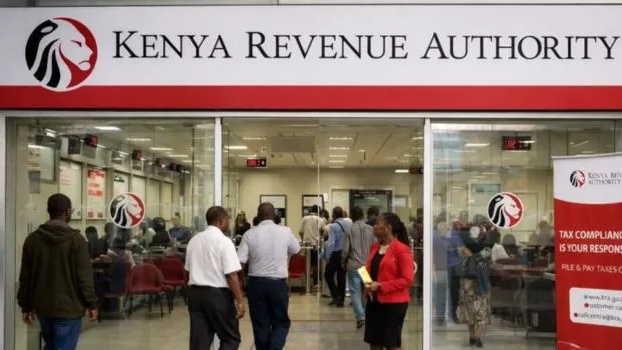
KRA Misses First-Quarter Revenue Target by Sh58.2 Billion as Deficit Runs Almost Double Treasury Projection
The Kenya Revenue Authority (KRA) fell Sh58.2 billion short of its ordinary revenue target in the first quarter of the 2026/27 financial year, leaving the National Treasury with a wider-than-planned fiscal gap at a time when debt repayments already absorb most of what the taxman collects.

Microsoft to Close Nairobi Africa Development Centre as Hundreds of Engineering Jobs Hang in the Balance
Microsoft has told staff at its Africa Development Centre (ADC) in Nairobi that the engineering operation will shut down, ending a seven-year effort to build a global product-development base in Kenya. Employees were informed on Monday, October 12, 2026. On the same day, Information and Digital Economy Cabinet Secretary William Kabogo met a Microsoft delegation to discuss the impact on local jobs and on investor confidence in the country's technology sector.

DCI Warns Over Flashy Forex and Crypto Influencers as Investment Scams Climb in Kenya
The Directorate of Criminal Investigations (DCI) has warned Kenyans that the cash stacks, hired luxury cars and trading dashboards flaunted on social media can be bait for fraud, in an advisory aimed at what it called "Masharp Boys/Girls." The alert, issued on Monday, September 28, comes as official data show investment, forex and crypto schemes among the most frequently reported forms of online fraud in the country, and as regulators prepare for a November 4 deadline that will require crypto firms serving Kenyans to hold a licence