 By
By 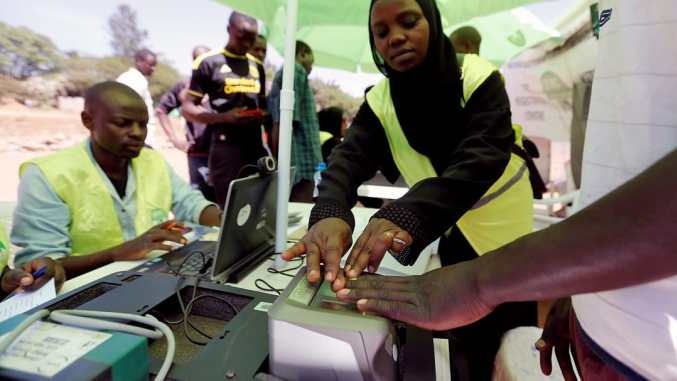
The IEBC triggered a minor political storm this week by clarifying that Kenyans who registered as voters before 2012 and never subsequently enrolled in the biometric system must register afresh before the April 28 deadline for the Enhanced Continuous Voter Registration exercise.
Martha Karua called it a potential disenfranchisement. Eugene Wamalwa questioned the motive. Sections of the internet read it as an attempt to manipulate the 2027 voter roll. IEBC chairperson Erastus Ethekon issued a follow-up statement saying "No panic!! Hapa kazi tu!" — clarifying that only the small number of Kenyans still exclusively on the pre-2012 manual register are affected, not the 22 million voters already in the biometric system.
The political controversy is real and legitimate. But underneath it is a technical question that most coverage has not answered: why exactly are the old paper-based records incompatible with the current system? What is KIEMS, how does it actually work, and why does it structurally require biometric data to function at all?
Why Kenya Changed Its Electoral System: The 2007 Origin Story
Understanding KIEMS starts in 2007. Kenya's disputed presidential election that year (where claims of vote-rigging were levelled against both sides, turnout exceeded 100% in some constituencies, and post-election violence killed over 1,000 people ) triggered a fundamental rethinking of how the country manages its electoral process.
The Kriegler Commission, established to investigate what went wrong, identified a specific and damning technical failure in the voter register: an estimated 1.2 million deceased voters remained on the roll at the time of the 2007 election. Ghost voters ( people who had died but whose names remained active on the register ) were a documented mechanism for electoral fraud. The manual system had no reliable way to detect, prevent, or audit for this.
The commission's key recommendation: Kenya needed a biometric registration system. Not just a list of names and ID numbers. A system where every voter's physical identity (fingerprints, facial photograph, biographical details ) is captured digitally and stored in a searchable, verifiable database. A system where you cannot vote in place of someone else, because the system checks not just whether the name matches but whether the body matches.
The promulgation of the Constitution of Kenya 2010 and the subsequent enactment of the Elections Act provided the legislative mandate for this transformation. The biometric Register of Voters was established in 2012 following boundary delimitation exercises. By the time the register closed for the 2013 General Election, approximately 14.5 million Kenyans had been enrolled biometrically. That biometric register ( not the old manual register ) is the foundation on which KIEMS is built.
What KIEMS Actually Is
KIEMS ( the Kenya Integrated Election Management System ) is not a single device or database. It is a suite of interconnected systems that covers the entire electoral process: voter registration, candidate management, voter identification on election day, and results transmission.
The component that matters for this discussion is the Electronic Voter Identification (EVID) system, the part that operates at the polling station on election day.
The KIEMS kit used at polling stations is a tablet device (supplied by Smartmatic for the 2022 election, IDEMIA for 2017 ) loaded with:
Software for voter identification and results transmission
SIM cards from multiple network operators for data connectivity
SD cards containing the biometric and biographical data of all registered voters in that specific polling station's constituency
When you arrive at a polling station, here is the exact technical sequence:
1. You present your national ID card or passport — the same document used at registration
2. The presiding officer locates your record on the KIEMS kit, either by alphanumeric search (name or ID number) or by direct fingerprint scan
3. You place your finger on the fingerprint reader
4. The kit compares your live fingerprint against the stored biometric template from your original registration
5. If the biometric match exceeds the confidence threshold, you are authenticated as a registered voter
6. You are issued your ballot papers
7. Your record is marked as having voted, preventing double voting within the session
This is the critical step that breaks if you are not in the biometric database. Step 4 requires a stored biometric template to compare against. If you registered in 2009 on the manual paper register, there is no biometric template for you in the system. The kit cannot verify you biometrically. You exist in a legacy record, not in the digital database that KIEMS queries.
Why Paper Records Cannot Simply Be Converted
This is the question at the heart of the technical incompatibility and the answer reveals why re-registration is genuinely necessary rather than bureaucratic obstruction.
A paper voter registration record from 2005 or 2008 contains: a name, an ID number, a constituency, and usually a photograph. It does not contain a digitised fingerprint template. A fingerprint is not like a photograph, you cannot look at a paper form and extract a biometric template from it. The original biometric capture must happen at the point of registration, with a fingerprint reader, to produce the mathematical representation stored in the KIEMS database.
You cannot retroactively add biometric data to a historical paper record without collecting that biometric data from the person again. Which is exactly what re-registration does.
The pre-2012 data was not deleted maliciously or carelessly. IEBC chairman Ethekon stated directly: "The pre-2012 data was legally disposed of." This was a deliberate policy decision at the time of the biometric transition — maintaining two parallel registers (the old manual one and the new biometric one) indefinitely was both technically complex and a potential source of fraud. The biometric register became the authoritative register. The old register was retired.
The Technical Layers That Make Biometric Verification Powerful
KIEMS uses fingerprint matching through a process called one-to-many biometric identification, your live fingerprint is compared not against a single stored record but against all records in the relevant subset of the database to find the closest match above a confidence threshold.
This process is what prevents impersonation. In the manual register era, a presiding officer could theoretically be deceived by someone who knew a registered voter's name and had their ID card. Human verification of identity is fallible. A fingerprint reader with a stored biometric template is significantly harder to deceive, you cannot present a copy of someone else's fingerprint that passes a live biometric reader.
Beyond fingerprints, the KIEMS kit can also use facial scanning with comparison against the national ID photograph as a backup verification method. This redundancy was critical in the 2022 election when some voters experienced fingerprint reading failures, the system fell back to facial verification rather than denying access entirely.
The SD cards carrying voter data are contingency-encrypted, if a kit is lost or stolen, the data cannot be read without the decryption keys held by IEBC. The presiding officer themselves authenticates to the kit using their own fingerprint before the kit can be used, preventing unauthorised use of the device.
The Missing KIEMS Kits Problem
No discussion of KIEMS credibility is complete without acknowledging what Martha Karua raised directly: more than 200 KIEMS kits cannot be accounted for.
This is a real and serious concern. KIEMS kits carry encrypted biometric data for the voters in their assigned polling stations. An unaccounted kit is a potential data security breach. It is also a procurement and accountability failure that IEBC has not adequately addressed publicly.
Karua's argument (that Kenyans cannot be asked to re-register and hand over their biometric data again while KIEMS kits loaded with existing biometric data remain unaccounted for) is technically and ethically coherent. The security of biometric data matters. The IEBC owes Kenyans a clear account of what happened to those kits, what data they contained, and what has been done to mitigate any risks.
Who Is Actually Affected
The IEBC's clarification, if taken at face value, narrows the affected population significantly.
The 22.1 million voters who appear in the biometric register as of the 2022 General Election are not affected. They enrolled biometrically at some point between 2012 and 2022 and are already in the KIEMS-compatible database.
The affected population is only those who registered before 2012 and never subsequently presented themselves for biometric capture, people who appear exclusively on the old manual register. IEBC has not published an estimate of how many people this is. Given that the 2012 biometric drive enrolled 14.5 million voters, and many of those will have been people migrating from the old manual register, the residual population of exclusively-manual-register voters is likely to be relatively small. But without a published estimate, the public cannot independently assess the scale of the issue.
The ECVR exercise runs until April 28, 2026. Registration kits have been deployed across all 1,450 County Assembly Wards, institutions of higher learning, Huduma Centres, and constituency offices, with open kits allowing registration from any location, no need to travel to your home county.
If you are uncertain whether you are in the biometric register, the fastest check is to attempt to verify your voter registration status on IEBC's voter verification portal at verify.iebc.or.ke using your national ID number. If your details appear, you are in the biometric system and do not need to re-register.
The Bigger Shift KIEMS Represents
KIEMS is part of a broader global trend of democracies adopting biometric electoral systems to address the vulnerability of paper-based processes. Twenty-seven African countries have adopted electoral technology in some form, driven by the same recognition that emerged from Kenya's own 2007 experience: that a credible election requires not just a list of who is allowed to vote, but a system that can actually verify they are who they claim to be.
The transition from manual to biometric systems always creates this specific class of problem, people enrolled in the old system who have not migrated to the new one. It is not unique to Kenya. It is the inevitable friction of any systems transition that involves physical biometric capture.
The technical answer is simple: re-enroll people who were not captured in the transition. The political sensitivity is real: in Kenya's charged electoral environment, any disruption to the voter register raises legitimate concerns about manipulation. The two things can both be true simultaneously, biometric re-registration of manual-only voters is technically necessary, and IEBC needs to be transparent about who is affected, how many people that is, and what safeguards are in place for the data being collected.
The ECVR exercise runs until April 28, 2026. To check whether you are already in the biometric voter register, visit verify.iebc.or.ke and enter your national ID number.
Comments