 By
By 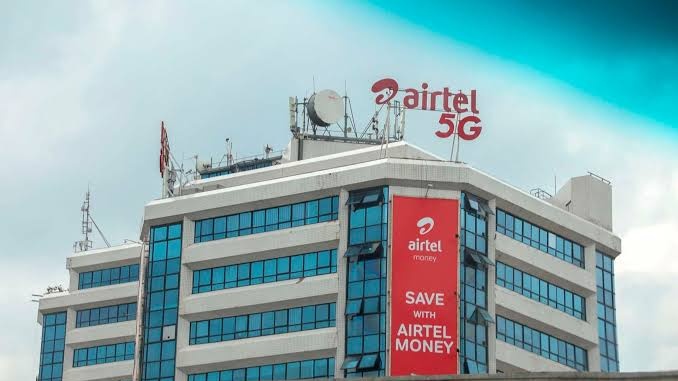
Airtel Kenya cut the data allocations on all four of its Smarta bundles on August 18, 2026, without changing a single price. The flagship KES 1,500 monthly plan, which offered 90GB as recently as March, now carries 32GB, a reduction of 64 percent. The KES 1,000 plan fell from 45GB to 22GB, a cut of 51 percent. Both weekly tiers lost exactly half their data. Voice minutes and SMS allocations were cut even harder in some tiers, with on-net minutes on the KES 1,000 bundle falling from 3,000 to 700.
The only warning customers received was a text message sent four days earlier, informing them that Airtel would "review" Smarta's benefits without specifying by how much. It is the second unannounced change to Airtel's core consumer proposition in a month. On July 14, Airtel Money's cross-network transfer fees rose to match M-Pesa's charges, again with no public statement. A week later, Airtel restructured its Amazing bundle range, cutting the KES 50 daily bundle from 2GB to 1GB while quietly boosting some monthly tiers.
Safaricom has moved in the same direction, though less visibly. Its B-Live product, a time-based bundle sold since August 2025 at KES 20 for one hour, KES 50 for three hours and KES 150 for six hours, has become inconsistent enough that Kenyans on social media describe it simply as "20 bob for 1GB," a shorthand from the bundle's early days when the fair-use ceiling before throttling sat close to a gigabyte an hour. Officially, B-Live was never sold as a fixed data amount. Subscribers now report that the same KES 20 tier can return anywhere from roughly 250MB to closer to 1GB of usable speed before the connection slows, depending on the time of day and a usage profile Safaricom does not disclose. Some customers report specific tiers vanishing from their menu entirely, only for Safaricom's support desk to describe this as normal personalisation. On August 1, the menu briefly collapsed into a single KES 25 option tied to Safaricom's Ziidi investment product, which the company blamed on a technical hitch.
Tunukiwa, Safaricom's other dynamic offer engine accessed through *444#, follows the same pattern. It has never had a public tariff sheet: Safaricom's own documentation describes it only as personalised and liable to change daily. Subscribers who once routinely received 1GB to 1.5GB for KES 50 through Tunukiwa report that offer has narrowed to roughly 350MB to 500MB for many users. Because the terms are not published anywhere, there is no official baseline to hold the telco to, which is precisely what makes the change hard to document and easy for Safaricom to describe as normal variation rather than a cut.
A rivalry that started as a price war
The context for these changes goes back to February 2025, when Airtel launched Smarta as a direct challenge to Safaricom, pairing generous data with Airtel Money cashback. It worked. Airtel has spent the past 18 months undercutting Safaricom's per-gigabyte pricing aggressively enough to draw customers away from a network that still commands 62.8 percent of Kenya's mobile broadband market and 34.3 percent of fixed internet, according to Communications Authority of Kenya data as of June 2025. Safaricom has responded with its own quiet reversals before. In November 2025 it briefly halved its "No Expiry" data bundles, doubling the effective cost of data, before restoring the old allocations within days and blaming a technical issue.
This week's Airtel cuts land differently because the KES 1,500 Smarta plan is now roughly half of what Airtel offered at launch, not merely a step down from a temporary high. Airtel's own justification, if it has offered one, has not been made public. What is public is Airtel Africa's most recent quarterly results, published July 22: group revenue rose 31 percent to $1,853 million for the quarter to June 30, and operating margin expanded to 50.1 percent from 48.0 percent a year earlier. The company does not break out Kenya's performance separately, grouping it with five other markets that together grew data customers 16.8 percent to 37.8 million.
What the cuts are actually solving for
Neither telco has issued a public explanation tying these changes to a specific cost pressure, so any reading of the underlying logic remains analysis rather than confirmed telco reasoning. Three forces are commonly cited by industry observers. The first is the end of promotional-tier economics: bundles like Smarta 1500's original 90GB and B-Live's early generous throughput were priced as customer acquisition tools rather than sustainable baseline products, and Communications Authority rules do not require telcos to consult the public before adjusting a promotional tariff filing.
The second is network load. Cheap, high-volume, short-validity bundles invite tethering and heavy streaming on infrastructure that, unlike fibre, has a hard capacity ceiling per cell tower. CA's own sector statistics show average mobile broadband consumption per subscription rising from 14.6GB to 15.1GB in the quarter to March 2026, with total mobile broadband usage up 6 percent to 800 million gigabytes, a trajectory that strains radio capacity faster than telcos can expand it. The third is a push toward higher average revenue per user: breaking the appeal of 20 bob and 50 bob passes nudges subscribers toward monthly plans priced at KES 1,000 or more.
Safaricom's own numbers support the ARPU argument. Its mobile data revenue rose 18.2 percent to KES 44.4 billion in the six months to September, according to its half-year financial results. Its August 1 Pata More campaign, which more than doubled the KES 1,000 monthly bundle from 10.2GB to 21.5GB and lifted the KES 20 daily bundle from 150MB to 250MB, looks generous in isolation. But many of the subscribers who felt the sharpest pinch this month were Airtel customers who had migrated to Smarta specifically because its KES 1,000 tier offered 45GB against Safaricom's much smaller equivalent. Airtel's cut to 22GB narrows that gap to roughly 2 percent per gigabyte, which means Safaricom's increase functions less as new generosity and more as matching a rival that has just retreated.
One regulatory detail may explain why Airtel bothered to send a warning text at all. The Kenya Information and Communications (Consumer Protection) Regulations, 2026, gazetted earlier this year, require licensees to communicate tariff and billing changes to subscribers in advance. Airtel's four-day SMS notice, thin as it was, is consistent with that requirement. Whether four days meets the spirit of the rule is a separate question, and neither the Communications Authority nor either telco has commented publicly on these bundle changes.
Comments