 By
By 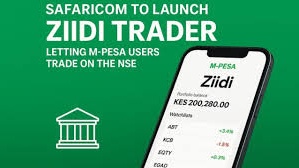
If you thought buying airtime from M-Pesa was convenient, wait until you try buying shares in Safaricom, KCB, or Equity Bank with the same ease.
On February 10, 2026, President William Ruto officially launched Ziidi Trader at the Nairobi Securities Exchange, marking what could be the most significant transformation in how everyday Kenyans access the stock market. For the first time, millions of M-Pesa users can now buy and sell NSE shares directly from their mobile wallet — no broker account, no paperwork, no minimum investment of thousands of shillings.
Just tap, buy, and you're a shareholder.
This isn't just another fintech feature. It's a fundamental reimagining of who gets to participate in Kenya's capital markets and how accessible wealth-building tools should be.
What is Ziidi Trader?
Ziidi Trader is a new feature embedded directly into the M-Pesa app that allows users to trade shares listed on the Nairobi Securities Exchange. Think of it as the stock market version of the Ziidi Money Market Fund that launched in December 2024 and quickly attracted over 1.15 million customers.
But unlike the passive investment nature of a money market fund, Ziidi Trader lets you actively buy and sell individual company shares — Safaricom, Equity Bank, EABL, KCB, you name it — all from the same app you use to pay for matatus and send money to shags.
The Journey from Pilot to Launch
Ziidi Trader didn't appear overnight. Safaricom first announced a pilot program in November 2025 during their half-year results presentation. The pilot phase ran for three months, testing the platform with a limited group of users to iron out technical issues and ensure the infrastructure could handle the transition from traditional brokerage to mobile-first trading.
On February 5, 2026, Safaricom began sending SMS notifications to M-Pesa users:
"Stock trading is now easier with Ziidi Trader. No account, No paperwork. Buy & sell shares on NSE from your MPESA App."
That simple message signals the end of an era where stock market participation required navigating complex bureaucracy, filling out Know Your Customer (KYC) forms, and waiting days for broker approval.
How Traditional Stock Trading Has Worked in Kenya (Until Now)
To understand why Ziidi Trader is revolutionary, you need to understand what it's replacing.
The Old Way: A Multi-Step Barrier Course
Traditionally, if you wanted to buy shares on the NSE, here's what you had to do:
Step 1: Find a Stockbroker You'd need to identify a licensed stockbroker from the list of firms authorized to trade on the NSE. This alone could be intimidating for first-timers who didn't know where to start or which broker to trust.
Step 2: Open a CDS Account Every investor needs a Central Depository System (CDS) account — basically a digital ledger where your shares are recorded. Opening a CDS account required:
Physical or scanned copies of your ID
Passport photos
Proof of residence (utility bill, bank statement)
Bank details
Completed KYC forms
This process could take anywhere from a few days to over a week, depending on the broker's efficiency.
Step 3: Fund Your Trading Account Once approved, you'd need to transfer money to your brokerage account. This often meant minimum deposits of KSh 5,000 to KSh 10,000 just to get started.
Step 4: The Board Lot Requirement Here's where it got expensive. Until August 2025, the NSE had a "board lot" requirement: you had to buy shares in multiples of 100.
If Safaricom shares were trading at KSh 15, you couldn't just buy 10 shares for KSh 150. You had to buy at least 100 shares, costing KSh 1,500. For blue-chip stocks like Equity Bank (trading around KSh 50), the minimum purchase was KSh 5,000. For EABL at KSh 150 per share? KSh 15,000 minimum.
This single rule excluded millions of Kenyans who wanted to invest but couldn't afford thousands of shillings upfront.
Step 5: Wait for T+3 Settlement After placing a buy order, you had to wait three business days (T+3) for the shares to actually appear in your CDS account. Selling was equally slow — you'd wait three days to receive your money after selling shares.
The Result? Out of 1.4 million registered investors on the NSE, only about 61,000 (4.3%) are active traders. The rest opened accounts, maybe made one or two trades, and then stopped — frustrated by the complexity, cost, and delays.
The stock market remained what it had always been: an elite club for those with capital, patience, and insider knowledge.
How Ziidi Trader Changes Everything
Ziidi Trader dismantles almost every barrier described above. Here's how it works:
1. Instant Onboarding with Zero Paperwork
There's no separate account to open. If you have an active M-Pesa account, you already meet the eligibility criteria.
When you launch Ziidi Trader for the first time from within the M-Pesa app, you simply:
Agree to terms and conditions
Receive a welcome message: "Welcome to Ziidi Trader. Discover NSE Stocks and start growing your wealth one share at a time."
That's it. No forms, no ID uploads, no waiting for approval. Safaricom leverages your existing KYC data from M-Pesa registration, which is already verified and compliant with regulatory requirements.
2. The Single-Unit Revolution
In August 2025, the NSE made a historic change: it scrapped the board lot requirement entirely. Starting August 8, 2025, shares could be traded in multiples of one.
This means:
Want to buy exactly one share of Safaricom? You can.
Want to invest KSh 100 and buy fractional ownership across multiple companies? Possible.
Testing the market with a small amount before committing more? Go ahead.
Combined with Ziidi Trader's KSh 100 minimum investment, this is the most accessible the Kenyan stock market has ever been.
For perspective: you can now own a piece of Safaricom, Kenya's largest company by market cap, for less than the cost of a soda.
3. Omnibus Account Structure
One of the most innovative aspects of Ziidi Trader is how it handles investor accounts behind the scenes.
Unlike traditional setups where each investor has their own individual CDS account, Ziidi uses an omnibus account structure. Here's how it works:
What is an Omnibus Account? An omnibus account is a pooled account where one entity (in this case, Kestrel Capital, the licensed broker managing Ziidi Trader) holds shares on behalf of multiple investors.
Think of it like a large digital wallet that contains everyone's shares, but Safaricom's system keeps precise records of who owns what. From your perspective, you see your shares in your M-Pesa portfolio. From the NSE's perspective, Kestrel holds a master account with all Ziidi users' shares aggregated.
Why This Matters:
No individual CDS setup required: You skip the entire account opening process
Faster execution: Orders can be processed instantly without coordinating across thousands of individual accounts
Scalability: The system can handle millions of users without creating millions of separate CDS accounts
Regulatory compliance: Kestrel, as a licensed broker, ensures all trades meet NSE and CMA requirements
The Trade-Off: You don't have a standalone CDS account in your own name. Your shares are held in Kestrel's omnibus account, with Safaricom maintaining the record of your specific holdings. For most retail investors, this is a worthwhile trade-off for the convenience and speed.
4. Near-Instant Settlement
Remember the old T+3 settlement where you waited three days to get your money or shares?
Ziidi Trader moves toward same-day or near-instant settlement directly into your M-Pesa wallet.
How it works:
Buy shares: Money is deducted from your M-Pesa balance immediately. Your shares appear in your Ziidi portfolio within hours, sometimes minutes.
Sell shares: Funds are credited back to your M-Pesa wallet on the same day, or at most, the next business day.
This is a game-changer for liquidity. You're no longer locking up money for days waiting for settlement. The stock market starts to feel less like a distant, illiquid investment and more like a utility you can access when you need to.
5. Trading Interface Built for Simplicity
The Ziidi Trader interface inside the M-Pesa app is deliberately designed to avoid overwhelming users with complex trading jargon.
Key Features:
Browse Companies: You see a list of all NSE-listed companies with their logos, names, and brief descriptions. No ticker symbols or confusing abbreviations unless you want them.
Live Prices: Current share prices, today's change (up or down), and simple charts showing recent performance.
"Use Best Price" or Set a Limit:
Use Best Price: The app automatically buys/sells at the current market price (market order)
Set a Limit: You specify the maximum you're willing to pay when buying, or the minimum you'll accept when selling (limit order)
Instant Payment: Enter the number of shares you want, tap confirm, enter your M-Pesa PIN, and the transaction is executed. It's as straightforward as buying airtime.
Portfolio Tracking: A dedicated dashboard shows:
Your holdings (which companies, how many shares)
Current value vs. what you paid
Gains or losses
Dividend history
Watchlists and Alerts: You can create watchlists of companies you're interested in and set price alerts — get a notification when Safaricom drops to KSh 14 or when KCB hits KSh 30.
Educational Content: The app includes explainers on how the stock market works, what dividends are, and basic investing principles — recognizing that many users will be first-time investors.
6. Cost Structure: What You Actually Pay
One of the biggest complaints about traditional brokers has been opaque and high fees. Ziidi Trader is designed to be transparent and affordable.
According to breakdowns from tech analysts, here's how the costs work:
Example Transaction: Buying 100 shares valued at KSh 4,500
Total transaction charges: KSh 68.50
This includes:
Brokerage commission (typically around 1.2% - 1.5%)
NSE trading fees
CMA levy
CDS fees
For a KSh 4,500 investment, paying ~KSh 68.50 in fees (~1.5%) is competitive with traditional brokers and significantly lower than some fintech platforms that charge flat fees regardless of transaction size.
Important Notes:
There are no account maintenance fees
No monthly subscriptions
No charges for viewing market data
Deposits and withdrawals to/from M-Pesa are free (unlike some brokers who charge for bank transfers)
The message is clear: start small, invest often, and fees won't eat away your returns.
Why This Matters: The Bigger Picture
Ziidi Trader isn't just about convenience — it's about fundamentally changing who participates in Kenya's economy and how wealth is built.
1. Addressing the Liquidity Crisis at the NSE
The Nairobi Securities Exchange has been struggling with a chronic problem: inactive investors.
Despite having 1.4 million registered investors, only 61,000 are actively trading. That's a participation rate of just 4.3%.
Compare that to mature markets where 20-40% of the population owns stocks, and you see the scale of the opportunity (and the problem).
Why does low participation matter?
Low trading volumes mean:
Illiquidity: It's hard to buy or sell large quantities without moving the price
Price discovery suffers: Prices don't accurately reflect company value when trading is thin
Companies avoid listing: Why go public if there's no active market for your shares?
Foreign investors stay away: International capital prefers liquid markets
The NSE has set an ambitious target: 9 million active retail investors by 2029.
With M-Pesa's 37.91 million one-month active users as of September 2025, the infrastructure to reach that goal is already in place. If even 25% of M-Pesa users dabble in Ziidi Trader, that's nearly 10 million potential market participants.
2. The M-Pesa Trust Factor
Let's be honest: many Kenyans don't trust stockbrokers. There's a perception (sometimes justified) that brokers are out to make money off you through fees, bad advice, or outright scams.
But M-Pesa is different.
M-Pesa is how people send money to family, pay bills, receive salaries, and run businesses. It's embedded in daily life. The brand carries trust that no standalone fintech app or traditional broker can match.
When M-Pesa says "you can buy shares here," people listen. The psychological barrier drops significantly.
This is the same playbook that worked for Ziidi Money Market Fund, which pulled in 1.15 million customers and KSh 12.6 billion in assets within its first year — representing nearly 48% of Kenya's entire unit trust investor base.
People invested in Ziidi MMF not because they deeply understood money market funds, but because M-Pesa made it feel safe and easy.
3. Wealth Building for the "Bottom of the Pyramid"
Kenya has a massive young, mobile-savvy population that's financially excluded from traditional wealth-building mechanisms.
The typical profile:
A 25-year-old hustler in Nairobi making KSh 30,000 a month
She's heard about investing but doesn't have KSh 50,000 lying around to open a brokerage account and buy 100 shares of anything meaningful
She's saving via M-Shwari or a chama, earning minimal interest
She sees wealthier Kenyans talking about "stock portfolios" and dividends but feels locked out
Ziidi Trader is designed for her.
She can start with KSh 500. Buy 10 shares of Safaricom, 5 shares of Equity Bank, 2 shares of Bamburi Cement. Watch them grow. Receive dividends (however small). Learn how markets work by doing, not by reading theory.
Over time, those small investments compound. She develops financial literacy. She becomes a stakeholder in Kenya's economy, not just a consumer.
This is how you build an investor class.
4. Economic Ripple Effects
When more Kenyans own shares, the entire economy benefits:
For Companies:
Easier access to capital by listing on the NSE
More shareholders = more customers who care about your success (brand loyalty effect)
Improved corporate governance (more retail investors = more scrutiny)
For the Government:
Deepened capital markets reduce reliance on debt financing
Increased tax revenue from capital gains and dividends (though Kenya currently exempts some investment income)
Greater economic resilience when wealth is distributed across more people
For Individuals:
Alternative to bank savings with historically higher returns
Dividends provide passive income
Long-term wealth accumulation through equity ownership
5. The Template for Regional Expansion
If Ziidi Trader succeeds in Kenya, expect copycat models across East Africa and beyond.
Safaricom already operates M-Pesa in Tanzania and Ethiopia. Imagine Ziidi Trader launching in Dar es Salaam or Addis Ababa, connecting regional stock exchanges to mobile money platforms.
Kenya could export this model the way it exported M-Pesa — establishing itself as the regional leader in democratized finance.
The Challenges and Concerns
No innovation is without risks. Ziidi Trader faces several challenges that could undermine its potential:
1. System Overload and Infrastructure Capacity
M-Pesa handles millions of transactions daily without breaking a sweat. But stock trading is different.
The concern: Can the NSE's matching engine handle a sudden influx of thousands of retail trades per second?
Stock exchanges rely on sophisticated order-matching systems that pair buyers with sellers. If Ziidi Trader drives mass adoption and suddenly 100,000 people are trying to buy Safaricom shares simultaneously during a market rally, can the NSE infrastructure keep up?
M-Pesa's track record gives some confidence — Safaricom has proven it can scale. But the NSE's systems have historically been built for lower volumes. Stress testing during the pilot was critical, but real-world adoption might reveal bottlenecks.
What to watch: Platform slowdowns, failed orders, or delayed executions during high-volume periods. If users experience glitches early on, trust erodes quickly.
2. Investor Education and Behavioral Risks
Ziidi Trader makes buying stocks as easy as buying airtime. But stocks aren't airtime.
The risk: Millions of first-time investors with no financial literacy could:
Panic sell during market dips, locking in losses
Chase hot stocks without understanding fundamentals, creating bubbles
Over-concentrate in one or two companies (likely Safaricom) instead of diversifying
Treat it like gambling — buying and selling daily based on emotions, racking up fees
The app includes educational content, but will people actually read it? Or will they skip straight to buying?
Financial regulators and Safaricom have a responsibility here. If Ziidi Trader enables reckless speculation that wipes out people's savings, the backlash will be severe — both reputationally and politically.
What's needed:
Mandatory prompts before first trades: "Stock prices go up AND down. Are you prepared to lose money?"
Gamification that rewards long-term holding, not day-trading
Partnerships with financial educators to run M-Pesa-based investment literacy campaigns
3. The Broker Controversy
Ziidi Trader has not been universally welcomed. In fact, it sparked a significant conflict between the NSE and traditional stockbrokers.
The controversy: Kestrel Capital is the exclusive broker handling Ziidi Trader during the launch phase. This has angered other brokers who see Safaricom and the NSE as cutting them out of the business.
In June 2025, tensions escalated to the point where some brokers called for the removal of NSE CEO Frank Mwiti, accusing him of favoritism and undermining the brokerage industry.
The brokers' argument:
They invested years building businesses based on the brokerage model
Safaricom is using its M-Pesa monopoly to dominate stock trading, creating unfair competition
If Ziidi Trader becomes the default way people trade, traditional brokers will be obsolete
Safaricom and NSE's response:
Once the platform stabilizes, other brokers will be able to integrate with Ziidi Trader
This isn't about killing brokers — it's about expanding the market
A bigger pie means more business for everyone, even if the business model shifts
The reality: This is a classic disruption story. Traditional players are being forced to adapt or die. Some brokers will pivot to offering advisory services, research, or wealth management. Others will struggle.
But from a consumer perspective, the question is simple: Should the stock market remain exclusive to protect broker profits, or should it be opened to millions who were previously locked out?
The answer seems obvious.
4. Data Privacy and Security
Ziidi Trader operates within the M-Pesa ecosystem, which means Safaricom now has access to:
How much money you're investing
Which companies you're buying
Your trading patterns and frequency
Your risk tolerance (inferred from behavior)
The concern: How is this data used? Could it be sold to third parties? Could it be used for targeted marketing in ways that feel intrusive?
Safaricom is regulated by the Central Bank of Kenya and the Capital Markets Authority, both of which have data protection requirements. But Kenya's data privacy enforcement has historically been weak.
What users should demand:
Clear privacy policies explaining what data is collected and how it's used
Opt-out mechanisms for marketing
End-to-end encryption for sensitive transactions
Transparency reports on data breaches (if any occur)
5. Market Manipulation Risks
With millions of retail investors now able to trade from their phones, there's potential for coordinated manipulation.
Scenarios to watch:
Pump-and-dump schemes: Bad actors promoting low-liquidity stocks on social media, getting people to buy via Ziidi, then selling at inflated prices
Rumor-driven volatility: False news about companies spreading on WhatsApp, causing panic buying/selling
Influencer-driven bubbles: Financial "gurus" on TikTok or Instagram telling followers to buy specific stocks, creating artificial demand
The Capital Markets Authority will need to step up surveillance and enforcement. Traditional market manipulation tools (monitoring unusual trading volumes, investigating insider trading) need to adapt to a world where millions of small trades can collectively move markets.
The Success of Ziidi Money Market Fund: A Proof of Concept
Before dismissing Ziidi Trader as overly ambitious, consider the precedent set by the Ziidi Money Market Fund (MMF).
Launched in December 2024, the Ziidi MMF allowed M-Pesa users to invest in a diversified portfolio of government securities, fixed deposits, and corporate bonds with:
KSh 100 minimum investment
Free deposits and withdrawals via M-Pesa
Daily interest accrual
No lock-in period
The results were staggering:
By September 2025 (just 9 months after launch):
1.15 million customers — representing 47.9% of Kenya's entire unit trust investor base
KSh 12.6 billion in assets under management
KSh 354.36 million in investment income for the half-year ending June 2025
For context, it took decades for Kenya's unit trust industry to build a base of 2.4 million investors. Ziidi MMF captured nearly half of that in under a year.
What made it work?
Trust: M-Pesa's brand made people comfortable
Simplicity: No jargon, no complicated forms
Accessibility: KSh 100 minimum meant everyone could participate
Liquidity: Withdraw anytime without penalties
Returns: Competitive interest rates (higher than bank savings accounts)
Ziidi Trader is applying the exact same playbook to equities. If the MMF is any indication, adoption could be explosive.
What This Means for Competitors
The launch of Ziidi Trader casts a long shadow over independent fintech apps like Hisa, Mali, and Ndovu — platforms that pioneered accessible stock trading in Kenya and East Africa.
The Hisa Problem
When Hisa launched, it was celebrated as a disruptor. It allowed Kenyans to invest in NSE and US stocks from their phones with low minimums and modern interfaces.
But here's the harsh reality: Hisa never had 37.91 million active users. It had to build its user base from scratch, spending heavily on marketing to convince people to download a new app, trust a new brand, and link their bank accounts.
Ziidi Trader skips all of that. It's already embedded in the app that every M-Pesa user already has and uses daily.
The competitive dynamics shift dramatically:
Factor | Hisa / Independent Apps | Ziidi Trader |
|---|---|---|
User Base | Build from zero | 37.9 million M-Pesa users |
Trust | New brand, requires building | M-Pesa = trusted |
Onboarding | Download app, create account, verify ID | Already M-Pesa verified |
Funding | Link bank or M-Pesa externally | Funds already in M-Pesa |
Brand Recognition | Requires marketing spend | Safaricom's brand halo |
What can independent apps do to survive?
Differentiate on features: Offer US stocks, crypto, fractional shares of global companies — things Ziidi doesn't (yet)
Target sophisticated investors: Focus on users who want advanced charting, research tools, options trading
Build community: Create forums, investment clubs, and educational content that foster loyalty
Partner, don't compete: Some apps might integrate with Ziidi, offering complementary services
But make no mistake: this is an existential challenge for standalone investment apps in Kenya.
The Road Ahead: What to Expect
Short-Term (Next 6 Months)
Mass Adoption Phase: Expect aggressive marketing from Safaricom, leveraging the full power of M-Pesa's reach. SMS campaigns, in-app prompts, influencer partnerships, and media coverage will drive awareness.
Initial Volatility: As millions of first-time investors enter the market, expect unusual trading patterns — sudden volume spikes in popular stocks (likely Safaricom, Equity Bank, KCB), increased volatility, and potentially some coordination attempts via social media.
Infrastructure Testing: The NSE and Safaricom will be stress-testing systems in real-time. Watch for technical glitches, order delays, or system downtime during peak hours.
Regulatory Scrutiny: The Capital Markets Authority will be monitoring closely for signs of market manipulation, insider trading, or consumer protection issues.
Medium-Term (6-18 Months)
Broker Integration: Other licensed brokers will start integrating with Ziidi Trader, offering their own branded experiences within the M-Pesa ecosystem. This could lead to competition on fees, research quality, and customer service.
Product Expansion: Safaricom may introduce:
Fractional shares (own 0.5 shares of expensive stocks)
Automated investing (recurring buys, round-up features)
Thematic portfolios (ESG stocks, dividend aristocrats, growth stocks)
IPO participation directly via M-Pesa
Impact on NSE Metrics: If Ziidi Trader works as intended, we should see:
Surge in active investor numbers (targeting 9 million by 2029)
Increased daily trading volumes
Greater liquidity in previously dormant stocks
More companies considering IPOs
Financial Inclusion Metrics: Track whether Ziidi Trader is genuinely reaching low-income, rural, and first-time investors, or if adoption is concentrated among urban middle-class users who already had access.
Long-Term (18+ Months)
Regional Rollout: Expansion to Tanzania, Ethiopia, and potentially other African markets where Safaricom or M-Pesa operates.
Integration with Other Financial Products: Imagine a future where:
You can use your NSE shares as collateral for M-Pesa loans
Dividends are automatically reinvested or swept into Ziidi MMF
Tax reporting is automated via integration with KRA systems
Insurance products, real estate investment trusts (REITs), and bonds are all accessible within the same interface
Disruption of Traditional Banking: If Kenyans start seeing better returns from equities than savings accounts, banks will face pressure to compete. This could drive innovation in retail banking products.
Cultural Shift: Over time, stock ownership becomes normalized. Conversations about "my portfolio" or "dividend season" become common in boda boda stages, salons, and markets — not just corporate boardrooms.
Should You Use Ziidi Trader?
That depends on who you are and what you're trying to achieve.
You Should Try Ziidi Trader If:
You've always been curious about investing but found traditional brokers intimidating
You want to start small (KSh 100 - KSh 5,000) and learn by doing
You value convenience and simplicity over advanced trading features
You trust the M-Pesa ecosystem and are comfortable managing investments via mobile
You're looking for long-term wealth building, not day-trading
You want exposure to Kenyan companies you believe in
You Might Want Alternatives If:
You're a sophisticated trader who needs advanced charting, technical indicators, and real-time data feeds
You want access to international stocks (US, UK, emerging markets) that aren't on the NSE
You're investing large sums (hundreds of thousands or millions) and want dedicated relationship managers
You need tax-loss harvesting, estate planning, or complex portfolio strategies
You're concerned about data privacy and prefer keeping investments separate from M-Pesa
You want to actively day-trade (fees will add up quickly)
General Advice for First-Time Investors:
Do:
Start small and learn
Diversify across multiple companies (don't put all KSh 1,000 into one stock)
Invest money you won't need for at least 1-2 years (stocks fluctuate)
Read the educational content in the app
Track your performance but don't obsess over daily changes
Reinvest dividends when possible
Don't:
Invest money you need for rent, food, or emergencies
Panic sell when prices drop (unless fundamentals have changed)
Follow "hot tips" from social media without research
Buy stocks just because your friends are buying them
Expect to get rich quickly (equities are long-term investments)
Ignore fees (they compound over time)
The Bigger Question: Is Kenya Ready?
Ziidi Trader represents more than just a new app feature. It's a test of whether Kenya is ready for truly democratized finance.
Kenya has the infrastructure:
Near-ubiquitous mobile money penetration
A functioning stock exchange with diverse listings
Regulatory frameworks (even if enforcement is imperfect)
A young, digitally literate population eager for financial opportunities
But Kenya also has challenges:
Low financial literacy rates
A history of investment scams that have burned people
Income inequality that limits how much most people can invest
Weak consumer protections and slow legal recourse
The Success Factors:
For Ziidi Trader to truly transform Kenyan capital markets, three things need to happen:
1. Education at Scale: Safaricom, the NSE, and CMA must invest heavily in investor education. Not just pamphlets or website FAQs, but:
In-app tutorials and simulations (practice trading with virtual money)
Partnerships with schools and universities to teach financial literacy
Community outreach in counties, not just Nairobi
Swahili and local language content
2. Consumer Protection that Works: Fast-track dispute resolution, transparent fee structures, and real consequences for market manipulation. If early adopters get burned and have no recourse, the whole initiative collapses.
3. Sustained Political Will: The government needs to support capital market development through:
Tax incentives for long-term investors (e.g., exempting capital gains on shares held >3 years)
Streamlined IPO processes to get more companies listed
Enforcement of corporate governance standards to protect minority shareholders
Investment in NSE infrastructure to handle scale
If these pieces fall into place, Ziidi Trader could be the catalyst that finally unlocks Kenya's capital market potential.
Conclusion: The Stock Market Just Became a Utility
For decades, the Nairobi Securities Exchange was a place — a physical location in Westlands where traders shouted and screens flashed. Then it became digital, but still distant, accessible only through brokers who felt like gatekeepers.
Now, with Ziidi Trader, the stock market is neither a place nor a service you access through intermediaries. It's a utility. Like electricity, water, or mobile data — it's infrastructure you tap into whenever you need it, from wherever you are.
This is the logical evolution of what M-Pesa started in 2007: removing middlemen and making essential services accessible to everyone.
M-Pesa democratized money transfer. Ziidi MMF democratized savings and returns. Now, Ziidi Trader is democratizing equity ownership.
Whether this transforms Kenya's economy or fizzles out depends on execution, education, and whether everyday Kenyans see the stock market as an opportunity or just another way to lose money.
But one thing is certain: The barriers have fallen. The invitation has been extended. The stock market is now in your pocket.
What you do with it is up to you.
Comments