 By
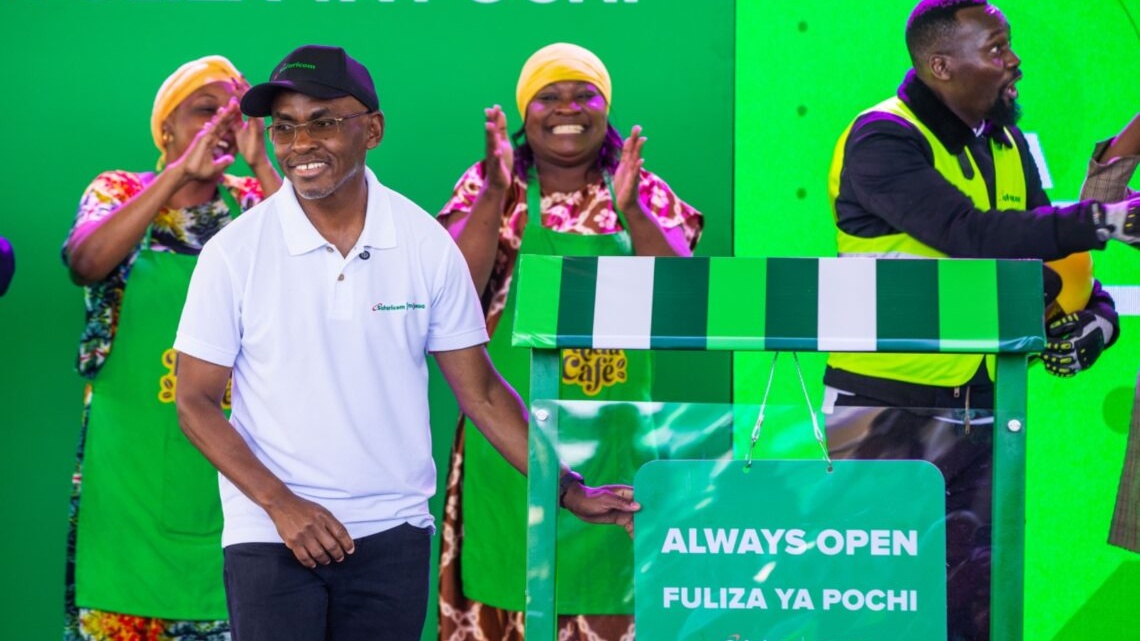
Safaricom has launched Fuliza Ya Pochi, an overdraft facility that lets qualifying Pochi La Biashara merchants complete payments when their wallet balance falls short. The product extends the M-Pesa credit model to micro-traders and informal businesses, the segment that now makes up most of the company's merchant base.
The service was unveiled in Thika on Thursday, October 22, 2026, and Safaricom published its press release the following morning. The company says more than one million Pochi La Biashara merchants currently qualify. Pochi has also overtaken the formal Lipa na M-Pesa till system in size, with about 2.2 million users against roughly one million Lipa na M-Pesa merchants.
How Fuliza Ya Pochi works
The facility lets a merchant spend from an empty or low Pochi wallet. According to Safaricom's statement, merchants can use the overdraft to pay suppliers, make Buy Goods purchases, send money and settle utility bills. The company describes the aim as keeping businesses running and serving customers without interruption when cash timing is off.
Safaricom Group CEO Peter Ndegwa framed the product around the daily cash flow gaps small businesses face. In the press release, he said thousands of micro-businesses experience gaps that lead to missed sales and delayed stock purchases.
Eligibility and access rules, as set out by Safaricom include:
A merchant must have actively used Pochi La Biashara for more than six months.
Applicants are expected to have transacted on at least 15 days within a 30-day period.
The overdraft limit is assigned on enrolment and is based on the merchant's business activity.
Merchants can join through the Pochi Mini App on My OneApp, or by dialling *334#, selecting option 8 for Pochi La Biashara and then option 1.
Repayments are deducted automatically from future payments received into the merchant's Pochi wallet.
The automatic repayment design mirrors the personal Fuliza product. This deduction model is the reason Fuliza records the strongest repayment performance among Safaricom's mobile loan products, since money is recovered from the first incoming payment.
Pricing and repayment terms
According to reports, the overdraft carries a 1 per cent fee on each disbursement. A daily maintenance fee applies after a 48-hour interest-free window, and it is tiered by outstanding balance. The outlet reported the tiers in US dollars, running from zero for balances up to about $0.77 to about $0.23 a day for balances between roughly $19.32 and $540.90. At the exchange rate implied by Safaricom's own fee-relief figures (KES 200 corresponding to $1.54 in the same report), that works out to about KES 100 at the lower threshold, about KES 30 a day on the top tier, and an upper balance of roughly KES 70,000. These conversions are approximate.
For comparison, Safaricom's personal Fuliza product also charges a one-off 1 per cent access fee, according to the company's 2022 tariff announcement made with NCBA and KCB. That restructuring introduced a three-day free maintenance period for amounts of KES 1,000 and below. Fuliza Ya Pochi, as reported, offers a 48-hour window with no balance cap attached to it.
An illustrative calculation using the reported figures: a merchant who draws KES 5,000 and repays within 48 hours would pay the 1 per cent fee, or KES 50. A merchant who holds that balance for ten days would owe the same KES 50 plus about eight days of the daily fee at around KES 30, or roughly KES 240, bringing the total cost to about KES 290 before any taxes. Whether excise duty applies to the Pochi maintenance fee, as it does on personal Fuliza, was not stated in the sources reviewed.
Borrowed amounts are payable within 30 days. Merchants who do not repay face suspension of the service and reduced limits, and may be listed with a credit reference bureau after 91 days past the due date. The outlet also reports that the facility was developed in partnership with Sidian Bank. Safaricom's press release does not name a lending partner.
The growth of Pochi La Biashara behind the launch
Pochi La Biashara is a wallet that lets small traders receive customer payments and keep business money separate from personal funds, without needing a registered business or till number. Senders cannot reverse a Pochi payment and cannot see the receiver's number, features that have made it popular with women traders because they reduce fraud and harassment risk.
The same outlet reports that Pochi users grew from 600,000 in the 2024 financial year to 1.1 million the next year, then doubled to 2.2 million by the end of the 2025/2026 financial year. Revenue from the product rose from about $6.2 million to $17 million and then to $30.9 million over the same period. Safaricom's release describes Pochi as serving "over two million" micro-merchants, a figure consistent with that trajectory.
From personal overdraft to merchant credit
Fuliza launched on January 5, 2019, in partnership with Commercial Bank of Africa (now merged into NCBA) and KCB Group. The product came from Safaricom data showing millions of M-Pesa transactions being cancelled each day for insufficient funds, with 58 per cent of them eventually completed within two days. The logic was that customers needed a short bridge more than a conventional loan.
That logic has produced revenue. Birr Metrics reports that Safaricom earned about $46.4 million from Fuliza in the financial year ended March 2026, a 46 per cent increase on the year before, while M-Pesa as a whole generated about $1.41 billion, up 13.4 per cent and equal to 45.6 per cent of Kenya service revenue. Ndegwa said Fuliza serves 17 million individual customers.
Safaricom later extended the product to businesses through Fuliza ya Biashara, which serves qualifying Lipa na M-Pesa merchants. Fuliza Ya Pochi is the third layer, and it relies on transaction history rather than collateral to assess creditworthiness.
Pochi has had credit offerings before. Safaricom partnered with digital lender Pezesha to introduce Mkopo wa Pochi, a loan product tied to Pochi La Biashara. The Founder reported that Pezesha assessed borrowers using factors such as Safaricom transaction history, mobile money activity and credit bureau data, and that the loans carried a one-time access fee of 2.76 per cent. Fuliza Ya Pochi differs in being an overdraft that draws against Safaricom's own wallet infrastructure and repays automatically from incoming payments.
Fee relief on Pochi payments
The launch follows temporary measures Safaricom introduced for Pochi users. According to the company, customer payments of up to KES 200 are zero-rated, and charges on payments above KES 200 are cut by 50 per cent and capped at KES 50. The relief runs for three months.
Lower payment charges and overdraft access address different parts of a small trader's costs. Reduced fees lower the expense of accepting payments, while the overdraft covers the timing gap when a supplier must be paid before a customer's money arrives. Because repayment comes out of incoming Pochi receipts, merchants will see overdraft recoveries taken from sales proceeds before they can use that money elsewhere, which means stock purchases, rent and household spending will all compete with the repayment on the same wallet.
Comments