 By
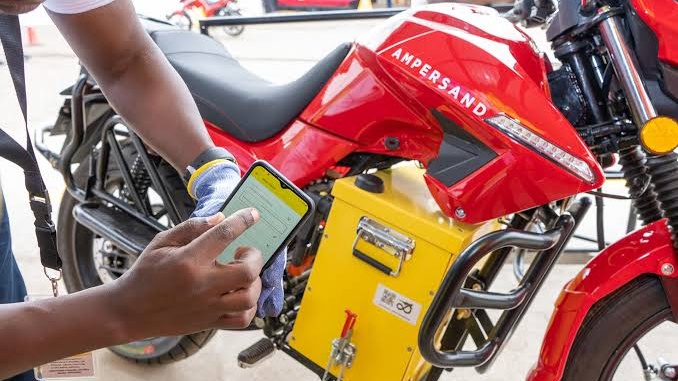
Kenyan startups raised $126 million (KSh16.3 billion) in the first half of 2026, the weakest opening six months since 2021, according to data from The Big Deal. Yet the capital that did move went almost entirely to companies that own and finance physical assets: electric motorcycles, swappable batteries, buses and solar kits sold on daily instalments. For founders building pure software, the pattern points to a market that now rewards collateral and repayment data over user growth.
Two numbers that frame the shift
The first is the 2025 total. Africa: The Big Deal found that Kenya's startup funding grew 52 percent year on year in 2025, with debt accounting for $582 million, or 60 percent of the total, and equity at $383 million, nearly double the prior year. Other trackers put the full-year figure closer to $984 million or $1.04 billion, depending on what they count as startup funding. The Big Deal attributed the performance largely to energy companies including d.light, Sun King, M-KOPA, Burn and PowerGen.
The second is the 2026 slowdown. Kenya ranked third in Africa in the first half of the year, behind Egypt ($327 million) and Nigeria ($254 million). Across the continent, total funding held steady at roughly $1.4 billion, but the number of disclosed deals fell from 252 to 146 year on year. An AU-Startups review of the same period reported that climate technology, renewable energy, electric mobility and digital financial infrastructure together captured more than 45 percent of Kenya's capital, and that seed deals fell by 60 percent.
The picture is not new. Kenya received $537 million in venture funding in 2024, 62 percent of it as debt, and took 67 percent of Africa's climate-focused venture capital that year. AVCA data showed Kenya drawing about eight of every ten dollars of private capital flowing into East Africa over the five years to 2025. The 2026 figures suggest the concentration has deepened rather than reversed.
Why lenders prefer a battery to an app
The commercial logic is visible in how these companies are financed. A consumer app that loses users when subsidies end offers an investor little to recover. An electric motorcycle, a battery pack or a solar home system can be tracked, remotely disabled if payments stop, and repossessed. Revenue arrives through mobile money in small, frequent payments, which gives lenders a running record of collections.
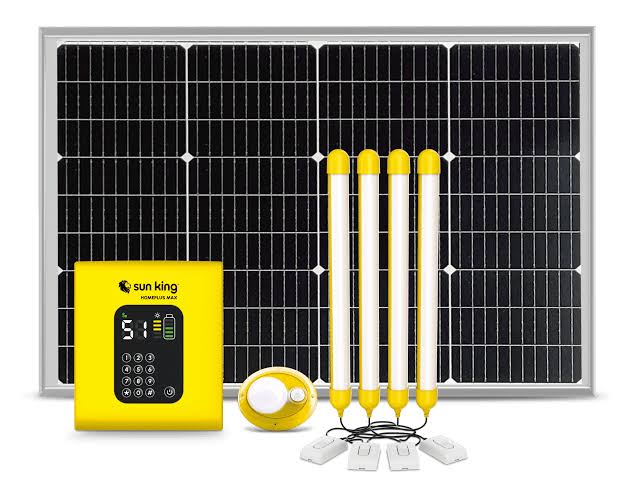
That record is what turns a startup's receivables into something banks will lend against. Sun King closed a $156 million (about KSh20 billion) securitisation in Kenya in July 2025, arranged by Citi, with Stanbic Bank Kenya, KCB, Absa and Co-operative Bank among the participants, alongside development finance institutions including British International Investment, Norfund and FMO. The structure pools expected customer repayments into debt notes. It was Sun King's second Kenyan shilling securitisation after a $130 million deal in 2023, and its customers pay from as little as $0.19 (KSh25) a day via mobile money, according to Sun King.
Two features matter for the wider market. The debt is denominated in shillings, which removes the mismatch between dollar-priced hardware and shilling-denominated collections that has hurt other importers. And the senior tranche was taken up by domestic commercial banks, which suggests local lenders now treat pay-as-you-go receivables as a credit class and not as a development-finance experiment.
Who is raising, and on what terms
ARC Ride. The Nairobi battery-swapping company announced a $33.3 million round in September 2026, led by Novastar Ventures and Norrsken22, with participation from IFC, BII and Proparco, plus a debt facility from BII's Kinetic programme and Mirova. The proceeds are earmarked for 5,000 additional electric motorcycles, more swapping infrastructure and expansion into Ghana, South Africa, Tanzania and Uganda. Roughly a year earlier, ARC Ride raised $10 million in debt from Mirova to deploy more than 600 swapping cabinets and 25,000 batteries in Kenya. The sequence shows how a company in this category stacks equity, development finance and structured debt, rather than relying on a single venture round.
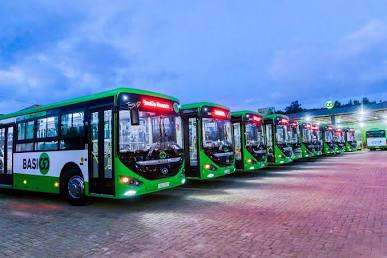
BasiGo. The electric bus company sells nothing outright. Under its pay-as-you-drive model, operators acquire a bus for a small upfront payment (reported at about $7,700 in Kenya by ImpactAlpha) and then pay mileage-based fees that cover charging, insurance and maintenance. The company raised $24 million in Series A equity alongside $17.5 million in debt, and MIT Technology Review reported in October 2026 that its fleet had passed 100 buses across Kenya and Rwanda. BasiGo has described its own financing as a blend of equity, debt and grants.
M-KOPA. The asset-financing company's mobility arm secured a $30 million senior debt package from Dutch development bank FMO, reported in Africa's July 2026 funding tally, to support its electric motorcycle and battery portfolio. Zeno ($25 million Series A) and Roam (a reported £19.72 million Series A) are also building production and swapping capacity, according to AU-Startups.
Policy has done part of the work
The capital shift has fiscal support behind it. The Finance Bill 2025 zero-rated VAT on electric buses, electric bicycles, electric motorcycles and lithium-ion batteries, and cut excise duty on e-bikes, e-motorcycles and batteries to zero, according to the Ministry of Roads and Transport as reported by The Standard and The Star. The National Electric Mobility Policy was launched on February 3, 2026, with support from the European Union, GIZ and the International Finance Corporation.
The ministry reported that registered electric vehicles rose from 1,378 in 2022 to 39,324 in 2025, led by motorcycle taxis. Kenya Power data showed electricity used for EV charging reached 8.4 million kWh in 2025, up 188 percent from 2024, with charging revenue rising from KSh64.8 million to KSh190.8 million.
The tax treatment has not been settled without argument. During the 2025 public participation phase, a proposal to reclassify electric motorcycles from zero-rated to VAT-exempt drew criticism because exempt status prevents producers from recovering input VAT and would likely have pushed up prices. Zero-rating survived in the final measures, but the episode illustrates how much of the sector's unit economics rests on tax classification. Personal electric cars, by contrast, were not covered by the same blanket relief, according to Tech-ish.
What it costs early-stage founders
The same logic that favours asset-backed lenders disadvantages small software teams. AU-Startups reported that the median disclosed deal in the first half of 2026 nearly halved to $2.65 million from $4.65 million, and that the median time from seed to Series A across African startups stretched to 29 months from 18 two years earlier. Big Deal data noted a decline in seed-stage investment alongside a growing preference for startups with proven revenue models and positive unit economics.
Concentration compounds the problem. AU-Startups reported that five companies accounted for 82 percent of Kenya's 2025 funding. When a few large facilities dominate the total, headline growth says little about whether a first-time founder can close a pre-seed round, and a Kenyan developer with a marketplace app is not competing for the same cheques as a company financing a 5,000-unit motorcycle fleet.
There are signs that funders see the gap. Kenya Climate Ventures is launching a $100,000 non-dilutive pilot fund for early-stage adaptation startups and a $5 million Kenya Uganda Adaptation Accelerator, according to AU-Startups. Those programmes target climate businesses, however, and do little for founders in software, health or education.
Risks inside the asset-backed model
The model has its own exposures, and the evidence so far leaves several open.
Counting. Debt-heavy totals flatter the ecosystem. A report on July 2026 African funding noted that some trackers exclude large industrial loans from startup totals, which produces much lower estimates. A year with strong headlines can still be a year with few funded companies.
Currency. Companies importing batteries and vehicles pay in dollars and collect in shillings. Sun King's shilling securitisation addresses this for solar receivables. Whether e-mobility lenders can secure comparable local-currency structures will affect how far the model scales beyond a handful of well-backed names.
Adoption base. Electric vehicles were still about 0.2 percent of registered vehicles in Kenya at the end of 2024, against a government target of 5 percent by 2025, according to the Environment for Development (EFD) initiative. Growth from a small base is fast but fragile.
Policy dependence. If tax relief on motorcycles and batteries narrowed in a future Finance Bill, riders' daily lease costs would rise and repayment performance, the figure lenders watch most closely, could weaken.
Counterparty concentration. A sector dependent on a short list of development lenders and a few operators is exposed if any one of them pulls back.
On the evidence available, Nairobi's investors have decided that a startup whose revenue can be metered, collected through M-Pesa and secured against a physical unit is easier to finance than one whose revenue depends on user attention. Whether that preference produces a broader industrial base, or only a few well-capitalised operators, will depend on how many companies outside the current leaders can reach the same lenders on similar terms.
Comments