 By
By 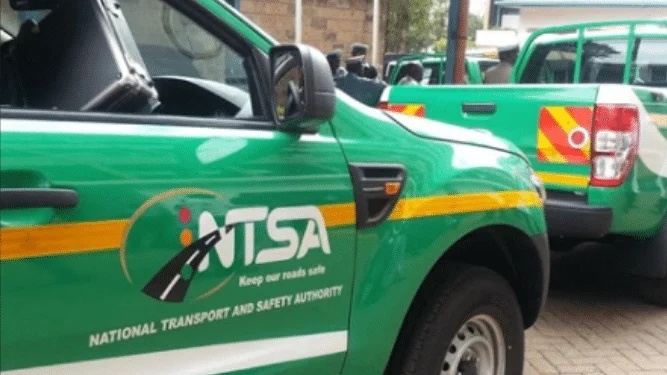
Three days after launch, Kenya's new automated traffic fines system has been stopped in its tracks.
The High Court in Nairobi issued conservatory orders this morning, March 12, suspending the implementation of NTSA's Instant Fines Traffic Management System following a petition by lawyer Shadrack Wambui challenging its legality. Justice Bahati Mwamuye's orders mean that NTSA and other enforcement agencies cannot implement or enforce the instant fines system until the court hears and determines the full petition.
The system had gone live on Monday, March 9, with NTSA announcing that over 1,000 smart cameras would automatically detect traffic violations and send SMS fines directly to motorists' phones — no traffic officer required, no roadside interaction, no court appearance. Within hours of the announcement, the legal challenges began arriving.
What the System Was Designed to Do
The Instant Fines Traffic Management System was built around a network of more than 1,000 smart cameras — 700 fixed units along highways and urban roads, and 300 mobile units deployable to accident-prone corridors. The cameras use Automatic Number Plate Recognition (ANPR) technology to detect violations in real time, read the offending vehicle's registration plate, match it to NTSA's registration database, and automatically generate a violation notice.
The registered vehicle owner then receives an SMS detailing the offence, the location, the time, and the amount due. The fine is simultaneously logged on the motorist's NTSA account. Payment was required within seven days through KCB Group branch channels. Failure to pay would trigger interest charges and a lockout from all NTSA services — licence renewals, vehicle transfers, logbook applications, and any other transaction on the authority's digital platform.
The system reads the vehicle number plate and links it to NTSA registration records before generating a violation notice. NTSA described the process as "fully automated and operating without human intervention", a phrase meant to signal transparency and anti-corruption credentials, but one that immediately raised the question of who checks the machine's work.
The Full List of 37 Offences and Fines
The NTSA schedule lists 37 minor traffic offences with penalties ranging from Ksh 500 to Ksh 10,000. The highest fines apply to driving without identification number plates, operating a vehicle without a valid inspection certificate, exceeding speed limits by 16 to 20 km/h or more, causing obstruction by leaving a vehicle blocking traffic, and PSV operators employing unlicensed drivers or conductors.
The full schedule covers:
Ksh 10,000:
Driving without identification number plates
Operating a vehicle without a valid inspection certificate
Exceeding speed limit by 16–20 km/h or more
Causing obstruction by leaving vehicle blocking traffic
PSV operators employing unlicensed drivers or conductors
Ksh 5,000:
Driving on a pedestrian walkway
Failure to stop when ordered by police
Ksh 3,000:
Failure to obey traffic signs
Failure to obey police directions
Ksh 2,000:
Using a mobile phone while driving
Ksh 1,000:
Failure to carry a driving licence
Failure to renew a driving licence
Failure to install seat belts (per seat)
Ksh 500:
Failure to wear a seat belt
Speeding by 1 to 5 km/h over the limit results in a warning, not a fine. The cameras also cover lane indiscipline, driving on pavements, and running red lights.
The Constitutional Challenge: Guilty Until Proven Innocent?
The legal objections to the system are not trivial, and they were raised by multiple parties almost simultaneously.
Motorist Kennedy Maingi Mutwiri filed a constitutional petition at the High Court's Constitutional and Human Rights Division, arguing that the system "violates the most basic tenets of natural justice by condemning alleged offenders of traffic laws unheard." The incoming Law Society of Kenya president Charles Kanjama stated that the only way the instant fine system can legally apply is if people have the right to deny the offence.
The Consumers Federation of Kenya (Cofek) went further. Secretary general Stephen Mutoro said the organisation would challenge the entire public-private partnership arrangement between NTSA and Pesa Print Ltd, the private company involved in implementing the system. Mutoro warned that the instant fines framework could violate Article 50 of the Constitution, which guarantees every accused person the right to a fair hearing.
The constitutional arguments run along three tracks:
Separation of powers. The petitioners argue that the system violates Article 159 of the Constitution by assuming judicial functions reserved for courts, determining criminal liability and imposing penalties are core judicial responsibilities that an administrative tool cannot lawfully exercise.
Right to fair trial. The system is described as "a veiled attempt at limiting the right to a fair trial under Article 50 of the Constitution by removing the ability of accused persons to appear in court, take a plea, challenge evidence, and present their defence."
Fair administrative action. Article 47 is also invoked, the automated system imposes penalties without providing prior notice, an opportunity to be heard, reasons for decisions, or access to review mechanisms.
The court's next mention date to confirm service and give further directions is April 9, 2026. Until then, the system cannot be enforced.
The Technical Problems Nobody Has Answered
Beyond the constitutional questions, several practical problems were raised by the transport sector and technology analysts that NTSA has not publicly addressed.
The appeals gap. NTSA did not provide any clarification on how a motorist can appeal or challenge an imposed fine. For a system that issues fines without human review, the absence of a clear appeals process is a fundamental design flaw, not a minor omission.
Parallax errors and dirty plates. Cameras are susceptible to parallax errors, an optical illusion where an object appears to be in a different position depending on the viewing angle. In other jurisdictions, minor mud splatters, highly reflective plate covers, or strategic tape have completely blinded ANPR systems. Kenya's roads are not the smooth, well-lit corridors that ANPR performs best on. Potholes, dust, and variable lighting conditions create real accuracy concerns that a fully automated system with no human review will not catch.
VIP plates. Will a Cabinet Secretary's convoy receive an automated SMS fine for overlapping on the Southern Bypass? Without open-source transparency on the system's registry rules, the public has no way of knowing whether privileged plates are hardcoded as exceptions. This is not a hypothetical, in every country that has deployed automated traffic enforcement, the question of whether powerful people face the same consequences as ordinary motorists has been a central legitimacy test.
Boda bodas and matatus. Any system designed to fix Kenyan traffic that does not explicitly address boda bodas is fundamentally incomplete. Boda bodas rarely adhere to lane discipline and often lack proper, legible rear number plates. If the cameras are calibrated to track standard vehicle dimensions, the most chaotic element of Kenyan roads might simply slip through the digital cracks leaving standard motorists to shoulder the burden of enforcement while the biggest offenders are invisible to the system.
The KCB payment bottleneck. Despite being presented as a digital revolution, NTSA's notice mandates that fines be paid specifically through the branch network of KCB Group, a clunky, analogue bottleneck in a supposedly seamless digital system. In a country where M-Pesa processes billions in transactions daily, limiting payment to one bank's branch network is a bizarre design choice that makes compliance harder, not easier.
Foreign vehicles. Trucks from neighbouring countries frequently pass through Kenya. Transport operators want authorities to explain how drivers of foreign-registered vehicles will receive notifications, pay their fines, and clear penalties before they leave the country. There is no current answer.
The Case For: What the System Gets Right
The constitutional objections and technical gaps are real, but so is the problem the system is trying to solve.
Kenya recorded more than 5,000 road fatalities in 2025, up from 3,875 in 2019. Road crashes are estimated to cost the economy approximately Ksh 450 billion annually, roughly five percent of Kenya's GDP. Manual traffic enforcement has not fixed this. Every Kenyan motorist knows that the most predictable outcome of being stopped by a traffic officer is a negotiation, not a fine.
The anti-corruption argument for automated enforcement is strong. A camera does not take bribes. A system that sends an SMS fine to the vehicle owner's phone before the traffic officer can intervene closes the bribery window completely, at least in theory.
The Federation of Public Transport Sector, while raising concerns, acknowledged that the technology-driven system could boost road discipline and cut down on corruption, potentially leading to fewer road accidents.
The government is also pursuing a broader reform package alongside this system, body-worn cameras for traffic officers, integration with prosecutors and the judiciary, and a proposed demerit points system for driving licences that would shift repeat offenders off the road rather than just fining them repeatedly.
What Happens Now
The system is suspended. NTSA cannot enforce fines issued under the Instant Fines Traffic Management System until the High Court resolves the constitutional challenge. The next court date is April 9, 2026.
For motorists who already received fines in the three days the system was live: the legal status of those fines is now unclear. It would be prudent to take a screenshot of any SMS received and wait for further guidance rather than rushing to pay or ignore. Given that the conservatory order was issued today, KRA would be unlikely to enforce penalties or service lockouts on fines issued under a system a court has just suspended.
For NTSA, the path forward likely involves one or both of two things: amending the Traffic Act to explicitly create the legal framework for administrative traffic penalties separate from criminal prosecution, or building a clear, accessible appeals mechanism into the system before relaunch. The incoming LSK president's point is precise, the system is not inherently unconstitutional, but it needs a denial mechanism. A motorist who receives a fine must have a clearly defined and accessible route to contest it.
The goal (safer roads, less corruption, consistent enforcement) is right. The implementation skipped some foundational legal steps. The court is now the place where those steps get worked out.
Have you received an NTSA instant fine SMS since Monday? Share your experience in the comments. We will update this article as the court proceedings develop.
Comments