 By
By 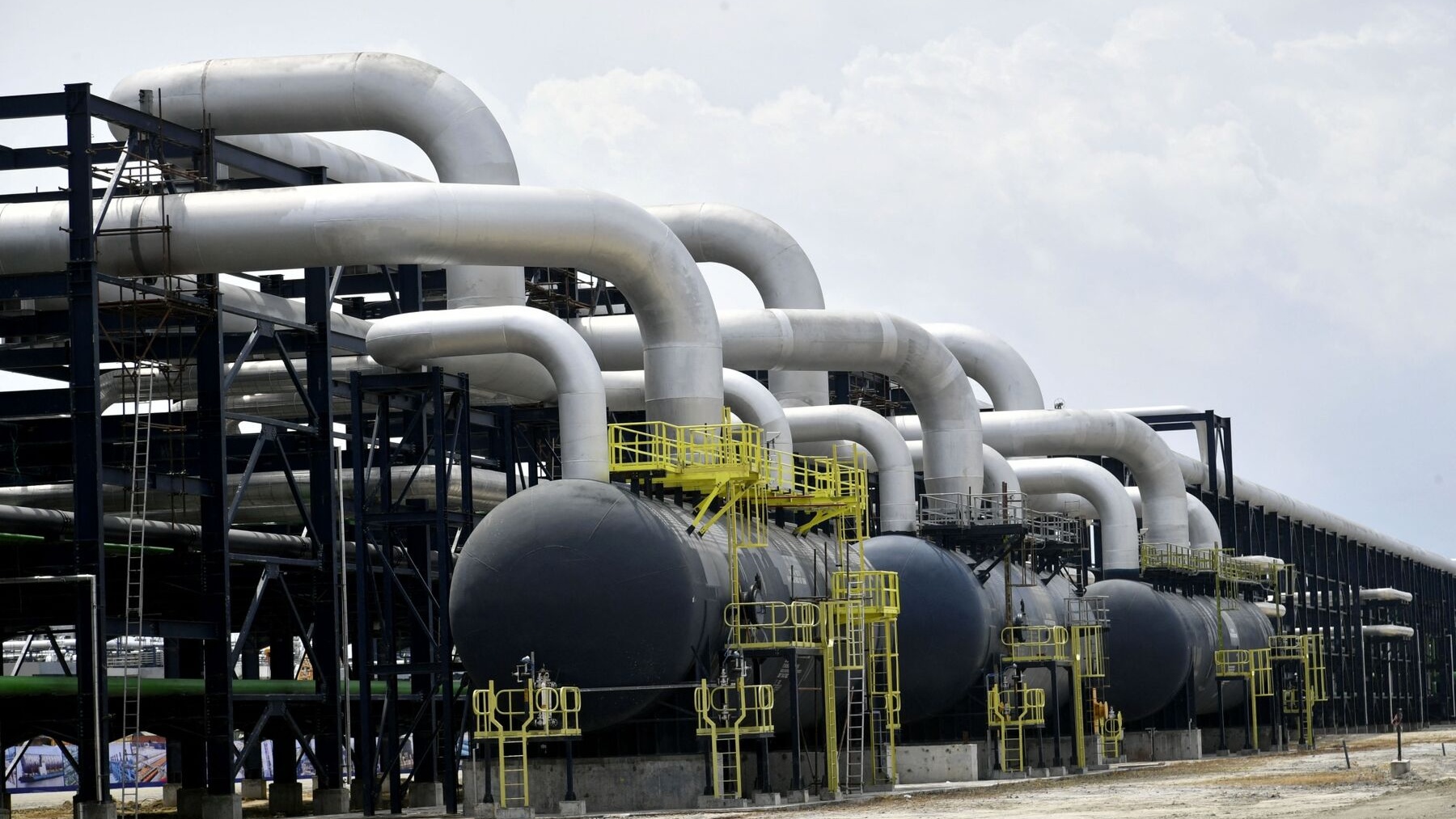
Nigeria is on course to build more new refineries than any other country on earth, a development that could reshape how Africa sources its fuel and reduce the continent's decades-long dependence on refiners in Europe, the United States and Asia.
According to a new report by US-based energy research firm Industrial Info Resources (IIR), cited by The Punch, Nigeria currently has 24 grassroots refinery projects at various stages of development, all expected to come on stream before 2031. That places the country ahead of the United States and Iran, which each have 11 projects in the pipeline, Iraq with eight, and China with five. IIR said it is tracking $10.74 billion worth of modular refinery capital spending in Nigeria scheduled for completion between 2026 and 2030, a figure that makes Nigeria the global leader in new refinery development by project count.
IIR Vice President of Energy Intelligence Hillary Stevenson said Nigeria's operational refining capacity currently stands at 732,000 barrels per day (bpd), and could rise to 2.635 million bpd by the end of 2030 if the pipeline is realised. Most of that increase, Stevenson said, will come from grassroots (newly built) plants, which account for 1.119 million bpd of the projected growth, of which 444,000 bpd is already under construction or fully engineered.
From crude exporter to fuel importer, and back again
The scale of the ambition only makes sense against the backdrop of Nigeria's troubled refining history. Despite being Africa's largest crude oil producer, the country spent much of the last two decades exporting raw crude while importing the vast majority of the refined fuel it consumed. State-owned refineries in Port Harcourt, Warri and Kaduna, with a combined nameplate capacity of roughly 445,000 bpd, sat largely idle after 2020 due to years of poor maintenance and underinvestment, forcing Nigeria to import 90 to 95 percent of its refined products, according to Industrial Info Resources.
That began to change with the commissioning of Aliko Dangote's Lekki refinery, which started processing crude in early 2024 and became the largest single-train refinery in the world, with a 650,000 bpd crude distillation unit. Industrial Info Resources data shows the Dangote plant helped cut Nigeria's gasoline import bill from $14.06 billion in 2024 to roughly $10 billion in 2025, while the refinery has also begun exporting petrol to Ghana, Angola, South Africa and Cameroon.
Nigeria's total refining capacity now stands at 684,500 bpd, largely on the back of Dangote's output. By 2030, Dangote plans to expand its own capacity to 1.4 million bpd, while other private developers plan to add roughly 1.17 million bpd through smaller modular plants, according to Industrial Info Resources. If all of that materialises alongside the wider 24-project pipeline, Nigeria's combined refining capacity would comfortably exceed the country's domestic fuel demand, which industry estimates place at around 500,000 to 600,000 bpd, freeing several million barrels a day for export across the region.
What it could mean for the rest of Africa
Africa consumes an estimated 4 million bpd of refined petroleum products, and much of that has historically been sourced from refiners in Northwest Europe, the US Gulf Coast and India. A Nigerian refining hub of the scale being projected would give West African buyers a much closer alternative source of supply, cutting shipping distances and freight costs for neighbours such as Ghana, Ivory Coast, Senegal and Cameroon compared with transatlantic cargoes.
There are also currency implications. Fuel imports priced in US dollars have been one of the biggest drains on foreign exchange reserves across West and Central Africa, a dynamic that has repeatedly pressured local currencies and fed domestic inflation. Deeper intra-African fuel trade, potentially settled through mechanisms envisaged under the African Continental Free Trade Area (AfCFTA), could ease some of that pressure over time, though this remains a longer-term structural shift rather than an immediate outcome of Nigeria's refinery build-out.
Nigeria is not acting alone. OPEC's 2025 World Oil Outlook projected that Africa as a whole will add 1.2 million bpd of new refining capacity by 2030, led by Nigeria, Angola and Uganda. Angola's 200,000 bpd Lobito refinery and 100,000 bpd Soyo refinery, and Uganda's planned 60,000 bpd Hoima facility tied to its Lake Albert oil development, are part of that broader continental build-out, alongside modular projects emerging in Ghana, Guinea-Conakry and the Republic of Congo. OPEC estimates Africa will need more than $40 billion in refining investment by 2030 to meet these ambitions, and over $60 billion more in the years beyond.
The execution risk that could slow it all down
Turning 24 planned refineries into operating plants is a different challenge from announcing them. Nigerian refineries depend on guaranteed domestic crude allocation, and the country's upstream sector has been repeatedly disrupted by crude theft and pipeline vandalism in the Niger Delta. The Nigerian Upstream Petroleum Regulatory Commission has said crude production climbed to 1.735 million bpd (combined crude and condensate) in June, the highest level since April 2020, but output remains well below the levels needed to comfortably feed both export commitments and an expanded domestic refining base.
A large share of the 24 projects tracked by Industrial Info Resources are modular refineries rather than full deep-conversion plants. Modular units are cheaper and faster to build, but they are generally limited to producing straight-run fuel oils and diesel, and require secondary processing units to yield higher-value products such as high-octane gasoline. That means headline capacity figures may overstate how much of the new output can directly displace imported petrol without further investment.
Distribution poses a separate set of problems. Moving 2.64 million bpd of refined product across West Africa would require upgrades to regional pipeline networks, deepwater port terminals and cross-border customs processes that, in many cases, have lagged behind the pace of refinery construction itself. Nigeria's own experience with the Dangote refinery, which faced years of delay tied to power supply issues before its 2024 commissioning, is a reminder that the gap between a project's announced timeline and its actual startup can run into years.
Comments