 By
By 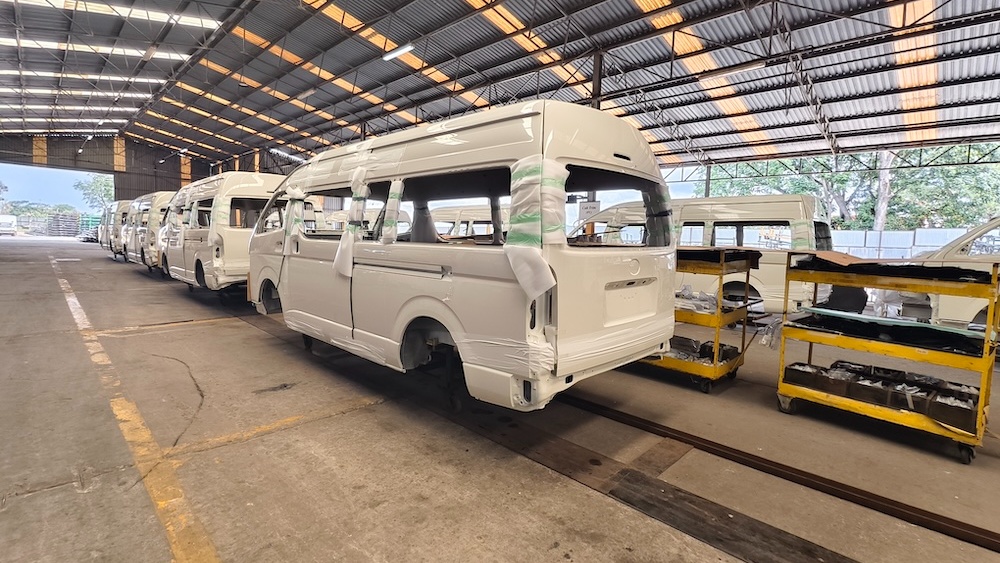
When Rideence Africa Limited announced a KSh 320 million investment to establish Kenya's first dedicated electric vehicle assembly line at the Associated Vehicle Assemblers (AVA) plant in Mombasa in early February 2026, the headlines wrote themselves. "Kenya's EV Revolution," "Local Manufacturing Milestone," "3,000 Jobs Created." The narrative was compelling: Chinese investment bringing green technology and industrialization to Kenya's shores.
But beneath the press releases and government enthusiasm lies a more complex story, one that reveals how "local assembly" might be less about Kenya's industrial development and more about solving China's massive overcapacity crisis while gaming tax incentives through clever logistics.
The Announcement: Progress on Paper
The numbers sound impressive. Rideence plans to assemble 152 electric vehicles by the end of February 2026, 132 Henrey electric taxis and 20 Joylong electric high-roof matatus. The company promises production capacity of 5-10 vehicles daily, with prices potentially dropping by up to 25%, particularly for the Joylong vans currently retailing at Sh7 million. The charging network will expand from 16 to 100 stations nationwide by year's end.
The economic promises are equally attractive: at least 3,000 direct and indirect jobs, with Rideence having already invested over Sh1.4 billion in Kenya since 2023. The company targets 15-25% local component sourcing in the short term, with a long-term goal of 40-60% local content.
On paper, it's a win-win. Kenya gets manufacturing jobs and cheaper EVs. Rideence gets market access. Everyone celebrates.
But walk the streets of Nairobi, scroll through Kenyan social media, or talk to potential buyers, and a different picture emerges.
The Consumer Reality: "It's Just a Tuk-Tuk on Four Wheels"
Here's what the press releases don't tell you: Kenyans largely don't want Henrey cars.
The Henrey vehicles—small, compact, utilitarian—face a perception problem that no amount of government incentives can overcome. To many Kenyans, they look and feel more like enclosed tuk-tuks than actual cars. And in a market where vehicle ownership carries significant social currency, that's a deal-breaker.
Social media comments tell the story. When Henrey vehicles are posted, the responses are brutal. "Why would I downgrade from a proper car to this?" "Looks like a toy." "I'd rather take a matatu." The contrast with BYD's reception is instructive, Chinese EVs that maintain traditional car proportions and aesthetics are met with enthusiasm. The problem isn't EVs. It's these EVs.
The issue runs deeper than aesthetics. It's about ego, status, and what car ownership means in Kenya. People want the pride of a car, not a vehicle that invites ridicule. They want what they've always wanted: a Toyota, a Nissan, a Subaru—just electric. Not a reimagined mobility solution that feels like a compromise.
If Toyota or Nissan announced an assembly plant in Mombasa to build electric versions of their popular models, the market response would be entirely different. The technology would be the same, but the product would respect what consumers actually want.
So who's buying Henreys? Primarily people for whom price trumps everything else, and fleet operators attracted by government incentives. Not because they love the product, but because with tax breaks, it's the cheapest option available.
Which raises an obvious question: if the product isn't compelling on its own merits, what's really driving this "local assembly" push?
The China Context: An Industry Drowning in Overcapacity
The timing of Rideence's Kenyan expansion isn't coincidental. It's strategic, and it's driven by forces far beyond Kenya's borders.
China's automotive industry is in crisis, not from lack of production capability, but from too much of it. Chinese automakers currently have idle production lines capable of making up to 20 million petrol cars per year. The country's $1.2 trillion trade surplus is increasingly fueled by what Beijing calls the "New Three" industries: Electric Vehicles, Lithium-ion Batteries, and Solar Cells. These sectors have been in deflation for 39 consecutive months, a clear sign of overproduction.
The numbers are staggering. Africa has seen a 184% increase in Chinese EV imports in 2025 compared to 2024, reaching over $1 billion in sales. But here's the crucial context: Chinese EVs are facing massive tariff walls in their primary target markets. The EU has imposed 37% additional duties on Chinese EVs. The US went even further, slapping on 100% tariffs. Canada followed suit.
Shut out of lucrative Western markets, Chinese automakers needed somewhere to send their surplus capacity. And they found it: the Middle East and Africa, where regulatory frameworks are weaker, environmental standards less stringent, and governments eager for any investment they can label "manufacturing."
Industry analysts are blunt about what's happening. There's growing concern that Africa could become a "dumping ground" for surplus Chinese EVs that can't find buyers elsewhere. The continent becomes the relief valve for an industry that built far more production capacity than global demand can absorb.
Enter the "local assembly" model, a sophisticated approach that makes everyone feel better about what's essentially surplus offloading.
The CKD Game: Tax Arbitrage Dressed as Industrialization
Here's where it gets interesting. Rideence isn't manufacturing cars in Kenya. They're importing completely knocked down (CKD) kits from China and assembling them in Mombasa. The difference matters enormously.
In the automotive industry, the CKD approach can yield duty savings of 30% to 60% compared to importing completely built-up (CBU) vehicles. The math is simple: governments offer reduced import taxes for CKD kits to encourage "local manufacturing." Never mind that no actual parts are being manufactured locally—the assembly process is enough to unlock the incentives.
Kenya's government has been particularly generous. EV assemblers are exempt from the 35% import duty on fully-built units. Excise duty is reduced from 20% to 10%. EVs are exempted from VAT entirely. These aren't minor benefits, they're massive competitive advantages that make it nearly impossible for importers to compete on price.
This is how Rideence can promise a 25% price reduction. It's not because they've revolutionized manufacturing or achieved economies of scale. It's because the Kenyan government is subsidizing the final price through tax exemptions designed to promote "local production."
But there's another advantage to the CKD model that rarely gets discussed: shipping economics.
You can pack far more disassembled car parts into a shipping container than you can fully assembled vehicles. The container density is dramatically higher, reducing per-unit shipping costs. For a manufacturer facing overcapacity in China and looking to move surplus inventory, this matters. You can flood a market more efficiently with CKD kits than with finished vehicles.
So Rideence hits two birds with one stone: access preferential tax treatment by claiming to support local manufacturing, while simultaneously moving more units per shipping container than CBU imports could manage.
It's elegant. It's profitable. But is it industrialization?
The Localization Myth: Screwdrivers Don't Build Industries
Let's examine what "local assembly" actually means in the Henrey plant.
Workers in Mombasa will bolt together parts manufactured entirely in China. The sophisticated components (electric motors, battery management systems, power electronics, chassis assemblies, suspension systems) all come from China. The assembly process is essentially the automotive equivalent of IKEA furniture: follow the instructions, connect the pieces, done.
Rideence's targets tell the story. They aim for 15-25% local content in the short term, with a long-term goal of 40-60%. But what counts as "local content"? Industry insiders suggest it's primarily basic components: trim pieces, fasteners, maybe some wiring harnesses, potentially battery packs assembled from imported cells. Nothing that requires significant technical capability or represents genuine technology transfer.
The Kenya Revenue Authority (KRA) has grown suspicious of such arrangements. They're now proposing stricter compliance requirements for assemblers to provide detailed reports on sourcing of components to meet local content thresholds. Why? Because there's evidence of misuse of the CKD importation scheme, where fully assembled units are being imported as CKD kits to avoid taxes, a practice so brazen it required regulatory intervention.
Real industrialization involves building supplier ecosystems, developing technical capabilities, creating engineering jobs, and fostering innovation. Screwdriver assembly does none of these things at scale. The 3,000 jobs Rideence claims sound impressive until you realize most are low-skill assembly positions that could disappear the moment tax incentives change or the Chinese market shifts.
Compare this to how countries like Thailand or South Africa built their automotive industries. They demanded genuine local content, forced technology transfer, developed local engineering capabilities, and built comprehensive supplier networks. They used market access as leverage to secure real industrialization, not just assembly operations.
Kenya is getting the assembly. China is keeping everything else.
Infrastructure: Putting the Cart Before the Horse
There's also the small matter of whether Kenya is actually ready for mass EV adoption.
Rideence plans to expand the charging network from 16 stations to 100 by the end of 2026. In a country where people routinely drive hundreds of kilometers between cities, 100 charging stations is a drop in the bucket. For comparison, the United States, with far more developed infrastructure, has over 140,000 public charging points and still struggles with range anxiety.
The infrastructure challenge creates a perverse situation: EVs are being pushed into a market that isn't ready for them, primarily because government incentives make them artificially cheap. Consumers who buy based on price alone may discover too late that charging infrastructure doesn't support their actual usage patterns.
This isn't to say EVs don't have a future in Kenya, they absolutely do. But the sequencing matters. Building charging infrastructure, developing electricity grid capacity, training mechanics, and establishing spare parts networks should precede mass market rollout, not follow it.
Instead, we're seeing the opposite: push the vehicles into the market first, figure out the infrastructure later, all because the primary driver is moving Chinese surplus inventory, not developing Kenya's transportation ecosystem.
Following the Money: Who Really Benefits?
Let's be clear about the economics at play.
Rideence gets to move surplus inventory that might otherwise sit in Chinese warehouses. They access a market where they can undercut competitors not through superior products or efficiency, but through tax arbitrage. They get positive PR for "investing in Kenya" while the actual manufacturing remains in China. They face a market with limited alternatives and consumers whose choices are constrained by price sensitivity.
The Chinese government gets to reduce domestic overcapacity pressure, maintain production levels at home, and expand global market share for Chinese EVs. They can point to African "partnerships" while the technology, IP, and valuable jobs remain in China.
The Kenyan government gets photo opportunities, ribbon-cutting ceremonies, and the ability to claim they're attracting foreign investment and promoting local manufacturing. Politicians can tout job creation and green energy leadership.
But what does Kenya actually get?
Low-skill assembly jobs that depend entirely on continued Chinese supply chains. No technology transfer. No engineering capabilities. A market flooded with vehicles many consumers don't actually want but buy because government policy makes them the cheapest option. Dependence on imported parts that could be disrupted by currency fluctuations, trade disputes, or supply chain shocks.
And perhaps most concerning: the opportunity cost. Every tax dollar foregone to incentivize Henrey assembly is a tax dollar not available for schools, hospitals, roads, or genuine industrial development. Every container slot filled with Chinese CKD kits is a slot not available for capital goods that could build actual manufacturing capacity.
The Uncomfortable Questions Nobody's Asking
If Kenyan assembly is genuinely more efficient than Chinese production, why do companies need 30-60% tax breaks to make it work?
If these vehicles are compelling products, why aren't consumers excited about them?
If this represents genuine industrialization, why is essentially zero manufacturing actually happening in Kenya?
If local content requirements matter, why are they set so low and enforced so weakly?
If EV adoption is the goal, why isn't infrastructure development happening first?
These aren't rhetorical questions. They're the questions that should be asked before governments commit to long-term tax incentives that may be subsidizing Chinese overcapacity management rather than Kenyan industrial development.
What Real Localization Would Look Like
It's worth considering what genuine automotive industrialization might look like for Kenya, because the contrast with the Henrey model is stark.
Real localization would start with technology transfer agreements that require Chinese partners to train Kenyan engineers in EV design, battery technology, and power electronics. It would demand that a percentage of R&D happen in Kenya, not just assembly.
It would build supplier ecosystems by requiring gradual increases in local content with specific targets: first simple components, then more complex parts, eventually major systems. Thailand's automotive industry offers the playbook, they started with basic assembly and over decades developed comprehensive local supply chains.
It would invest in technical education, funding programs to train Kenyan engineers in EV technology, battery chemistry, power electronics, and automotive software. The jobs created would be engineering positions, not just assembly line work.
It would use market access as leverage, telling Chinese manufacturers: if you want preferential access to Kenyan consumers, you must bring genuine manufacturing, not just assembly. You must share technology, not just ship CKD kits.
It would develop infrastructure first (a robust charging network, grid upgrades, standardized charging protocols) before pushing mass adoption.
And critically, it would produce vehicles that Kenyans actually want to buy, not just vehicles they can afford with government subsidies.
None of this is happening with the Henrey model. And that's not an accident, it's by design. The current model serves Chinese industrial policy and Kenyan political narratives. Whether it serves Kenya's long-term economic interests is a very different question.
The Broader Pattern: Africa as China's Pressure Relief Valve
The Henrey plant in Mombasa isn't an isolated case. It's part of a broader pattern across Africa where Chinese manufacturers, facing overcapacity at home and tariff walls in developed markets, are establishing "assembly" operations that provide market access while maintaining control of actual manufacturing.
Similar dynamics are playing out in automotive, electronics, appliances, and other sectors. The model is consistent: ship CKD components, assemble locally to access tax incentives, claim to support local manufacturing, maintain all valuable activities in China.
For African governments desperate to show economic progress and job creation, it's tempting. You get to announce foreign investment and manufacturing jobs without the difficult work of building genuine industrial capacity.
But the opportunity cost is enormous. Every dollar of tax incentives given to support screwdriver assembly is a dollar not invested in building real manufacturing capability. Every year spent celebrating assembly plants is a year not spent developing the technical skills, supplier networks, and innovation ecosystems that drive genuine industrialization.
Countries that successfully industrialized—South Korea, Taiwan, Thailand, even China itself—did so by using market access as leverage to demand technology transfer, local content, and genuine manufacturing. They were patient, strategic, and willing to make tough demands of foreign investors.
Kenya appears to be choosing the easier path: celebrate assembly, call it manufacturing, and hope nobody asks too many questions about where the actual value creation is happening.
A Call for Honest Conversation
None of this is to say that Rideence is acting improperly or that the Henrey plant should be opposed. Companies respond to incentives, and Rideence is playing by the rules Kenya has established. The issue isn't with them, it's with a policy framework that confuses assembly with manufacturing and fails to demand genuine industrial development.
Nor is this to dismiss the potential value of EV adoption in Kenya. Electric mobility has genuine environmental and economic benefits. But those benefits should be pursued strategically, with infrastructure development, consumer education, and yes, eventual local manufacturing. Not through dumping subsidized vehicles that consumers don't particularly want into a market that isn't ready for them.
What's needed is an honest conversation about what "local assembly" actually means, what Kenya is getting from these arrangements, and whether the tax incentives being deployed are actually advancing long-term industrial development or simply subsidizing Chinese overcapacity management.
That conversation should include some uncomfortable questions:
Are we confusing assembly with manufacturing because assembly is easier to achieve and makes for better headlines?
Are tax incentives being deployed based on sound industrial policy or political expediency?
Are we building the foundation for a genuine automotive industry or just creating dependent assembly operations that could disappear overnight?
Are the jobs being created the kind of jobs that build long-term economic capability, or are they low-skill positions that could be automated or relocated at any time?
Is the opportunity cost of foregone tax revenue justified by the actual benefits being delivered?
The Path Forward
If Kenya is serious about automotive industrialization rather than just assembly, the policy framework needs to change.
First, local content requirements should be meaningful and escalating. Start at 20%, sure, but require 40% within three years, 60% within five. If companies can't meet those targets, they don't get the tax incentives. Simple.
Second, technology transfer should be mandatory. Foreign assemblers should be required to establish R&D facilities in Kenya, train Kenyan engineers, and share technical knowledge. Market access should come with strings attached.
Third, infrastructure development should be front-loaded. Build the charging network before pushing mass EV adoption. Upgrade the grid before it becomes a bottleneck. Train mechanics before vehicles hit the road in large numbers.
Fourth, consumer protection matters. If we're using tax policy to push EVs into the market, we owe consumers proper infrastructure, reliable after-sales service, and products that meet genuine needs, not just price points.
Fifth, transparency is essential. Companies receiving tax incentives should be required to publish detailed reports on local content, sourcing, employment, and actual manufacturing activities. If the public is subsidizing these operations through foregone tax revenue, the public deserves to know exactly what they're getting.
Sixth, and perhaps most importantly: stop celebrating assembly as if it were manufacturing. Words matter. Assembly is assembly. Manufacturing is manufacturing. Industrial policy that can't distinguish between the two is industrial policy that will fail.
Conclusion: Choosing Between Easy Narratives and Hard Progress
The Rideence Henrey assembly plant in Mombasa represents a choice, not just for Kenya, but for Africa.
One path leads to easy narratives: foreign investment, job creation, local manufacturing, green technology. This path produces nice headlines, ribbon-cutting ceremonies, and photo opportunities with Chinese executives and Kenyan ministers smiling in front of assembly lines.
The other path is harder. It requires making tough demands of foreign investors. It means being willing to forgo short-term job creation in favor of long-term capability building. It involves developing technical education systems, building supplier ecosystems, demanding technology transfer, and accepting that real industrialization takes decades, not years.
The first path gives us assembly plants where workers bolt together Chinese parts to create vehicles many Kenyans don't particularly want but buy because government policy makes them artificially cheap. The second path gives us the foundation for genuine automotive manufacturing capability that could, over time, make Kenya a regional hub for vehicle production.
Right now, we're choosing the first path. And we're calling it progress.
But progress isn't measured in press releases or ribbon cuttings. It's measured in technical capabilities developed, value added locally, and whether the jobs created today will lead to better jobs tomorrow. By those measures, screwdriver assembly of surplus Chinese EVs falls short.
The KSh 320 million investment in the Mombasa plant might be exactly what Rideence needed: a way to move surplus inventory while accessing tax breaks in a market with limited alternatives. Whether it's what Kenya needed is a different question entirely.
And until we're willing to ask that question honestly, and answer it with more than just celebration of "local assembly", we'll continue to confuse activity with progress, and wonder why after all these ribbon cuttings, genuine industrialization remains elusive.
The uncomfortable truth is this: if a car manufacturer can only compete in your market because of 30-60% tax breaks, and if consumers only buy the product because subsidies make it the cheapest option, and if zero actual manufacturing is happening locally, you don't have industrial development. You have subsidized dumping dressed up as partnership.
Kenya deserves better. The question is whether we're willing to demand it.
Comments