 By
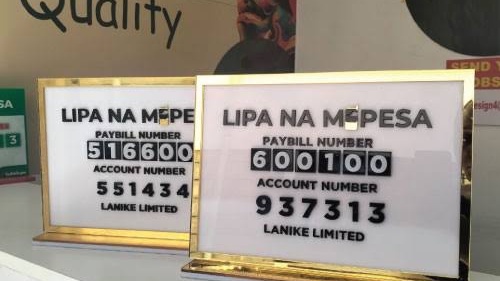
The Kenya Revenue Authority (KRA) and Safaricom are in talks to let M-Pesa generate electronic tax invoices for small businesses that receive payments through Till Numbers and Paybills. Under the arrangement being discussed, Safaricom would produce the invoices on KRA's electronic Tax Invoice Management System (eTIMS) on behalf of the traders and forward them to the tax authority.
The proposal targets a specific problem. Larger companies need valid eTIMS invoices from their suppliers before they can claim purchases as deductible business expenses, and many micro traders have struggled to issue them. If M-Pesa produces the invoice at the point of payment, the trader no longer has to generate it separately.
What the talks cover
The plan would apply to small traders who collect money through M-Pesa Till Numbers and Paybills. Safaricom is expected to create the eTIMS invoice and send it to KRA, which gives the tax authority wider visibility of transactions passing through the mobile money platform.
The report does not set out a launch date, a fee structure, or the technical design of the integration. Neither KRA nor Safaricom has published a framework for the arrangement in the sources reviewed for this article, and the talks are described as ongoing.
Why an eTIMS invoice matters to a small supplier

The pressure on small traders comes from tax law rather than from the technology itself. The Finance Act, 2023 amended Section 16 of the Income Tax Act to add a provision (Section 16(1)(c)) requiring business expenditure to be supported by an invoice generated through eTIMS before it can be deducted when computing taxable income, according to law firm Bowmans. The requirement applied from January 1, 2024. Expenses without a valid electronic tax invoice were no longer deductible for income tax purposes.
The same Act amended the Tax Procedures Act so that issuing eTIMS invoices became mandatory for all persons in business from September 1, 2023, not only those registered for VAT, as outlined by CM Advocates in a compliance guide.
The effect on supply chains was direct. When a buyer cannot obtain an eTIMS invoice for a purchase, it loses the tax deduction on that expense. Big firms have been dropping small suppliers unable to generate eTIMS invoices as they moved to comply with the law. A National Assembly Finance Committee recommendation at the time said it was impractical to demand eTIMS invoices for certain transactions, citing matatu and boda boda expenses as examples.
Earlier attempts to bring small suppliers into the system
KRA has already tried to ease the burden on the smallest sellers. In its Reverse Invoicing Guidelines, summarised by Bowmans, businesses and small-scale farmers with annual turnover not exceeding KES 5 million can have the purchaser raise the invoice on their behalf through the eCitizen platform. The supplier then approves the invoice through eCitizen or the USSD code *222#.
KRA also offers several ways to invoice: a web portal, client software, a mobile app known as eTIMS Lite for small traders and professionals, and USSD, according to CM Advocates.
In 2024, KRA's first effort to enrol a critical mass of micro, small and medium-sized enterprises through eTIMS had fallen short, which led to the push for reverse invoicing and buyer-initiated invoices.
The compliance stakes have since risen. The Finance Act, 2026 introduced penalty floors for failing to use eTIMS: a minimum of KES 100,000 for companies and KES 10,000 for individuals. The same report said KRA began an Incomes and Expenses Validation exercise on January 1, 2026, which compares what taxpayers declare in their income tax returns with what eTIMS has captured.
How the plan fits KRA's M-Pesa strategy
The talks follow a broader plan KRA disclosed in May 2026. George Obell, the Commissioner for Micro and Small Taxpayers, told The Star that KRA intends to connect real-time tax systems to M-Pesa and other digital payment channels. Businesses would transmit invoices in real time through web portals, mobile apps, USSD and APIs, so that each sale is visible to KRA immediately.
Obell projected that the reforms, together with others introduced over the past year, would raise general tax compliance by 16 per cent. Under the setup, a transaction through an M-Pesa-connected channel triggers eTIMS to generate a Payment Registration Number and settle the related tax without a separate declaration. It also reported that KRA is rebuilding iTax as an API-connected platform that can exchange data with banks, payment providers and public agencies, and that the rebuilt systems target 99.8 per cent availability. The reforms are tied to a Treasury goal of lifting Kenya's VAT-to-GDP ratio from 4 per cent to 6 per cent.
KRA's Micro and Small Taxpayers unit, created in 2024, has brought 511,000 taxpayers into the system and is targeting a further 320,000 registrations, according to reports on the May announcement.KRA received KES 19 billion for digital transformation projects including eTIMS upgrades.
Safaricom's earlier position on eTIMS
Safaricom has dealt with eTIMS from the other side of the counter. In 2024, the company appeared before the National Assembly's Finance and National Planning Committee on the Tax Laws (Amendment) Bill, 2024 and asked for M-Pesa transaction fees to be exempted from the eTIMS invoice requirement.
Safaricom argued that generating an invoice for each fee-bearing transaction would require integration of several systems on both its side and KRA's, and that the volume was the obstacle: the platform completes roughly 200 million transactions a month, according to the company's submission. It noted that the Tax Procedures (Electronic Tax Invoice) Regulations, 2024 already exempt fees charged by financial institutions, and asked for the same treatment for M-Pesa fees. The current talks concern a different set of invoices, those for goods and services sold by small traders who are paid through M-Pesa, rather than the fees Safaricom itself charges.
Data and privacy questions
Any arrangement that routes invoice data from M-Pesa to KRA touches an issue that has surfaced before. Treasury sought in 2016 to amend the Tax Procedures Act to give KRA ongoing access to M-Pesa records without a court order, and that Safaricom publicly resisted, citing the Constitution and the National Payment Systems Act. The outlet also noted that a 2024 Finance Bill proposal to amend the Data Protection Act to exempt KRA from certain privacy protections was withdrawn.
A statement by a former KRA domestic taxes official in October 2023, who acknowledged that some businesses were closing their Lipa na M-Pesa, Buy Goods and Pochi La Biashara accounts after KRA stepped up compliance checks.
A separate proposal floated in December 2024 by a senior economic adviser to President William Ruto would have turned paybill and till accounts into virtual electronic tax registers, starting with firms generating more than KES 5 million in annual sales. The sources reviewed for this article do not confirm whether that plan was implemented.
What has not been disclosed
Several details remain unpublished. The reporting does not state when M-Pesa-issued invoices would begin, whether traders must opt in, how the invoice would identify the buyer when a customer pays through a till, whether the service would carry a charge, or which tax obligations, such as VAT, the invoices would attach to.
It also does not say how the arrangement would interact with the reverse invoicing process that already allows buyers to raise invoices for suppliers with turnover below KES 5 million.
KRA and Safaricom had not issued a public statement detailing the arrangement at the time of writing.
Comments