 By
By 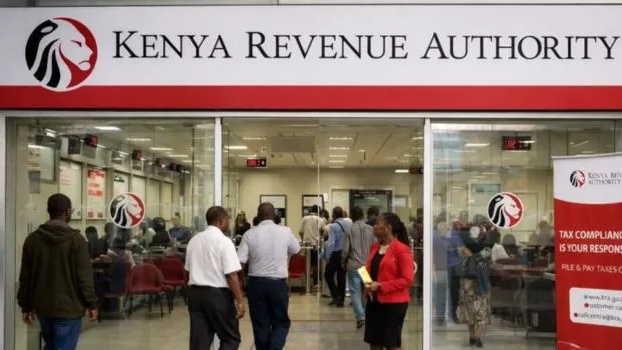
The Kenya Revenue Authority (KRA) fell Sh58.2 billion short of its ordinary revenue target in the first quarter of the 2026/27 financial year, leaving the National Treasury with a wider-than-planned fiscal gap at a time when debt repayments already absorb most of what the taxman collects.
Treasury data show ordinary revenue, which combines tax and non-tax receipts, reached Sh655.8 billion in the three months to September 2026. The Treasury had set the quarterly goal at Sh714 billion, putting the miss at about 8.2 per cent of target. Collections still grew 14.4 per cent from the Sh573.5 billion recorded in the same period last year, which means the authority is raising more money each year but not at the pace the budget assumes.
What the Treasury Reported
The figures come from a National Treasury presentation on budget performance for the period ending 30 September 2026. The Treasury said total revenue collection was Sh40.4 billion below target, a smaller gap than the ordinary revenue miss because ministerial Appropriations in Aid (A-i-A), the fees and charges ministries and agencies collect directly, came in Sh17.8 billion above target.
The ordinary revenue shortfall was concentrated in two categories:
Income tax: Receipts of Sh297.9 billion against a target of Sh323.3 billion, a shortfall of Sh25.4 billion. This was the largest gap among the tax heads.
Excise duty: Collections missed target by Sh16.3 billion.
On the spending side, expenditure ran Sh116.9 billion above the Treasury's quarterly projection. Recurrent spending exceeded its target by Sh59.3 billion and development spending by Sh34.7 billion. Transfers of the equitable share to county governments were Sh22.9 billion above target.
Taken together, weaker revenue and heavier spending pushed the first-quarter fiscal deficit to Sh329.1 billion, equal to 1.6 per cent of gross domestic product (GDP). The Treasury had planned for a quarterly deficit of Sh174.8 billion, or 0.8 per cent of GDP, according to a Sacco Review report on the Treasury data. The actual deficit is therefore close to double the projection.
Customs Offered Some Relief
Not every revenue line missed. KRA data for September, reported by Sacco Review and the Rio Times, show customs revenue of Sh90.05 billion for the month, up 5.8 per cent from Sh85.15 billion in September 2025. That was Sh965 million above the monthly target of Sh89.09 billion, a performance rate of 101.1 per cent. Non-oil customs revenue contributed Sh57.2 billion, beating its Sh55.42 billion target. Fertilisers, iron and steel, palm oil and rice were among the products that pushed collections above the expected level, while imports of motor vehicles and containerised cargo also grew.
The customs figures describe a single month rather than the full quarter, and KRA has not published a breakdown of how much of the increase reflects higher import volumes versus higher prices.
Separately, the Treasury's September fiscal outturn statement put total tax revenue for the month at Sh258.31 billion, a 14.85 per cent rise. The same statement showed domestic borrowing of Sh101.72 billion and external loans and grants of Sh54.05 billion in September, along with public debt service of Sh109.66 billion for the month.
A Pattern Rather Than a One-Off
The first-quarter miss follows a long run of shortfalls. In the first quarter of 2025/26, KRA missed its target by Sh90 billion, according to Treasury remarks in November 2025. The Treasury at the time attributed that gap to widening compliance gaps, administrative inefficiencies in enforcement and revenue-reducing measures introduced in the Finance Act 2025.
The gap widened as that year progressed. Ordinary revenue was Sh110.6 billion below target at the end of December 2025 and Sh161.9 billion below at the end of March 2026, when the Treasury reported collections of Sh1.81 trillion against a target of Sh1.98 trillion. At the time that every ordinary revenue category except import duty and a group of smaller revenue lines had missed target.
For the full 2025/26 year, KRA reported total collections of Sh2.844 trillion, a 10.6 per cent increase on the previous year, against a target of Sh2.969 trillion. Customs revenue of Sh988.78 billion exceeded its target (100.8 per cent), while domestic revenue of Sh1.851 trillion reached 93 per cent of its goal. KRA credited growth to the expanded taxation of digital services under the Finance Act 2025, debt recovery that brought in Sh144.82 billion, integration with government procurement systems, and tip-offs through its iWhistle platform, which helped recover Sh3.2 billion from 908 reported cases.
The digital services measure is relevant to Kenya's technology sector. According to a KRA performance summary carried by Khusoko, the Finance Act 2025 widened the tax to cover any income earned through the internet or electronic networks and removed the earlier Sh5 million threshold. KRA has also connected itself in real time to 143 betting and gaming companies, which supported excise collections from that sector. Betting taxes brought in Sh16.53 billion against a Sh14.26 billion target in 2025/26.
Targets and Capacity
The repeated misses as a sign that tax targets are unrealistic, noting that the authority records growth almost every year but regularly lands below projections. The Treasury has set an annual tax revenue target of about Sh2.86 trillion for 2026/27 and has revised some revenue projections in light of slower economic growth.
The Treasury's own assessment points to a structural problem. Domestic revenue as a share of GDP has fallen from 18.1 per cent in 2013/14 to a projected 13.9 per cent in 2026/27. The department identified revenue erosion, public debt and rising spending needs as the main pressures on the budget, and said cost rationalisation and revenue base expansion would remain its core reforms. Its plans include simplifying tax legislation, reviewing tax exemptions and growing non-tax revenue from public services.
Debt servicing is the largest claim on the money that does come in. Sacco Review, citing Treasury projections, reported that debt service is expected to consume nearly 80 per cent of ordinary revenue in 2026/27. That leaves limited room to absorb a revenue miss without either cutting spending or borrowing more, and the September figures show the Treasury leaning on domestic and external financing to cover the gap.
Pressure for tax relief has added to the difficulty. Reported earlier this year that calls to cut Pay As You Earn (PAYE) were growing even as collections lagged, and that further concessions without a lower revenue outlook would likely widen the shortfall. In 2025, Treasury Cabinet Secretary John Mbadi told the Senate that planned PAYE reductions had been shelved because KRA missed its 2023/24 targets, and that the proposal would be revisited once collection systems improved.
Who Is Affected
Digital platforms, online service providers, betting operators and importers are among the groups whose data KRA now accesses more directly, as the Treasury leans on enforcement, system integration and base-widening measures to close the gap. The income tax line, which missed by the widest margin in the quarter, is also the category that is under pressure for cuts.
Comments