 By
By 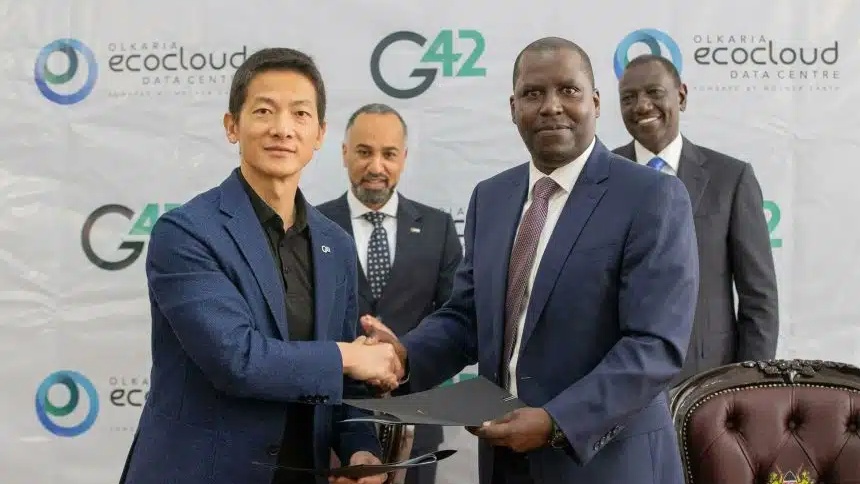
It was one of the most ambitious tech deals ever announced on African soil. In May 2024, President William Ruto stood before cameras during a state visit to Washington, D.C., and announced that Microsoft and UAE-based artificial intelligence firm G42 would invest $1 billion to build a geothermal-powered data center in Olkaria, Kenya. The plan was bold, the setting was dramatic, and the symbolism was hard to miss. Kenya would become a digital hub for East Africa, powered entirely by clean, renewable geothermal energy from the Great Rift Valley.
Two years later, that dream has officially been suspended.
President Ruto himself confirmed the news in late April 2026, speaking to grassroots leaders in Nairobi. His explanation was blunt: the data center would have required roughly one-third of Kenya's total installed electricity capacity, and the national grid simply cannot support it. "To switch on that one data center, we would need to shut off power for half the country," Ruto reportedly said. "That's when I knew there was a problem."
This is a story about infrastructure ambition meeting hard infrastructure reality. And it raises questions that go well beyond Kenya's borders.
What Was the Deal, and What Was Promised?
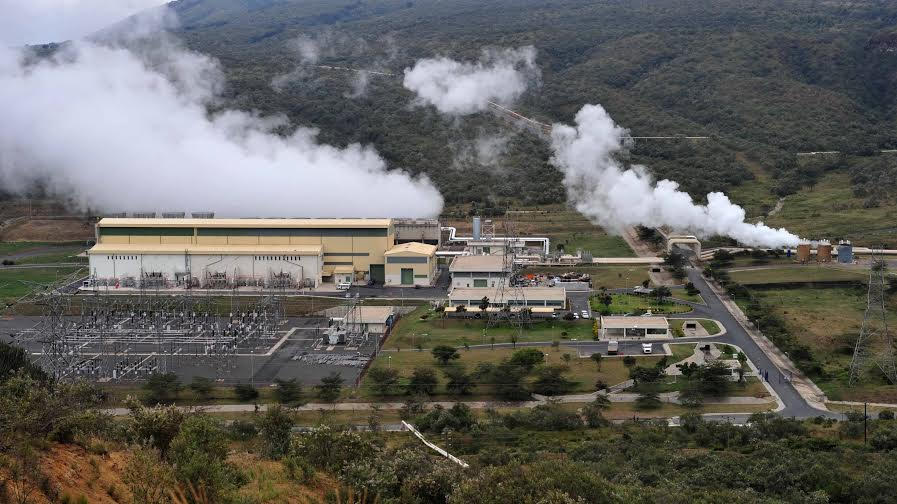
The Microsoft-G42 partnership was announced amid significant fanfare. G42, led by CEO Peng Xiao, was to lead the initial investment and handle construction on the Olkaria geothermal field in Naivasha, roughly 100 kilometres northwest of Nairobi. The site was chosen deliberately: Olkaria is home to Kenya's state-owned Kenya Electricity Generating Company (KenGen), which operates four geothermal power plants in the region with an installed geothermal capacity of approximately 800 megawatts.
The data center would run Microsoft Azure for a new East Africa Cloud Region, giving businesses and governments across the region access to cloud computing services. The first phase was to have a capacity of 100 megawatts and was expected to be operational within 24 months of the deal being signed, putting the target date squarely at May 2026. Ultimately, the project was designed to scale up to a full 1 gigawatt of power.
On paper, it looked like the ideal convergence of technology and sustainability. Kenya has one of the cleanest energy mixes on the African continent, with renewables accounting for about 80% of the national energy mix. Geothermal energy, unlike solar or wind, is baseload power: it runs 24 hours a day, 7 days a week, making it ideal for the constant, uninterrupted power demands of a large data center. Kenya even ranks seventh in the world for installed geothermal capacity.
The deal was also framed as a geopolitical win. It was orchestrated partly by the Biden administration as a way to strengthen US-Kenya ties and counter growing Chinese influence in East Africa.
Why It Stalled: The Numbers Don't Lie
The problem, as it turns out, was always hiding in plain sight.
Kenya's total installed electricity capacity is approximately 3,000 megawatts. The Microsoft-G42 data center, at full buildout, would have consumed 1,000 megawatts, which is one-third of the entire national grid. Even the first phase alone, at 100 megawatts, represents a significant chunk of what the country can reliably generate and distribute.
But the crisis runs deeper than just the data center. Kenya is already struggling badly with its power situation. By the end of January 2026, the country's system peak demand stood at 2,439 megawatts against a firm capacity of only 2,495 megawatts, leaving a reserve margin of just 2.3%. On paper, Kenya appears to have nearly 800 megawatts of installed capacity to spare, but in practice, only about 56 megawatts of firm, reliable headroom remains. That is almost nothing.
The grid's troubles don't stop there. In 2025, system losses due to unbilled or stolen electricity reached 23.36%, far above the regulator's allowable benchmark of 17.5%. Consumers in 2025 experienced an average of 8.39 hours of power cuts per month, nearly six times higher than the regulator's target of 1.5 hours. President Ruto himself admitted in November 2025, while speaking to Kenyans abroad in Doha, that the government was already carrying out deliberate load shedding between 5 pm and 10 pm in some areas just to keep the grid stable.
No new interconnected power plants had been commissioned in the four years preceding 2025. A government moratorium on new power purchase agreements, imposed in 2021, was only lifted in December 2025 by the National Assembly. That moratorium created a gap in Kenya's capacity pipeline just as demand was accelerating, driven by industrial growth, electric vehicles, new data centers, and an aggressive domestic connectivity programme.
Adding a 1 GW data center to this already strained system would not have been an upgrade. It would have been a catastrophe.
The Political Anatomy of a Stalled Deal
Beyond the technical realities, the timeline of this project's collapse reveals a pattern worth examining.
Semafor had reported as far back as September 2025 that the project had stalled, with developers having never broken ground. Government officials, speaking anonymously, confirmed that Kenya's technology ministry had developed a concept note for the project and submitted it to the National Treasury to unlock funding. The National Treasury declined to approve it. By August 2025, both Kenyan officials and Microsoft executives already knew the May 2026 operational target would not be met.
G42 declined to comment when news of the suspension broke. Microsoft did not immediately respond to media requests.
The announcement was made at a high-profile bilateral summit during Ruto's state visit to Washington. It checked every box for a presidential photo opportunity: a billion-dollar investment, a clean energy angle, a tech giant partner, and a development narrative for Africa. What it lacked was a feasibility study that took Kenya's existing grid realities seriously before the ink was signed.
This is not the first time an ambitious deal has been announced at an international forum, only to quietly unravel when the details are stress-tested. Letters of Intent and Memoranda of Understanding do not build infrastructure. They announce intentions. The hard work, the grid assessments, the treasury approvals, the procurement timelines, those need to be done before the cameras show up.
Kenya's Power Problem Is Not New. The AI Boom Makes It Urgent.
Here is what makes this story particularly important to understand in 2026: the global demand for data center power is growing at a pace that was almost unimaginable five years ago.
According to the International Energy Agency (IEA), data center electricity consumption surged by 17% in 2025 alone, with AI-focused data centers climbing even faster. Global data center electricity use is projected to roughly double from 485 terawatt-hours in 2025 to 950 terawatt-hours by 2030. That would represent about 3% of the entire world's electricity demand. The five largest tech companies combined spent more than $400 billion in capital expenditure in 2025 on infrastructure, and that figure is set to rise by a further 75% in 2026.
Even developed nations with robust grids are struggling to cope. In the United States, data center demand could reach 74 gigawatts by 2028, with a projected shortfall of about 49 gigawatts in available power access, according to Morgan Stanley Research. US data centers used around 4% of the nation's electricity in 2023, and that share is expected to rise to between 7% and 12% by 2028. In Ireland, which has become a European tech hub, data centers already consume about 21% of the country's electricity, with the IEA projecting that share could rise to 32% by 2026.
To address this, tech giants in the West are turning to nuclear energy. Microsoft struck a deal to reopen the Three Mile Island nuclear plant in the United States. The pipeline of agreements between data center operators and Small Modular Reactor (SMR) projects grew from 25 gigawatts at the end of 2024 to 45 gigawatts today. Goldman Sachs estimates that 85 to 90 gigawatts of new nuclear capacity would be needed to meet all projected data center power demand growth by 2030.
These are the countries that Kenya was implicitly competing with for hyperscaler investment. And they are struggling with power supply despite having vastly more grid capacity, infrastructure redundancy, and capital to deploy new generation.
Kenya has a 3 GW grid. The United States has a 1,200 GW grid.
Kenya's Data Center Future: Smaller, Smarter, Staged
None of this means Kenya cannot participate in the global data center economy. It means the participation must be calibrated to what the country can actually support right now.
The good news is that Kenya's data center market is still growing. According to reports, Kenya accounts for more than three-quarters of fresh data center capacity expected in East African markets by 2030. The country's renewable energy mix, its relatively strong digital infrastructure, its position as East Africa's financial and technology hub, and the emergence of a local talent ecosystem all make it an attractive market.
More realistic projects are already moving forward. Nxtra, a subsidiary of Airtel Africa, began construction of East Africa's largest data center in Kenya's Tatu City in late 2025. The facility will be 44 megawatts in capacity, slated for completion this year, and is designed to support AI-driven solutions and cloud services for businesses, startups, and governments. That is a meaningful, appropriately scaled facility that does not require a third of the national grid to operate.
Ruto has stated his intention to raise Kenya's power capacity to 10,000 megawatts by 2030, which he has linked to a controversial plan to raise $38 billion through asset sales and private capital. That target is ambitious to say the least, but it points in the right direction. Kenya needs to prioritise grid expansion before it can realistically court hyperscale data center investment.
The question is not whether Kenya can host large data centers. It is whether Kenya can build the power base to support them. The answer, right now, is no. But with the moratorium on new power purchase agreements lifted, and with serious reform of transmission infrastructure underway, the conditions for a more viable future are slowly taking shape.
What This Means for Kenya's Tech Ambitions
There is a temptation to frame the suspension of the Microsoft-G42 deal as a failure or an embarrassment. That would be unfair. Ruto made the right call. Connecting a 1 GW data center to a 3 GW grid with barely 56 megawatts of firm headroom, in a country already experiencing daily load shedding, would have been genuinely reckless. Ordinary Kenyans, small businesses, hospitals, schools, and factories would have paid the price in the form of even worse, more frequent blackouts.
What this story really highlights is the gap between the aspirational language of global tech summits and the grinding, unsexy work of building energy infrastructure. Kenya has world-class geothermal resources. It has a young, tech-savvy population. It has a growing startup ecosystem. But it cannot shortcut the need for reliable, sufficient electricity. The AI revolution is intensely power-hungry, and countries that want to host it need to have their energy house in order first.
The lesson for Kenya's policymakers is not to stop dreaming big. It is to do the feasibility work before the cameras arrive. The lesson for tech investors is that Africa's digital potential is real, but so are its infrastructure constraints, and those constraints demand honest engagement, not just headline-grabbing MOUs.
Kenya will get its moment. But it will need to build the grid first.
Comments