 By
By 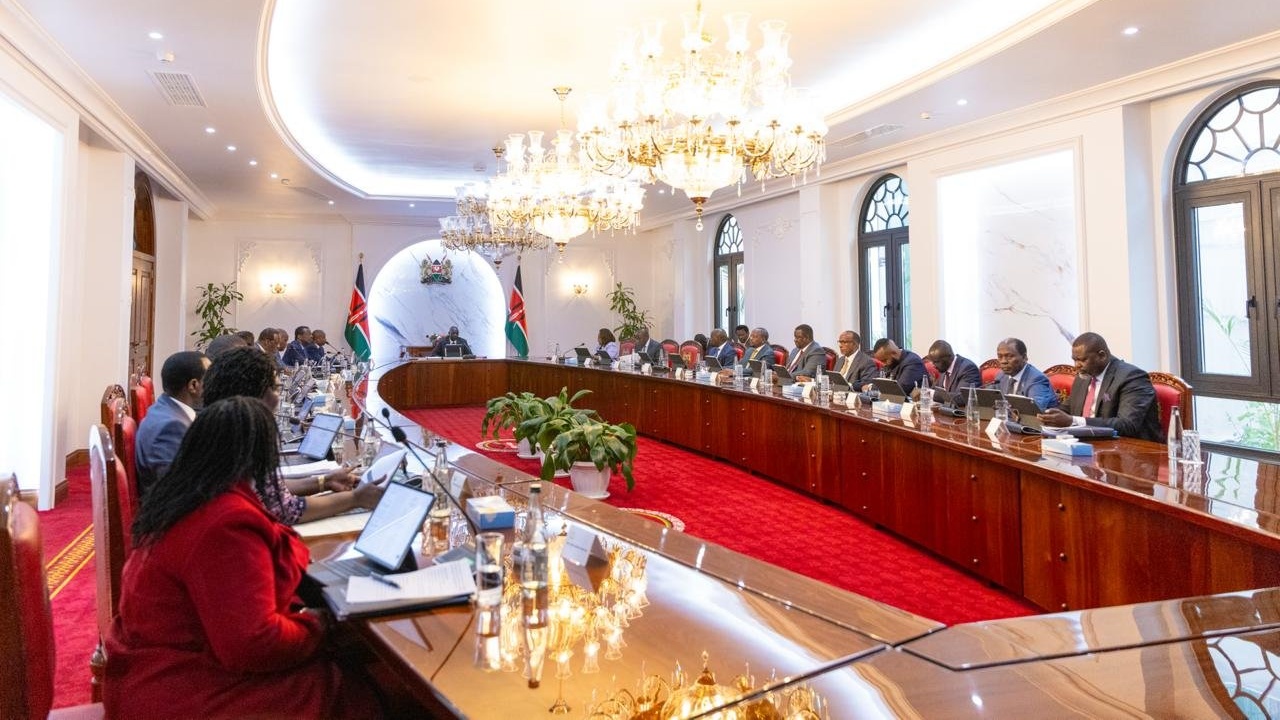
On June 30, 2026, during a Cabinet meeting chaired by President William Ruto at State House, Nairobi, the government established a Standing Cabinet Committee on Artificial Intelligence. It was announced in the same dispatch that ordered a DCI probe into a Ksh 6.2 billion payroll fraud scandal and approved a new National Business Process Outsourcing Policy, so it did not get the standalone headline treatment you might expect for a body meant to shape how an entire country handles AI. But it deserves closer attention, especially coming weeks after we broke down the Artificial Intelligence Bill, 2026 and its most glaring flaw: a training data disclosure requirement that most Kenyan AI developers cannot possibly comply with.
What the Committee Actually Does
According to the official Cabinet dispatch, the Standing Cabinet Committee on Artificial Intelligence exists to "steer Kenya's national AI strategy, coordinate policy across Government and position the country as a regional leader in the responsible development and adoption of artificial intelligence." Its stated functions are to advance AI-driven innovation, boost productivity, improve public service delivery, support job creation and inclusive economic growth, while putting in place "appropriate governance and safeguards."
Strip away the language and this is, at its core, a coordination body. It sits at Cabinet level, meaning it is chaired within the executive's own structure rather than as an independent regulator. Its job is not to write law or issue fines. It is to make sure that the various arms of government pulling in AI-related directions, from the ICT Ministry to the Communications Authority to the Data Protection Commissioner's office, are not working against each other.
That same Cabinet sitting also adopted the National Business Process Outsourcing Policy, aimed at positioning Kenya as a leading global outsourcing destination and capturing a share of a global BPO market Cabinet projects will exceed Sh68 trillion by 2030. The two announcements landing together is not a coincidence. AI and BPO are increasingly the same conversation. Kenya's pitch to global outsourcing clients now leans heavily on AI-augmented services, from customer support automation to data annotation work, and a government-level AI coordination body signals to investors that there is a single point of institutional accountability for that pitch.
The Institutional Traffic Jam This Adds To
Here is where things get complicated. Kenya does not currently lack bodies with a claim over AI governance. It has:
The National AI Strategy 2025-2030, launched in March 2025, which set out a five-year plan requiring an estimated Ksh 152 billion to implement, with roughly half of that earmarked for digital infrastructure.
The pending Artificial Intelligence Bill, 2026, sponsored by nominated Senator Karen Nyamu, currently before the Senate. If passed, it would create three entirely new institutions: the Office of the Artificial Intelligence Commissioner, the Artificial Intelligence Authority, and the Artificial Intelligence Advisory Council.
Existing regulators whose mandates already brush up against AI, including the Office of the Data Protection Commissioner, the Communications Authority, and the Kenya Information and Communications Technology Authority.
Now add the Standing Cabinet Committee on Artificial Intelligence to that list, and Kenya has at least five distinct bodies with some claim over how AI is governed in the country, before the Bill that would create three of them has even passed.
The law firm Bowmans has already flagged this exact overlap as a risk in its analysis of the AI Bill, noting that a business operating in Kenya could find itself answering to the AI Commissioner, the Data Protection Commissioner, and sector regulators simultaneously, with no clear line on who has final say. Business Daily's editorial board went further, calling the Bill's institutional design "counterproductive." A Cabinet-level coordination committee could, in theory, be the thing that resolves this by acting as the single table where all these bodies reconcile their mandates. Or it could become one more voice in a room that already has too many.
The Adoption Versus Development Problem, Again
We raised this in our earlier piece and it is worth restating plainly, because it is the crux of whether any of Kenya's AI governance effort, cabinet committee included, will actually work.
Kenya does not develop foundation models. It cannot. Training a model like Llama, Gemma, or Mistral requires computing infrastructure, capital, and specialised talent at a scale that is simply not available domestically, and this is true for nearly every country outside the US, China, and a handful of others in Europe and the Gulf. What Kenyan developers actually do, almost without exception, is download an open-weight model released by Meta, Google, or Mistral, and fine-tune or adapt it for a local use case. A Swahili customer service bot. A crop disease diagnosis tool. A fraud detection layer for mobile money.
This is not a technicality. It is the entire shape of the Kenyan AI economy, and most of Sub-Saharan Africa's for that matter. Microsoft's AI Economy Institute reported in January 2026 that Kenya's AI usage sits at 8.1 percent, the highest diffusion rate among its East African peers, and that figure describes a country of adopters, not a country of model builders.
The AI Bill's training data audit trail requirement, which would obligate developers to document how the underlying model was trained and what data went into it, is written for a country that builds models from scratch. Kenya is not that country, and pretending otherwise through legislation does not change the underlying economics of who trains foundation models and who fine-tunes them. A Cabinet committee focused on strategy and coordination is well placed to catch this kind of mismatch before it becomes law. Whether it will is a separate question, and one this committee's early output will answer.
Is This the Right Move?
My honest take: creating the committee is defensible, but it treats a symptom rather than the actual disease.
The real gap in Kenya's AI governance right now is not a coordination gap. It is that the legislative instrument furthest along, the AI Bill, was drafted with a "development" mental model bolted onto an "adoption" economy. A Cabinet committee cannot fix bad drafting. It can only, at best, make sure the eventual law and the national strategy are speaking to the same reality, and flag technical errors like the training data clause before they reach the President's desk for assent.
There is also a sharper critique worth sitting with, made recently by researchers at CIPESA, who argued that Kenya's problem is not an AI regulation gap at all but an accountability gap. Their point, stripped of its specifics, is that the institutions expected to enforce any new AI law, including the security and telecoms apparatus, have a track record that predates AI regulation entirely. A coordination committee sitting inside the executive branch does not resolve questions about who ultimately has the authority to halt a harmful AI deployment, because that authority question was never really about AI in the first place.
None of this means the committee is a bad idea. Regional leadership in AI adoption is a genuinely achievable goal for Kenya, given its existing digital infrastructure, its position in the BPO market, and its comparatively high AI usage rate. But regional leadership will be won or lost on whether Kenyan developers can build and deploy AI products without running into legislation written for a different kind of country. A Cabinet committee that spends its early months aligning the AI Bill with the reality of an adoption economy would be doing genuinely useful work. One that becomes a sixth layer of process without touching the Bill's core flaw will have added a title without solving anything.
What to Watch Next
The AI Bill, 2026 is still before the Senate, and public participation has not yet been formally opened. That remains the moment that matters most for developers and civil society to push back on the training data clause specifically. Whether the new Standing Cabinet Committee engages with that process, or simply runs parallel to it, will tell us a lot about whether this was a genuine course correction or a headline alongside a payroll fraud scandal.
This piece follows our earlier analysis of the Artificial Intelligence Bill, 2026: Kenya's AI Bill Says You Must Be Told When You Are Talking to a Chatbot. Here Is What It Actually Proposes.
Comments