 By
By 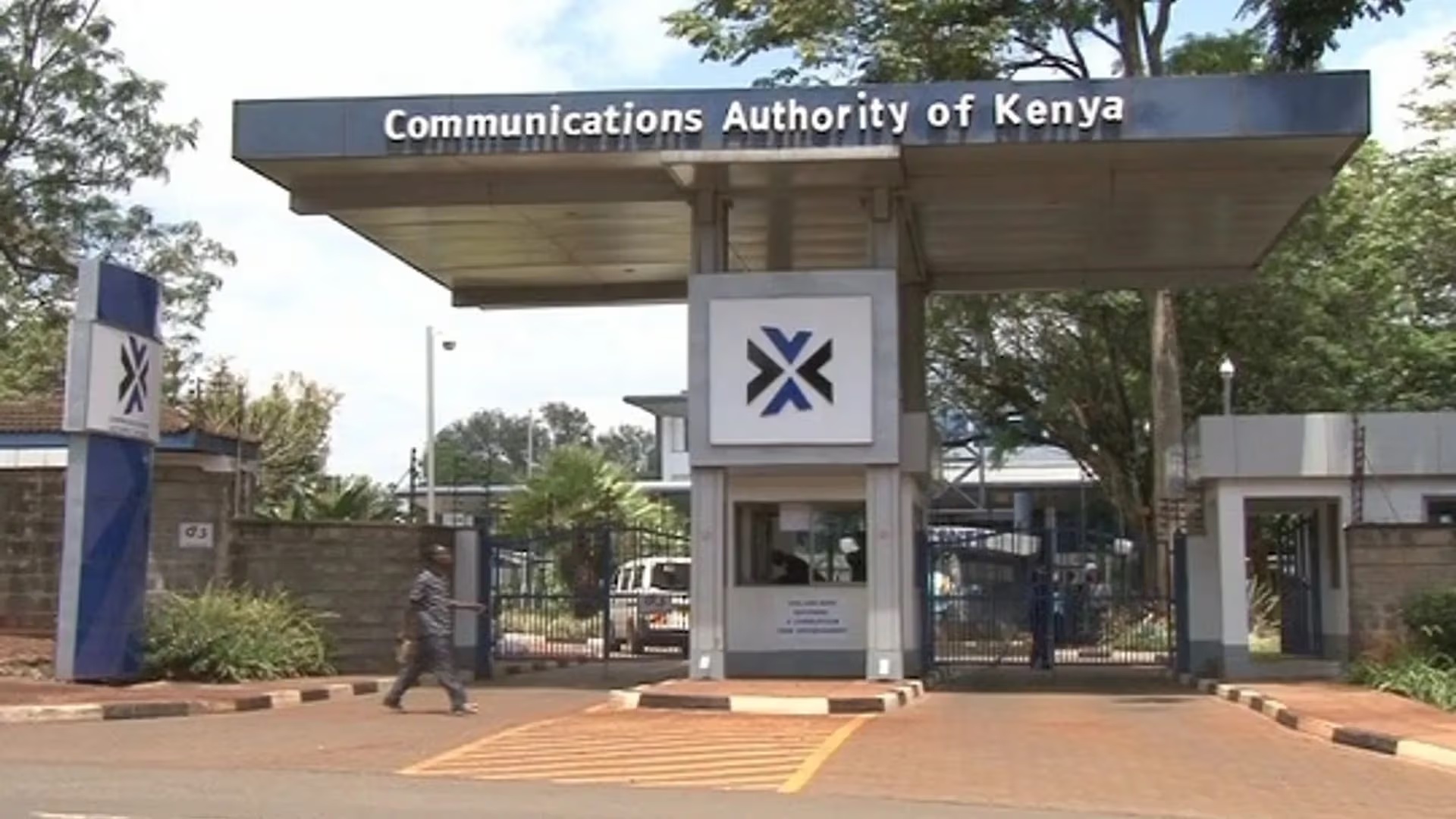
Kenya's Communications Authority wants to charge importers a fee every time they bring ICT equipment into the country and if you buy smartphones, laptops, routers, or any other tech hardware locally, the cost will eventually find its way to your receipt.
In a consultation paper dated March 3, 2026, signed by Director General David Mugonyi, the CA proposes to charge Ksh 15,000 per permit for commercial imports and Ksh 5,000 per permit for personal use imports, fees it says are necessary to sustain operations it currently runs at no charge.
The fees would apply to all permit applications processed through the National Electronic Single Window System (NESWS), the KenTrade-managed platform also known as the TradeNet System, through which every ICT equipment shipment ( from smartphones and laptops to routers and telecommunications infrastructure) must pass before customs clearance.
The CA has invited members of the public, importers, exporters, customs clearing agents, licensees, and other stakeholders in the ICT sector to submit their views on the proposal. The deadline for making submissions is April 30, 2026, via email to [email protected].
The window to push back is open. But understanding what you are pushing back on ( and why it matters beyond the headline number ) requires looking at how this fee sits inside a compliance framework that has been quietly expanding for two years.
What the Fee Actually Covers
The CA frames the permit processing fee as cost recovery for a three-stage evaluation process it currently performs for free.
The permit issuance process entails the checking stage, which counterchecks whether the equipment is type approved, the verification stage, which confirms the licensing status of the consignee and other regulatory requirements, and the final inspection stage, which authenticates the quantities and the make and model of the equipment as detailed in the import declaration form.
The entire process from checking to final inspection is required to be completed within the shortest possible time to avoid demurrage costs to importers. This, therefore, requires substantial resources to sustain efficient operations.
That is the CA's argument in its own words: we are already doing this work, we need to be funded to keep doing it efficiently, and a permit fee is the appropriate mechanism.
The logic is not unreasonable. Regulatory bodies that are chronically under-resourced do slow, inconsistent work which costs importers more in delays and demurrage than a processing fee would. A CA that can hire sufficient staff, maintain its systems, and process permits within a guaranteed turnaround is worth paying for in theory.
Whether this particular fee achieves that in practice is a separate question.
The Compliance Stack That Already Exists
The permit processing fee does not exist in isolation. It is the latest addition to a compliance framework that has been expanding steadily since 2019 and accelerated significantly in the past 18 months.
2019 — CA mandated use of the KenTrade TradeNet system for all ICT import and export permit applications. Paper submissions phased out.
October 2024 — CA implemented mandatory registration of all mobile phones, tablets, and computers before sale, a device-level requirement targeting counterfeit devices and grey market imports.
March 2025 — CA tightened the compliance framework further, mandating that all importers of ICT products for sale must hold the appropriate CA license and attach a valid compliance certificate to every permit application. Invoices were required to include model numbers and quantities for type approval verification. For internet-connected devices intended for sale, importers were required to submit technical specifications verifying IPv6 compliance.
March 2026 — The proposed permit processing fee: Ksh 15,000 per commercial permit, Ksh 5,000 per personal permit.
Each individual layer has a legitimate rationale. Together, they create a compliance burden that is meaningfully heavier than it was two years ago and the proposed fee adds a direct monetary cost on top of the existing documentation, licensing, and verification requirements.
The Real Impact: Who Pays and How Much
The per-permit fee sounds manageable in isolation. The impact depends entirely on how a permit is defined, specifically, whether a single permit covers an entire container shipment or applies per consignment, per product line, or per model.
The CA's notice does not specify this clearly, and that ambiguity is arguably the most important thing stakeholders should push on before April 30.
Here is why it matters. A large distributor importing a mixed container of 500 smartphones across 10 models, 200 laptops across 4 models, and 100 routers across 3 models could be looking at one permit or seventeen permits depending on how the CA defines the unit of application. At Ksh 15,000 per permit, the difference between those two interpretations is Ksh 15,000 versus Ksh 255,000 for a single shipment.
For large distributors moving multiple containers per month, the fee at the high end could add millions of shillings in annual compliance costs. Those costs will be passed to retailers. Retailers will pass them to consumers. The question is not whether prices go up, it is by how much and on which product categories.
The consumer most affected is not the person buying a flagship Samsung Galaxy or iPhone. Premium devices carry sufficient margin to absorb a per-permit fee spread across hundreds of units. The consumer most affected is the person buying an entry-level smartphone in the Ksh 10,000 to Ksh 20,000 range, a Tecno, Itel, or Infinix device where margins are thinner and the importer has less room to absorb additional costs without passing them on.
Kenya's smartphone penetration has grown precisely because affordable Android devices have been accessible to lower-income buyers. A policy that adds friction and cost to the import of budget devices hits the segment of the market that is furthest from full digital inclusion.
The Personal Import Question
The Ksh 5,000 fee for personal use imports is the provision that will affect individuals most directly and it is the most questionable element of the proposal.
Under the current framework, a Kenyan living abroad who ships a laptop home, a student whose parents send them a smartphone, or a professional who orders specialised hardware from overseas would all face a Ksh 5,000 permit processing fee on top of existing customs duties.
Charging a permit processing fee is ironic for a country said to be on the digital superhighway. It is also consistent with a pattern. The KRA sparked widespread criticism in 2023 by implementing a policy to levy taxes on personal effects, targeting international travellers arriving at JKIA and mandating that any goods exceeding a $500 valuation be subject to taxation. The CA's personal import fee follows a similar logic, extending a compliance burden designed for commercial actors to individuals who are not importers in any meaningful sense.
The CA's type approval framework exists to ensure devices meet Kenya's technical and safety standards. A device brought in for personal use by its owner poses no greater technical risk to Kenya's networks than the same device brought in commercially. The justification for applying a Ksh 5,000 fee to personal imports is thin.
The Type Approval Layer Underneath All of This
Before the permit processing fee even enters the picture, commercial importers already navigate Kenya's type approval system, a separate certification process that ensures devices meet Kenya's technical, safety, and network compatibility standards.
Type approval requires a filled application form, a letter of agency from the manufacturer or authorised distributor, a sample of the equipment in working condition, a technical manual and user manual in English, test reports from an ISO/IEC 17025 accredited lab, and a declaration of conformity from the manufacturer or accredited lab.
Typical processing times for type approval in Kenya range from four to eight weeks. That is the timeline before a product can be legally imported for sale, before the permit application, before customs clearance, before a single unit reaches a retailer's shelf.
For large manufacturers with established CA relationships and pre-approved device portfolios, this is a known and manageable cost. For a startup importing specialised hardware for the first time, or a small retailer bringing in a new product line, the combination of type approval timelines, compliance documentation, and now permit processing fees creates a real barrier.
Kenya's tech startup ecosystem has benefited from the relatively easy availability of hardware — developers can source components, IoT devices, and specialised equipment without excessive friction. A compliance framework that adds cost and delay to hardware imports affects that ecosystem more than it affects Safaricom's procurement department.
What Stakeholders Should Submit Before April 30
The consultation process is genuine, CA has accepted that public feedback can influence the final framework, and the April 30 deadline means there is time to organise a substantive response. Here is what the submission should focus on:
Clarify the permit unit definition. The CA must specify whether Ksh 15,000 applies per shipment, per consignment, per product category, or per SKU. This single clarification changes the financial impact by orders of magnitude for high-volume importers.
Exempt personal imports entirely. The technical justification for applying a compliance fee to individuals bringing in personal devices is not credible. The personal use tier should be removed from the proposal.
Build in a turnaround guarantee. If the CA is charging for permit processing, it should be contractually committed to a processing timeline. A fee with no service level agreement is a tax, not a service charge. Importers and customs clearing agents should demand a maximum processing time ( five business days is a reasonable benchmark) with refunds or waivers if the CA misses it.
Protect budget device imports. A tiered fee structure based on device value rather than a flat per-permit rate would distribute the cost more equitably — higher fees on high-value commercial imports, reduced or waived fees on low-cost consumer devices where the fee represents a larger percentage of the device's value.
Small importer relief. Startups, individual developers, and small businesses importing specialised or low-volume hardware should not face the same fee structure as large commercial distributors. A volume threshold or SME exemption would prevent the fee from functioning as a barrier to entry for exactly the kind of innovative hardware business Kenya's tech ecosystem needs.
The Bigger Pattern
This proposal sits inside a broader pattern of regulatory cost accumulation that Kenya's technology sector is navigating simultaneously. Type approval fees, compliance certificates, IPv6 documentation requirements, device registration mandates, KenTrade system fees, and now permit processing fees, each individually defensible, collectively significant.
The CA's job is to maintain the integrity of Kenya's communications infrastructure. That is genuinely important. Devices that do not meet technical standards can cause network interference, expose users to security vulnerabilities, and undermine the quality of the shared infrastructure that everyone depends on. A funded, well-staffed CA is better at that job than an under-resourced one.
But the design of the funding mechanism matters. A flat per-permit fee that falls equally on a company importing 10,000 units and a developer importing a single router for a proof of concept is a blunt instrument. Good regulatory design would distinguish between these cases rather than treating them identically.
The consultation window is open until April 30. The email address [email protected]. The CA has specifically invited importers, exporters, customs clearing agents, and ICT sector stakeholders to submit written representations. If this proposal affects your business or your ability to buy affordable technology in Kenya, that is the channel to use.
Are you an importer, retailer, or developer affected by the CA's proposed permit fees? Share your perspective in the comments and consider submitting formal feedback to the CA before April 30.
Comments