 By
By 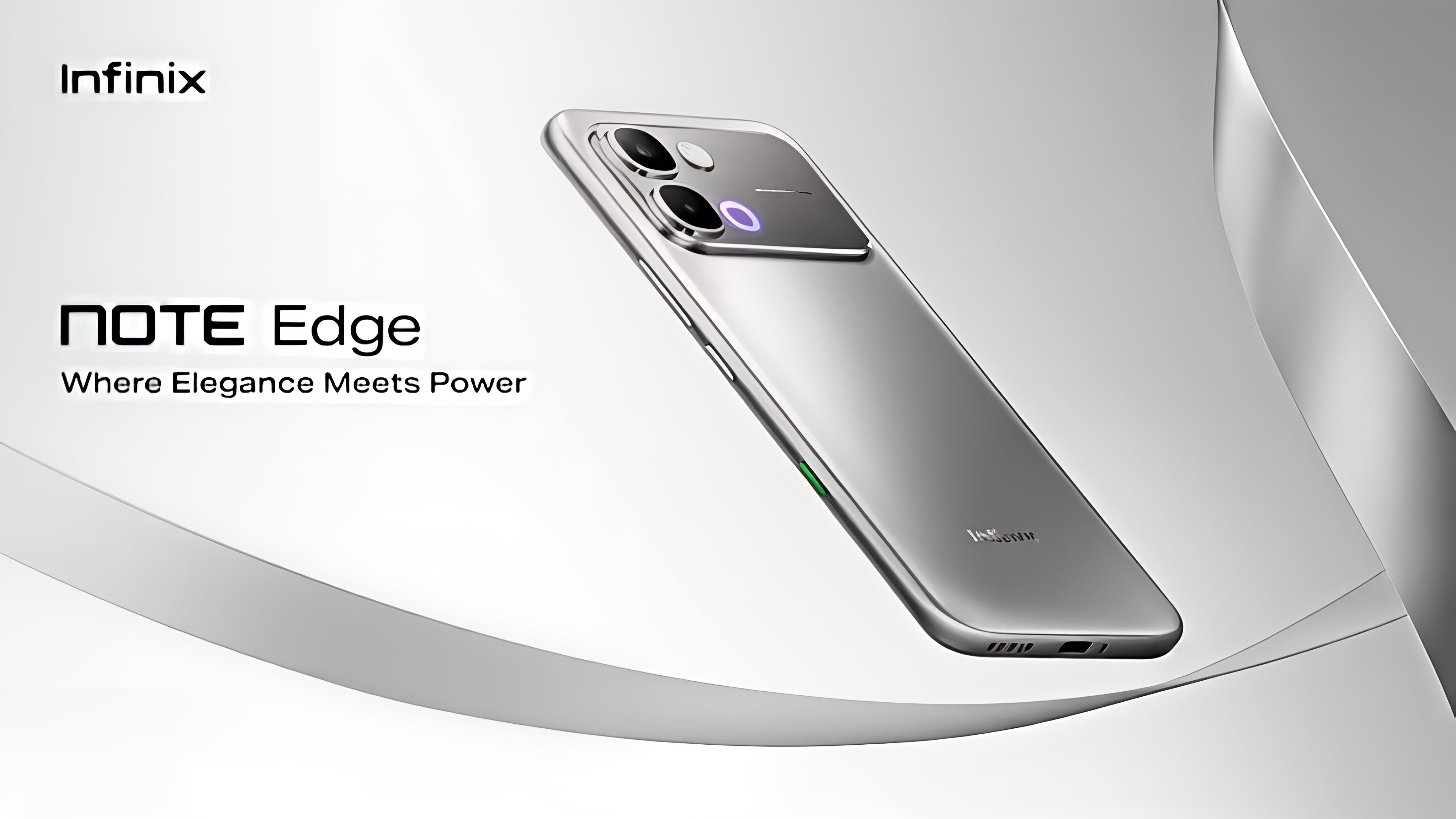
With a stunning display, solid battery, and aggressive pricing, the Infinix Note Edge looks like a premium device. But does the performance match the aesthetics?
Infinix has just launched the Note Edge for pre-order in Kenya, and at first glance, it's easy to mistake this device for something far more expensive than its KES 28,000-32,000 price tag suggests. With its curved "waterfall display," RGB halo lighting, and iPhone-inspired design language, Infinix is clearly aiming for the premium aesthetic crowd.
But here's the reality check: This is a mid-range phone in flagship clothing. And depending on what you prioritize, that might be exactly what you need—or a deal-breaker.
Let's break down what you're actually getting.
Design & Build: Where Infinix Actually Delivers
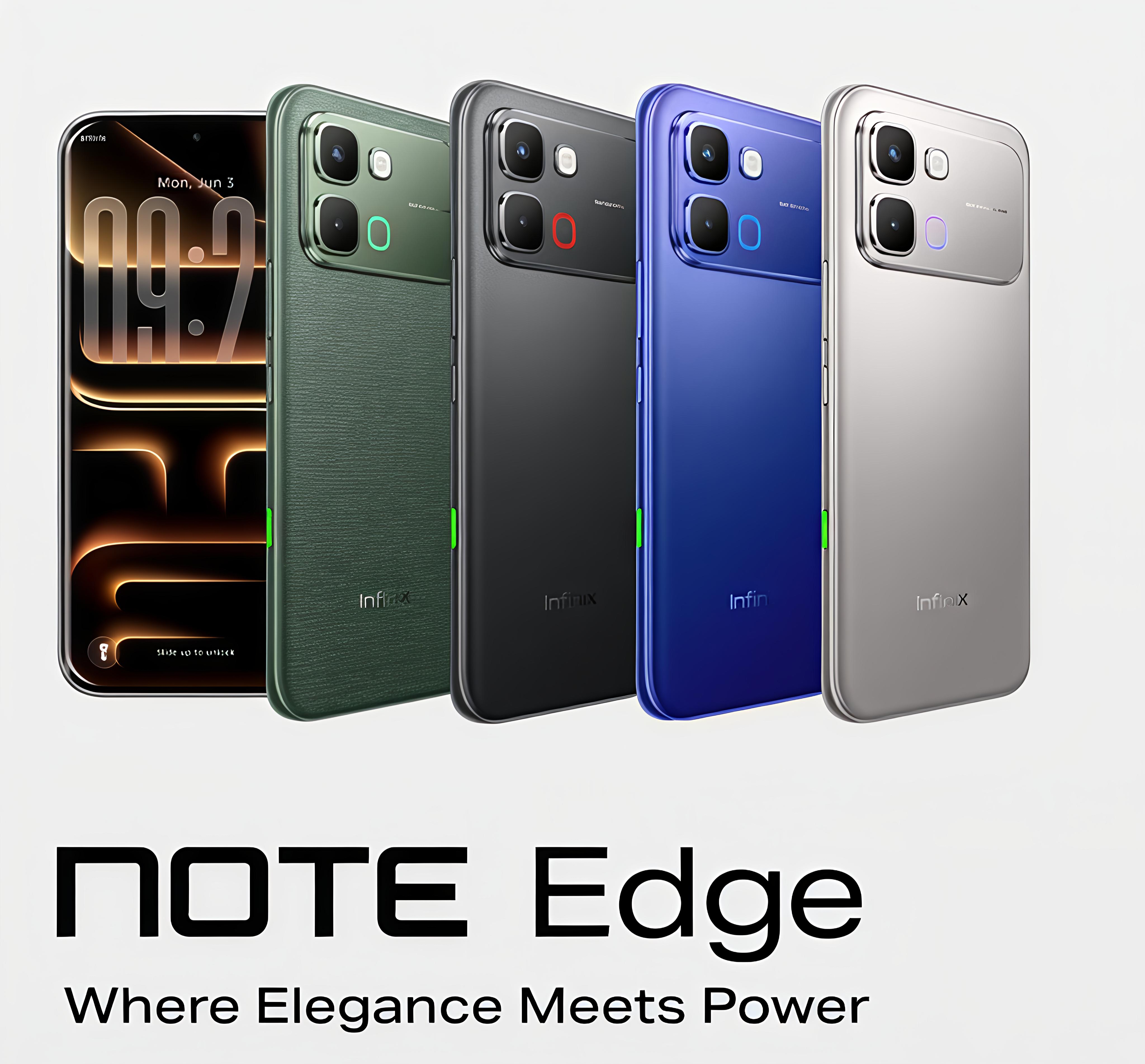
The Note Edge is genuinely impressive from a design perspective. At just 7.2mm thin and weighing 190g, it feels premium in hand. The fabric-textured back gives it a unique tactile feel that sets it apart from the usual glass-sandwich designs, and the curved "waterfall display" with minimal bezels creates an edge-to-edge screen experience that rivals phones twice its price.
Infinix has also included IP65 dust and water resistance—not full submersion protection, but enough to survive rain or accidental splashes. The device is protected by Corning Gorilla Glass 7i, the latest in scratch and drop protection.
The Gimmick: Halo RGB Lighting
On the back, you'll find a square RGB light ring that Infinix calls "Halo Lighting." It glows when charging, animates when you talk to the Folax AI assistant, and can be customized for notifications. Is it useful? Not really. Is it cool for showing off? Absolutely.
The Action Button
Infinix has added a trigger button on the right side—similar to what we've seen on gaming phones and now iPhones. You can program it to launch the camera, activate voice recording, open specific apps, take screenshots, or summon the Folax AI assistant. This is genuinely useful and sets it apart from competitors in this price range.
In The Box
Unlike most manufacturers who've stripped down their packaging, Infinix still includes:
USB-C wired earphones
45W fast charger with USB-A to USB-C cable
Cover case with fabric texture
Screen protector
For a sub-30k phone, this is generous.
Display: The Star of The Show
This is where the Note Edge genuinely competes with flagships:
6.78-inch AMOLED with 1 billion colors
120Hz refresh rate for smooth scrolling
2160Hz PWM dimming (reduces eye strain)
4500 nits peak brightness (if accurate, this is flagship territory)
1208 x 2644 resolution (~393 PPI)
Corning Gorilla Glass 7i protection
The display specs are legitimately impressive. The 2160Hz PWM dimming is particularly noteworthy—it's a feature typically reserved for premium devices and significantly reduces eye fatigue during extended use. If the 4500 nits peak brightness claim holds up in real-world testing, this phone will be perfectly usable even in direct Kenyan sunlight.
Performance: Where "Latest" Doesn't Mean "Best"
Here's where Infinix's marketing gets misleading. They heavily promote the "latest Dimensity chipset"—and technically, that's true. The Mediatek Dimensity 7100 is recent. But "latest" doesn't mean "best."
Chipset Reality Check:
MediaTek's Dimensity lineup follows a hierarchy:
9xxx series = Flagship (Dimensity 9300, 9400)
8xxx series = High-end (Dimensity 8200, 8300)
7xxx series = Mid-range (Dimensity 7100, 7200, 7300, 7400)
The Dimensity 7100 is built on a 6nm process with:
Octa-core CPU (4x2.4 GHz Cortex-A78 & 4x2.0 GHz Cortex-A55)
Mali-G610 MC2 GPU
For comparison, the higher-end 8xxx series uses 4nm processes, and flagship 9xxx chips use 3nm. This matters for both performance and efficiency.
What This Means In Practice:
Perfectly fine for social media, streaming, light gaming (PUBG Mobile, COD Mobile on medium settings)
Smooth multitasking with 8GB RAM (LPDDR5 + LPDDR4X hybrid)
Will struggle with intensive games like Genshin Impact or high-end emulation
Not ideal for heavy video editing or demanding productivity tasks
Memory & Storage:
8GB/128GB or 8GB/256GB configurations
UFS 2.2 storage (not UFS 3.1 or 3.2—noticeable in app loading times)
No microSD slot for expansion
LPDDR5
Camera: The Budget Reality
This is where the "glorified budget phone" label becomes undeniable:
Rear Camera:
Single 50MP main camera (1/2.0" sensor, 0.8µm pixels, PDAF)
Dual-LED flash
Video: 1440p@30fps, 1080p@30fps
Front Camera:
13MP selfie (f/2.2)
Video: 1440p@30fps, 1080p@30fps
What's Missing:
No ultrawide lens
No telephoto/zoom lens
No macro lens
No 4K60fps video
No optical image stabilization (OIS)
For a phone marketed with flagship aesthetics, having a single main camera is disappointing. Competitors at this price point typically offer at least a dual or triple camera setup with ultrawide options.
The camera will handle daylight photography and social media content fine, but don't expect versatility or low-light performance to match phones with multi-lens systems.
Battery & Charging: Solid All-Day Performance
6150 mAh battery (excellent for a phone this thin)
45W fast charging (decent, not market-leading)
Bypass charging (charges device directly during gaming, reducing battery degradation)
Reverse charging (can charge other devices—useful for earbuds or smartwatches)
The 6150 mAh battery is genuinely impressive, especially given the 7.2mm thickness. With the efficient Dimensity 7100 and AMOLED display, expect comfortable all-day battery life even with heavy use.
Audio: Dual JBL Speakers
Infinix has partnered with JBL for dual stereo speakers. While we haven't tested audio quality yet, JBL-tuned speakers at this price point are typically louder and clearer than generic smartphone speakers. Combined with the included USB-C earphones, this is solid for media consumption.
Software: The iPhone Clone Problem
The Note Edge runs Android 16 with XOS 16 on top, and here's where things get... derivative.
XOS 16 is essentially trying to be iOS. The lockscreen, notification shade, settings menu, and even icon design heavily borrow from Apple's aesthetic. While some users might appreciate the familiar iPhone-like experience, it feels lazy and undermines Android's flexibility.
Software Update Promise:
Up to 3 major Android upgrades and 5 years of security updates
Security updates for unspecified duration
Infinix's track record on timely updates is inconsistent at best. Don't expect day-one updates when new Android versions drop.
Folax AI Assistant:
The built-in AI assistant can be triggered via the action button or Halo lighting. We'll need hands-on testing to judge its usefulness versus existing options like Google Assistant.
Pricing & Availability: The Confusion
Infinix officially prices the Note Edge at:
KES 28,000-32,000 (8GB/128GB to 8GB/256GB)
However, some retailers (including Jumia) are currently listing it at KES 36,000—a significant markup. This is likely because:
Pre-orders are active but official retail launch hasn't happened
Early adopter tax (impatient buyers pay premium)
Limited initial stock
Pre-Order Details (Jan 15-25, 2026):
KES 500 deposit to reserve your unit. Pre-order gifts include:
KES 1,000 instant discount
Free power bank
3 months Spotify Premium
KES 1,500 discount on trade-ins
Prize draw to win the phone
Additional gifts to be announced
Recommendation: Wait for the official launch. Once supply stabilizes, expect prices to drop to the 28-32k range. Paying 36k now makes no sense when you can get better-specced alternatives for that money.
Full Specifications
Category | Specifications |
|---|---|
Dimensions | 163.1 x 77.4 x 7.2 mm |
Weight | 190g |
Display | 6.78" AMOLED, 120Hz, 2160Hz PWM, 4500 nits peak |
Resolution | 1208 x 2644 pixels (~393 PPI) |
Protection | Corning Gorilla Glass 7i, IP65 |
Chipset | MediaTek Dimensity 7100 (6nm) |
CPU | Octa-core (4x2.4 GHz Cortex-A78 + 4x2.0 GHz Cortex-A55) |
GPU | Mali-G610 MC2 |
RAM | 8GB (LPDDR5 + LPDDR4X) |
Storage | 128GB/256GB (UFS 2.2, no microSD) |
Main Camera | 50MP (1/2.0", PDAF), Dual-LED flash |
Video | 1440p@30fps, 1080p@30fps |
Selfie Camera | 13MP (f/2.2) |
Battery | 6150 mAh |
Charging | 45W fast charging, bypass charging, reverse charging |
Audio | Dual JBL stereo speakers, USB-C earphones included |
OS | Android 16, XOS 16 |
Extras | Halo RGB lighting, Action button, fabric-textured back |
Price | KES 28,000-32,000 (official), KES 36,000 (current retail) |
Who Should Buy This Phone?
Buy if you:
Prioritize display quality and design over raw performance
Are a casual user (social media, streaming, light gaming)
Want iPhone aesthetics without the iPhone price
Value long battery life
Appreciate in-box accessories
Skip if you:
Need strong performance for gaming or productivity
Are a photography enthusiast needing camera versatility
Want faster storage (UFS 3.1+) for app loading
Prefer pure Android over iOS clones
Need reliable, timely software updates
The Alternatives
At the 28-32k price point, consider:
Samsung Galaxy A36 (KES 32,000)
Better camera system (triple lens with ultrawide)
More reliable software updates (6 years Android updates)
Stronger build quality
But: Less impressive display specs, smaller battery
Xiaomi Redmi Note 14 Pro (KES 30,000)
Better chipset (Dimensity 7300 Ultra)
Superior camera (200MP main + ultrawide)
But: Less premium design
The Verdict
The Infinix Note Edge is a textbook example of style over substance—but that's not necessarily a bad thing if you know what you're buying.
If you prioritize how a phone looks and feels over benchmark scores, the Note Edge delivers. The display is genuinely flagship-quality, the design is premium, and the battery life is excellent. For someone who spends their day on TikTok, Instagram, and YouTube, this phone will feel like a steal at 28-32k.
But don't fall for the "latest Dimensity chipset" marketing. This is a mid-range phone with mid-range performance. The single camera is limiting. The software is an uninspired iOS clone. And if you need serious processing power, you'll quickly hit its limits.
Final recommendation: Wait for the official launch to avoid the current 36k markup. At 28-32k with pre-order gifts, it's a solid value proposition for the right buyer. Just go in with realistic expectations about what "mid-range in flagship clothing" actually means.
Pre-orders run from January 15-25, 2026. Official retail launch expected late January.
Comments