 By
By 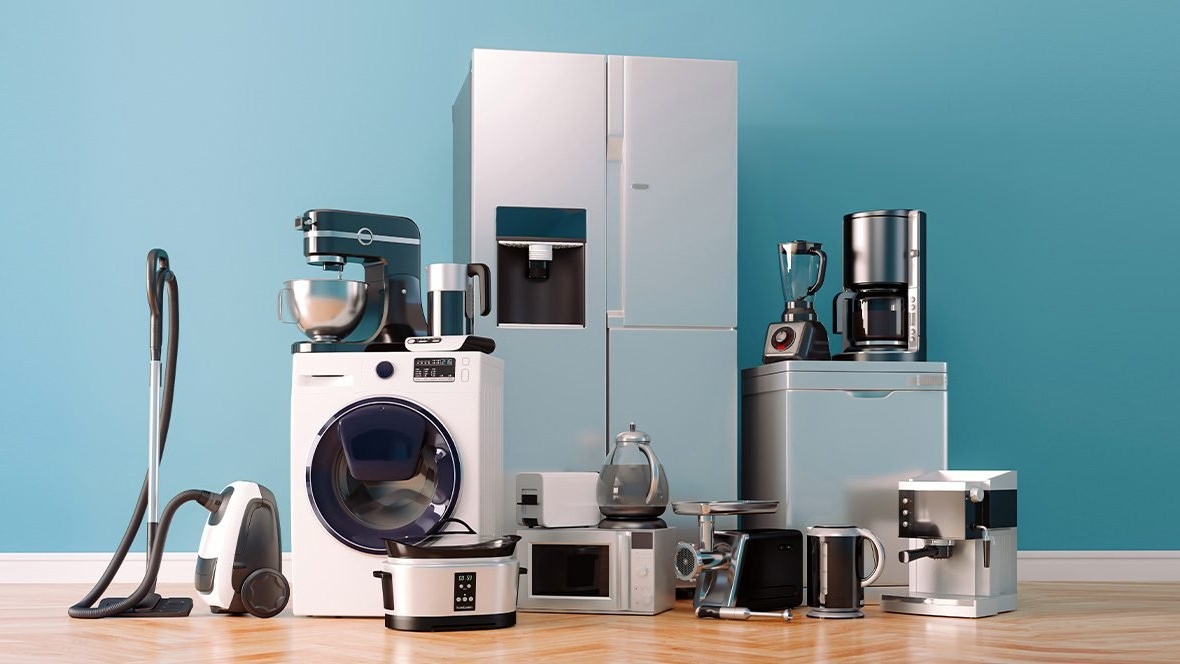
Why Importing From China Makes Sense
If you walk into any electronics shop in Nairobi today, chances are that most of what you see on the shelves came from China. Smartphones, laptops, televisions, phone chargers, earphones, and countless other gadgets all make the journey from Chinese factories to Kenyan consumers. And yet, most Kenyans buy these products at retail prices from middlemen, unaware that they could cut out one or two layers of the supply chain and earn significantly higher margins by importing directly.
This guide is written for anyone who has ever wondered: How do people import goods from China? Is it legal? How much does it cost? Where do you find suppliers? What happens at the port? We will answer all of these questions in plain, simple language, step by step, so that even if this is your very first time hearing about importing, you will finish this article with a clear picture of how it works and whether it is right for you.
Step 1: Decide What Electronics to Import
Before you spend a single shilling, you need to decide what product you want to import. Not all electronics are created equal when it comes to import business viability. Some have high demand but are also highly competitive. Others have better profit margins. The key is to find a product that has consistent demand in Kenya, can be sourced cheaply from China, and gives you room to make a reasonable profit after all costs are settled.
Popular Electronics That Kenyans Import From China
Smartphones (Tecno, Infinix, Itel, Xiaomi, Oppo, Realme, Samsung)
Phone accessories (chargers, cases, screen protectors, earphones, cables)
Laptops and computer accessories
Smart watches and fitness trackers
Television sets and streaming devices
Solar products (panels, lights, lanterns)
CCTV cameras and security equipment
Power banks and portable chargers
Bluetooth speakers and audio equipment
Home appliances (blenders, electric kettles, rice cookers)
How to Choose the Right Product
A good product for importing has the following qualities: people are already buying it in Kenya, it is compact and lightweight enough to keep shipping costs reasonable, it is not easily perishable or fragile, and it has a clear price gap between what you can source it for from China and what it sells for in Kenya.
Do your research first. Visit Jumia, Jiji Kenya, and local phone shops to see what is selling and at what prices. Then search for the same product on Alibaba or 1688.com to see how much it costs at the factory. If you can buy it at $3 and sell it for $12 after all import costs, that is a business worth pursuing.
Step 2: Find a Reliable Supplier in China
This is one of the most important steps and also where many people go wrong. There are thousands of suppliers in China, and not all of them are trustworthy. The good news is that there are structured platforms and methods to help you find genuine, reliable manufacturers.
The Main Sourcing Platforms
1. Alibaba.com (Best for Beginners)
Alibaba is the world's largest B2B (business-to-business) marketplace connecting buyers from all over the world with Chinese manufacturers and traders. It is available in English, accepts international payment methods including credit cards and bank transfers, and has a buyer protection system called Trade Assurance.
English interface, easy to navigate
Verified suppliers with ratings and reviews
Trade Assurance protects your money if the supplier fails to deliver
Accepts international payments
Suppliers are export-ready and experienced with international buyers
The downside is that prices on Alibaba are about 15 to 30 percent higher than buying direct from Chinese domestic platforms because suppliers build in an export premium.
2. 1688.com (Best Prices, Needs a Sourcing Agent)
1688.com is the Chinese domestic version of Alibaba. This is where Chinese businesses buy from each other. Prices here are 15 to 30 percent cheaper than Alibaba because there is no export premium. However, the platform is entirely in Chinese, does not support international payments, and suppliers here do not ship internationally.
To use 1688.com, you need a sourcing agent based in China who can browse the platform on your behalf, negotiate with suppliers, inspect the goods, consolidate your order, and arrange export. We will explain more about sourcing agents in a moment.
3. Made-in-China.com and Global Sources
These are other B2B platforms similar to Alibaba. They are legitimate and used by many Kenyan importers. Made-in-China.com tends to have a good selection of manufacturers while Global Sources is known for curated, verified suppliers.
How to Verify a Supplier
Do not send money to any supplier before verifying them thoroughly. Here is a simple checklist to follow:
Years in Business: Check how long the supplier has been on the platform. Prefer those with 3 or more years of trading history.
Ratings and Reviews: Look at their rating and customer reviews. Aim for suppliers with 4.5 stars or above and a high response rate.
Business Documents: Request their business license, export license, and any product certifications like CE, FCC, or RoHS.
Factory Verification: Ask for a video call or a factory visit video to confirm they are a real manufacturer and not just a reseller.
Sample First: Order a sample before placing any bulk order. This is non-negotiable.
Communication Test: Test how fast and how clearly they respond to your questions. Poor communication now means bigger problems later.
Red Flags to Watch Out For
Prices that seem too good to be true
Newly registered accounts with no history
Reluctance to provide samples or business documents
Requests for payment via Western Union or suspicious bank accounts
Very slow or vague responses to your questions
No product certifications for regulated items
Step 3: Consider Using a Sourcing Agent
A sourcing agent is a person or company based in China who acts as your representative on the ground. Think of them as your eyes, ears, and hands in China. They help you find suppliers, negotiate prices, inspect goods before shipment, and coordinate the logistics of getting your order out of China.
What a Sourcing Agent Does For You
Navigates Chinese platforms like 1688.com that are not available in English
Verifies suppliers and conducts factory audits on your behalf
Negotiates prices using their knowledge of the local market
Orders and inspects samples before you commit to bulk orders
Conducts quality control checks before shipment
Consolidates orders from multiple suppliers into one shipment
Handles payments to Chinese suppliers safely
Arranges export documentation and shipping
How Much Does a Sourcing Agent Cost?
Most sourcing agents charge between 5 and 10 percent of your total order value. Some charge a flat fee per shipment. This cost is often recovered through the savings they achieve by accessing 1688.com prices and negotiating hard with suppliers. In many cases, a good sourcing agent pays for themselves.
Step 4: Understand All the Costs Before You Order
This is where many first-time importers get a nasty surprise. When you buy goods from China, the price you see on the supplier's page is just the beginning. By the time your goods arrive at your door in Kenya, you will have paid several additional costs. These costs are compounded, meaning each one is calculated on top of the previous total, not on the original product price alone.
Let us break this down clearly using a simple example so you can see exactly how the final cost is built up.
The 5 Costs You Will Pay
1. Product Cost (FOB Price)
FOB stands for Free on Board. This is the price the supplier charges you for the goods, including packaging and delivery to the nearest Chinese port. This is the number you see on Alibaba or 1688.com.
2. Shipping Cost
This is what it costs to transport your goods from China to Mombasa port (by sea) or JKIA in Nairobi (by air). Sea freight is much cheaper and is the most common method for bulk orders. Air freight is faster but significantly more expensive.
3. Insurance
A small percentage of your cargo value is paid as insurance to protect against loss or damage during transit. This is usually about 1 to 2 percent of your goods value.
4. Import Duties and Levies (Paid to KRA)
Once your goods arrive in Kenya, the Kenya Revenue Authority (KRA) will charge you several duties and levies. These are calculated on your CIF value, which is your product cost plus shipping plus insurance combined.
Import Duty: Between 0% and 25% depending on the product. Computers and laptops attract 0% while most finished electronics attract 25%. Mobile phones also attract an additional 10% Excise Duty.
Import Declaration Fee (IDF): 2.5% of your CIF value, with a minimum of KSh 5,000.
Railway Development Levy (RDL): 2% of your CIF value.
Value Added Tax (VAT): 16% charged on your CIF value PLUS all the duties and levies above. This is where compounding hits hardest.
A Real Cost Example: Phone Accessories Worth $1,000
Let us walk through exactly how the costs stack up step by step.
Cost Item | How it is Calculated | Amount (USD) |
|---|---|---|
Product Cost (FOB) | As Quoted by Supplier | $1,000 |
+Shipping | Estimated 15% of FOB | $150 |
+Insurance | Estimated 1.5% of FOB | $15 |
=CIF Value | FOB + Shipping+ Insurance | $1,165 |
+Import Duty (25%) | 25% of CIF value | $291.25 |
+IDF ($2.5) | 2.5% of CIF Value | $29.13 |
+RDL (2%) | 2% of CIF Value | $23.30 |
=Subtotal Before VAT | CIF+Duty+IDF+RDL | $1,508.68 |
+VAT(16%) | 16% of the subtotal before VAT | $241.39 |
=TOTAL LANDED COST | Everything combined | $1,750.07 |
You started with $1,000 worth of goods and ended up paying $1,750 before you even move them from the port. That is a 75% increase on your original product cost. This is not unusual. It is simply the reality of importing into Kenya, and it is why you need to research your selling price carefully before you order.
Additional Costs to Budget For
Clearing agent fee: KSh 5,000 to KSh 15,000 per shipment
Transport from Mombasa port to Nairobi: Variable depending on cargo size
PVoC inspection fee in China: Paid to approved inspection agencies
Storage or warehousing: If your goods sit at the port beyond free days
KEBS inspection penalty (5% of CIF): If your goods arrive without a Certificate of Conformity
Step 5: Register Your Business and Get Legally Compliant
Before you import anything, you need to make sure you are legally set up to do so. This protects you, ensures you can clear your goods without problems at the port, and helps you avoid unnecessary penalties.
What You Need to Register
Business Registration: Register your business with the Business Registration Service (BRS). You can do this online at brs.go.ke. You will get a certificate of registration.
KRA PIN: Apply for a KRA PIN at itax.kra.go.ke. This is your tax identification number and you cannot import goods without it. It is free to obtain.
VAT Registration: If your annual turnover will exceed KSh 5 million, register for VAT at the same KRA iTax portal.
Kenya TradeNet Access: Get access to Kenya TradeNet at kentrade.go.ke. This is the government platform through which Import Declaration Forms (IDFs) are submitted.
Compliance Requirements for Electronics
Pre-Export Verification of Conformity (PVoC)
Kenya requires that certain product categories including electronics be inspected before they leave China. This is called the Pre-Export Verification of Conformity (PVoC) programme, managed by the Kenya Bureau of Standards (KEBS).
You must hire an accredited inspection agency in China to inspect your goods and issue a Certificate of Conformity (CoC) before they are shipped. The approved agencies include SGS, Bureau Veritas, and Intertek. Without this certificate, your goods will be held at the port and you will be charged a penalty of 5% of the CIF value for a local inspection.
Kenya Bureau of Standards (KEBS)
All electronics sold in Kenya must comply with Kenya Standards for safety and performance. Products must carry the Import Standardization Mark (ISM) before they can be sold at retail level.
Documents You Will Need for Every Shipment
Import Declaration Form (IDF) - submitted online via Kenya TradeNet
Certificate of Conformity (CoC) - from PVoC inspection in China
Commercial Invoice - from your supplier showing the value and description of goods
Packing List - a detailed breakdown of every item in the shipment
Bill of Lading (for sea) or Airway Bill (for air) - the transport document from the shipping company
Insurance Certificate - proof that your goods are insured during transit
KRA PIN Certificate - your tax registration document
Step 6: Place Your Order Safely
Once you have chosen your product, verified your supplier, understood your costs, and sorted out your compliance requirements, you are ready to place your order. How you pay is just as important as what you are buying.
Safe Payment Methods
1. Alibaba Trade Assurance (Best for Beginners)
If you are ordering through Alibaba, always use Trade Assurance. This is an escrow system where your payment is held securely and only released to the supplier once you confirm that the goods have been delivered as agreed. If the supplier fails to deliver, Alibaba will help you get your money back.
2. Telegraphic Transfer (T/T) with Deposit Structure
This is the most common method for established relationships. You pay a 30% deposit when the order is confirmed and the remaining 70% before the goods are shipped. Never pay 100% upfront to a supplier you have not worked with before.
3. Letter of Credit (L/C)
A Letter of Credit is a bank-backed guarantee. Your bank issues a letter promising to pay the supplier once they provide proof that the goods have been shipped. This is the most secure method for large orders but comes with bank fees and paperwork.
Warning: Never pay via Western Union, MoneyGram, or cryptocurrency to a new supplier. These payment methods offer no buyer protection and are commonly used in import scams.
Negotiating With Your Supplier
Do not accept the first price you are quoted. Negotiation is expected and suppliers build room into their initial prices. Here is how to negotiate effectively:
Ask for a lower price if you can commit to a larger quantity
Request free samples or discounted sample fees for first orders
Negotiate better payment terms once you have completed two or three successful orders
Ask for better packaging, custom branding, or extra accessories included at no cost
Always get the final agreed price in writing via email or the platform chat
Step 7: Ship Your Goods to Kenya
There are two main ways to get your goods from China to Kenya: by sea and by air. The right choice depends on the size and value of your order and how urgently you need the goods.
Sea Freight: The Standard Choice for Bulk Orders
Sea freight is the most affordable option for importing large quantities of goods. Your goods travel by ship from Chinese ports like Shanghai, Shenzhen, or Ningbo to Mombasa port, which is Kenya's main entry point for sea cargo.
Transit time: 25 to 35 days from China to Mombasa
Cost: Approximately $2,500 for a full 40-foot container
LCL (Less than Container Load): Around $100 to $150 per cubic metre if you do not have enough to fill a container
Best for: Bulk orders, heavy items, cost-sensitive shipments
Air Freight: Fast But Expensive
Air freight is significantly faster but also much more expensive. Goods fly from China to Jomo Kenyatta International Airport (JKIA) in Nairobi.
Transit time: 5 to 10 days
Cost: Approximately 5 to 10 times more expensive than sea freight per kilogram
Best for: Small, high-value orders, urgent shipments, samples
Courier Services (DHL, FedEx, Aramex)
For very small shipments and samples, international courier services offer a convenient door-to-door option. They handle customs clearance on your behalf and deliver directly to your address. This is the most expensive option but also the most hassle-free for small quantities.
Working With a Freight Forwarder
A freight forwarder is a company that manages the logistics of getting your goods from the supplier to your hands. They book shipping space, coordinate with the port, and can also assist with customs clearance. If you are new to importing, working with a reputable freight forwarder takes a lot of the complexity off your plate.
Step 8: Clear Your Goods Through Customs
Customs clearance is the process of officially bringing your goods into Kenya through the Kenya Revenue Authority (KRA). This is where your Import Declaration Form is processed, duties are calculated and paid, and your goods are released to you.
Unless you have experience with customs procedures, it is highly recommended that you work with a licensed clearing agent for your first few shipments. A clearing agent is a professional who manages the customs clearance process on your behalf.
The Customs Clearance Process, Step by Step
Your goods arrive at Mombasa port. You receive a notification from your freight forwarder with the arrival details.
Your clearing agent submits your Import Declaration Form (IDF) through Kenya TradeNet, along with all required supporting documents including your commercial invoice, packing list, bill of lading, and Certificate of Conformity.
KRA assesses your declaration and calculates the duties and taxes owed. You will receive a payment notice.
You pay the duties and taxes. This can be done electronically through the KRA iTax platform.
KRA releases your goods. Your clearing agent arranges for the goods to be collected from the port and transported to your location.
How Long Does It Take?
With all documents in order, customs clearance typically takes 3 to 7 working days. If there are discrepancies in your documents, missing certificates, or if your goods are flagged for physical inspection, it can take longer. This is why having all your paperwork complete and accurate before your goods arrive is so important.
Step 9: Sell Your Goods and Grow Your Business
You have made it through the hardest parts. Your goods are cleared, they are in your hands, and now it is time to sell. Here are the main channels Kenyan electronics importers use to move their products.
Where to Sell Electronics in Kenya
Online marketplaces like Jumia Kenya and Jiji.co.ke give you access to buyers across the country without needing a physical shop.
Social media shops on Instagram, Facebook Marketplace, and TikTok Shop are increasingly powerful channels for electronics sellers.
Physical retail from your own shop, a market stall, or a shared space in a mall or electronics arcade.
Wholesale to smaller retailers who will buy from you in bulk at a slight discount and then sell individually.
WhatsApp and Telegram groups where electronics buyers and sellers connect directly.
Profitability: What Kind of Margins Can You Expect?
Product Category | Typical Landed cost | Typical Retail Price | Margin |
|---|---|---|---|
Phone Accessories (chargers, cabl | $3-$5 per unit | $10-$15 per unit | 150%-300% |
Earphones and Bluetooth speakers | $5-$10 per unit | $15-$20 per unit | 150%-200% |
Smart Watches | $15-$30 per unit | $50-$90 per unit | 150%-%200 |
Budget Smartphones | $50-$80 per unit | $130-$180 per unit | 60%-125% |
Laptops and Computers | $250-$350 per unit | $500-$700 per unit | 50%-100% |
Tips for Growing Your Import Business
Build a relationship with one or two reliable suppliers and stick with them. Loyalty often earns you better prices and priority treatment over time.
Always maintain a safety stock of 2 to 3 months worth of your best-selling items to protect yourself against shipping delays.
Plan your import schedule around Chinese holidays so you are never caught off guard by factory shutdowns.
Offer after-sales service and warranties where possible. This builds customer loyalty and repeat business.
Consider private labelling or OEM (Original Equipment Manufacturer) arrangements once you have established volume. This means having your own brand name on the products you import.
Keep accurate records of all your import costs, duties paid, and sales. This makes tax compliance straightforward and helps you track your true profitability.
Common Mistakes First-Time Importers Make (And How to Avoid Them)
Mistake 1: Not Calculating the Total Landed Cost
Many people calculate their expected profit based on the supplier's price alone, forgetting about shipping, duties, VAT, clearing fees, and transport. Always calculate your full landed cost before placing an order.
Mistake 2: Skipping the Sample Order
No matter how good a supplier looks on paper, always order a sample before committing to a bulk order. You need to see, hold, and test the product yourself.
Mistake 3: Ordering Without a PVoC Certificate
Many first-time importers do not know about PVoC until their goods are held at the port and they are hit with a 5% penalty fee. Arrange your Certificate of Conformity in China before your goods are shipped.
Mistake 4: Ordering Too Much Too Soon
Start with a small test order to verify demand, understand the process, and identify any issues. Once you are confident, scale up.
Mistake 5: Ignoring Chinese Holiday Schedules
If your goods are stuck in a Chinese factory during Chinese New Year or Golden Week, they could be delayed by 4 to 8 weeks. Plan your orders well in advance.
Mistake 6: Choosing a Supplier Based on Price Alone
The cheapest supplier is rarely the best supplier. A supplier who delivers on time, communicates clearly, and maintains consistent quality is worth paying a little more for.
Your Import Checklist: Everything You Need Before You Start
Choose your product and confirm there is demand for it in Kenya.
Research at least three suppliers on Alibaba or through a sourcing agent.
Verify your chosen supplier using the checklist in Step 2.
Order a sample and test it thoroughly.
Calculate your full landed cost including all duties, levies, and fees.
Confirm your selling price gives you at least a 30 to 50% margin above landed cost.
Register your business and obtain your KRA PIN.
Set up access to Kenya TradeNet for IDF submissions.
Arrange PVoC inspection in China before your goods are shipped.
Pay your supplier using a secure payment method (Trade Assurance or structured T/T).
Book your freight with a reliable freight forwarder.
Track your shipment and prepare your documents for customs clearance.
Work with a clearing agent to process your goods through KRA.
Collect your goods and move them to your storage location.
Start selling through your chosen channels.
Sources and Resources
The information in this guide was compiled from official government sources, industry data, and verified platform documentation. Below are the sources used and resources you can use as you start your import journey.
Data Sources Used in This Article
Kenya National Bureau of Statistics (KNBS): Kenya-China trade volume data for 2024
Communications Authority of Kenya (CA): Smartphone import data for 2024
Kenya Revenue Authority (KRA): Import duty rates, IDF and RDL rates for 2026
Alibaba.com: Platform and Trade Assurance documentation
Kenya Bureau of Standards (KEBS): PVoC programme guidelines
Official Government Resources
Resource | What it is for | Link |
|---|---|---|
Kenya Revenue Authority (KRA) | PIN registration, tax payments, duty rates, customs clearance | kra.go.ke |
Kenya TradeNet | Submit Import Declaration Forms (IDFs) online | kentrade.go.ke |
Kenya Bureau of Standards | PVoC program details, Kenya Standard compliance | kebs.org |
KRA iTax Portal | File Tax returns, pay duties, VAT registration | itax.kra.go.ke |
Business Registration Service | Register your business officially | brs.go.ke |
Sourcing Platforms
Platform | What it is for | Link |
|---|---|---|
Alibaba.com | B2B sourcing, verified suppliers, Trade Assurance | alibaba.com |
1688.com | Domestic Chinese market, cheapest factory prices (needs sourcing agent) | 1688.com |
Made-In-China.com | Alternative B2B sourcing Platform | made-in-china.com |
Global Sources | curated, verified manufacturers | globalsources.com |
Inspection and Compliance Agencies
Agency | What they do | Website |
|---|---|---|
SGS | Approved PVoC inspection agency in China | sgs.com |
Bureau Veritas | Approved PVoC inspection agency in China | bureauveritas.com |
Intertek | Approved PVoC inspection agency in China | intertek.com |
Comments