 By
By 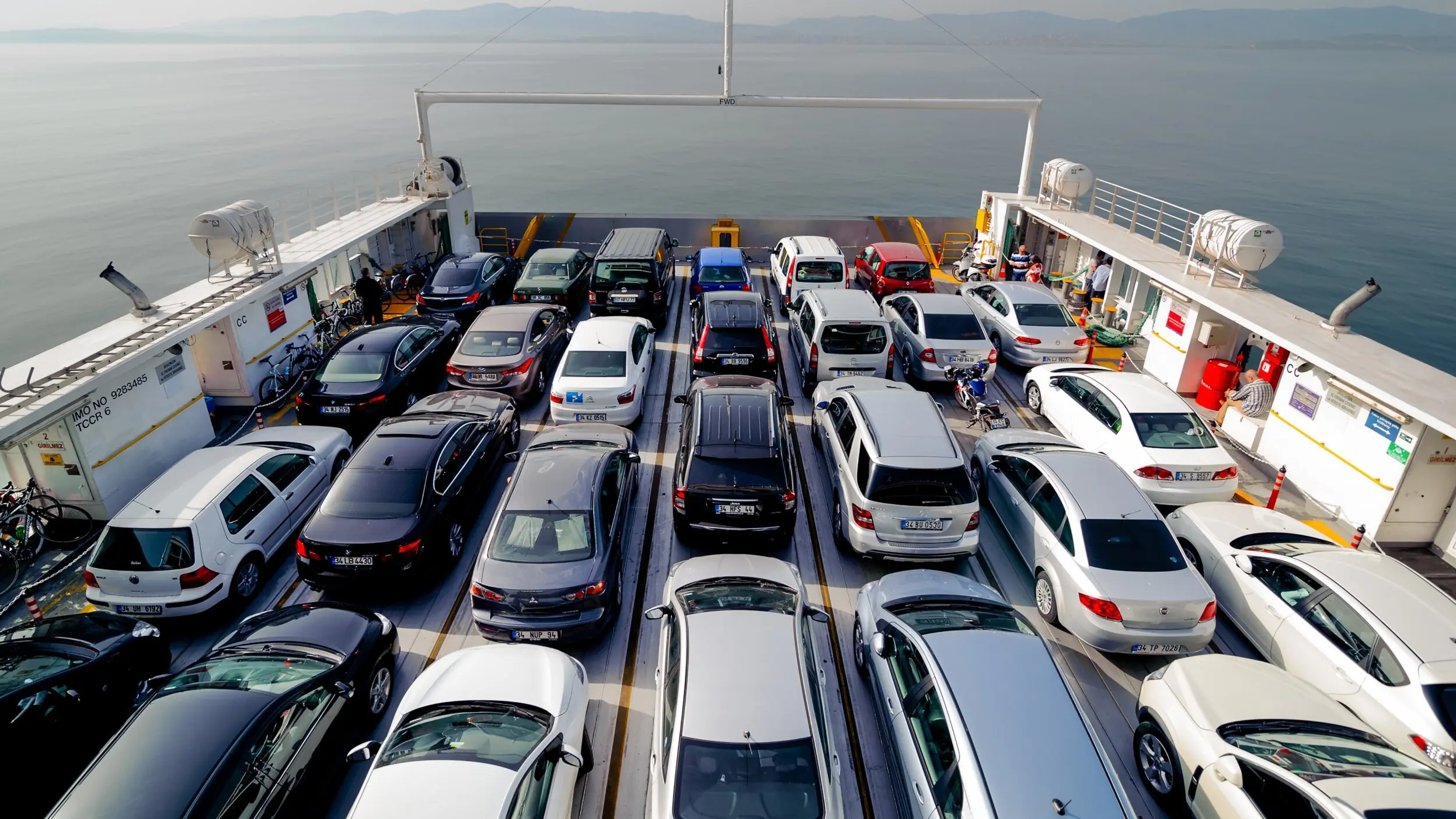
For first-time buyers and anyone curious about the process
Importing a car to Kenya might seem complicated, but once you understand the process, it's actually quite straightforward. This guide will walk you through every step, from finding a car online to driving it on Kenyan roads.
Before You Start: The Three Golden Rules
Before you even look at cars, you need to know these three non-negotiable rules. Break any of them, and your car will be rejected at the port:
1. The 8-Year Rule
In 2026, you can only import cars manufactured in **2019 or newer**. If you buy a 2018 model thinking you'll get a great deal, it will be destroyed at the port or shipped back at your expense. Check the manufacturing year, not the registration year.
2. Right-Hand Drive Only
Kenya drives on the left, so only right-hand drive (RHD) vehicles are allowed. Don't import a left-hand drive car unless it's a specialized vehicle like an ambulance.
3. Pre-Shipment Inspection Required
The car must be inspected in its country of origin by a KEBS-approved agency (like QISJ or EAA). This inspection checks that the car is roadworthy and issues a Certificate of Roadworthiness. No certificate means no entry into Kenya.
Step 1: Finding and Choosing Your Car
Most Kenyans import cars from Japan or the United Kingdom. Here's how to start:
Where to Look
Japan: Websites like BE FORWARD, SBT Japan, and Japanese car auctions
UK: Auto Trader UK, eBay Motors UK, and specialized exporters
Auction Sheets: If buying from Japan, always ask for the auction sheet. This document shows the car's true condition, mileage, and any accident history. It's more reliable than the seller's word.
What to Consider
Your budget: Remember, the car's price is only about 40-50% of your total cost. Taxes will add significantly more.
Engine size: Bigger engines (over 2500cc) attract higher taxes. A 1500cc car might be more affordable overall than a 3000cc car, even if the purchase price is similar.
Popular models: Toyota, Nissan, and Subaru parts are widely available in Kenya. Rare European brands might be cheaper to buy but expensive to maintain.
Step 2: Understanding the True Cost
Here's where many first-time buyers get shocked. The car's price is just the beginning.
The Price You See vs. The Price You Pay
Let's say you find a 2020 Toyota Harrier for $10,000 in Japan. Here's what you'll actually pay:
Purchase Costs:
Car price: $10,000
Shipping (RoRo): $800-$1,200
Insurance: $100-$200
Inspection fee: $100-$150
CIF Total: ~$11,200 (Cost, Insurance, Freight)
Kenyan Taxes (this is the painful part):
Import Duty: 25% of the taxable value
Excise Duty: 20-35% (depending on engine size)
VAT: 16%
Import Declaration Fee: 3.5%
Railway Development Levy: 2%
But here's the catch: Kenya doesn't tax based on what you paid. They use something called CRSP (Current Retail Selling Price).
What is CRSP?
CRSP is what KRA says your car is worth, based on the price of a brand-new version of that car at an authorized Kenyan dealership, minus depreciation.
Example:
You bought a 2020 Harrier for $10,000
A brand-new 2026 Harrier costs KES 5,000,000 at Toyota Kenya
KRA applies depreciation (let's say 50% for a 6-year-old car)
CRSP value: KES 2,500,000 (~$19,200)
KRA will tax whichever is higher: your CIF ($11,200) or the depreciated CRSP ($19,200).
In this case, you'll be taxed on $19,200, not the $11,200 you actually paid.
Total taxes on $19,200 (for a 2000cc car):
Import Duty (25%): $4,800
Excise Duty (25%): $6,000
VAT (16%): $4,928
IDF + RDL (5.5%): $1,056
Total taxes: ~$16,784
Your real total cost: $11,200 (what you paid) + $16,784 (taxes) = ~$27,984 (~KES 3.6 million)
This is why people say importing can double the car's price.
Step 3: Making the Purchase
Once you've found the right car and calculated the real cost, it's time to buy.
Payment Process
1. Proforma Invoice: The seller sends you an invoice with the total CIF price
2. Bank Transfer: You pay via Telegraphic Transfer (TT) from your Kenyan bank to the seller's account
3. Keep all receipts: You'll need these for customs clearance
Inspection
Before the car is loaded onto the ship, it must be inspected by QISJ (Quality Inspection Services Japan) or EAA (Export Auto Appraisal) if shipping from Japan, or other KEBS-approved agencies elsewhere.
The inspection covers:
Roadworthiness
Engine condition
Chassis number verification
Mileage verification
You'll receive a Certificate of Roadworthiness (CoR). Without this, your car won't clear customs.
Step 4: Shipping to Kenya
Shipping Methods
RoRo (Roll-on/Roll-off):
The car is driven onto a massive ship (think of a floating parking garage)
Cheapest option: $800-$1,200 from Japan
Fastest: 25-40 days to Mombasa
Best for: Regular cars (Harriers, X-Trails, Vitz, etc.)
Container Shipping:
The car is locked inside a container
More expensive: $1,500-$2,500
Safer: Better for luxury cars to prevent damage or theft of parts
Best for: High-end vehicles (Range Rover, Mercedes, etc.)
What Happens During Shipping
The seller loads the car and sends you the Bill of Lading (proof that your car is on the ship)
You receive tracking information to monitor the ship's progress
The ship arrives at Mombasa Port after about a month
Step 5: Clearing Your Car at the Port
This is where you'll need a clearing agent unless you want to spend weeks navigating KRA bureaucracy yourself. Most people hire an agent (costs about KES 15,000-30,000).
Documents You Need
1. Original Bill of Lading
2. Commercial Invoice (proof of purchase)
3. Certificate of Roadworthiness (CoR)
4. Original Logbook from the exporting country
5. Your KRA PIN
6. Copy of your ID or Passport
The Clearing Process
Step 1: IDF (Import Declaration Form)
Your clearing agent files this online through the KenTrade portal. This notifies KRA that your car has arrived.
Step 2: KRA Assessment
KRA inspects the documents and the physical car. They:
Check the chassis number matches the paperwork
Verify the car meets the 8-year rule
Check the Certificate of Roadworthiness
Calculate your taxes using CRSP
Step 3: Tax Payment
You receive a tax assessment. You must pay through the iTax portal using:
Mobile money (M-Pesa, Airtel Money)
Bank transfer
Banker's cheque
Timeline: If everything is correct, clearing takes 3-7 days. Delays happen if:
Documents are missing or incorrect
The chassis number doesn't match
There's a backlog at the port
Step 6: Registration with NTSA
Once taxes are paid and the car is released from the port, you need to register it to get Kenyan number plates.
NTSA Registration Process
Online Application (eCitizen):
1. Log into the NTSA portal on eCitizen
2. Submit your documents:
Tax Compliance Certificate (from KRA)
Inspection Certificate
Original foreign logbook
Your ID/Passport
3. Pay registration fees:
Number plates: ~KES 3,000
Logbook: ~KES 1,000
Physical Inspection:
NTSA may require a physical inspection to verify:
The chassis number
The car matches the description
Safety features are intact
Receiving Your Plates:
After approval (usually 1-3 days), you collect your number plates and logbook. Your car is now officially Kenyan.
Step 7: Final Steps Before Driving
You're almost there, but don't drive off just yet!
1. Insurance
It's illegal to drive without insurance in Kenya. You need at least:
Third-Party Insurance: Covers damage to other people/property (minimum legal requirement)
Comprehensive Insurance: Also covers damage to your own car (recommended)
Cost: KES 15,000-50,000 per year depending on the car's value and your coverage.
2. Interpol Clearance
Some cars (especially high-value ones) require Interpol clearance to confirm they weren't stolen abroad. Your clearing agent usually handles this.
The police check the:
Chassis number
Engine number
Against international stolen vehicle databases
If the car is flagged, it will be impounded and you lose everything.
3. Get Your Car From the Port/CFS
If it was RoRo shipping, your car is driven off the ship at Mombasa. If it was containerized, it goes to a Container Freight Station (CFS).
Once cleared, you (or a driver you hire) can drive it home. Many people hire a driver from Mombasa to Nairobi for about KES 10,000-15,000.
Total Timeline
From start to finish, here's how long the process takes:
Finding and buying the car: 1-2 weeks
Inspection in origin country: 3-5 days
Shipping to Mombasa: 25-40 days
Port clearance and tax payment: 3-7 days
NTSA registration: 1-3 days
Insurance and final checks: 1-2 days
Total: 2-3 months from purchase to driving
Common Mistakes to Avoid
1. Buying a 2018 or Older Car
The 8-year rule is absolute. No exceptions. Don't think you can "sweet-talk" KRA or find a loophole.
2. Trusting a Low Price Without Checking CRSP
A $5,000 car sounds great, but if the CRSP is $15,000, you'll still pay taxes on $15,000. Always calculate taxes before buying.
3. Skipping the Inspection
Some sellers offer to skip inspection to save money. Don't do it. Without the Certificate of Roadworthiness, your car won't enter Kenya.
4. Not Budgeting for Taxes
The car's price is only half the story. Budget for at least double the purchase price when calculating total cost.
5. Choosing a Clearing Agent Based Only on Price
Cheap agents cut corners. A good agent costs KES 20,000-30,000 but will save you from costly mistakes and delays.
6. Forgetting Insurance
You can't legally drive without it, and if you cause an accident, you'll be personally liable for all damages.
Import vs. Buying from a Dealership: When Does Each Make Sense?
Import Yourself When:
You want specific specs: A particular color, trim level, or features not available locally
You have time: You can wait 2-3 months
You want verified history: Auction sheets show true mileage and accident history
You're buying a popular model: Common cars like Harriers, Axios, or Fielders where CRSP is reasonable
You can save money: Even after taxes, you save 300k-1M KES vs. local prices
Buy from a Dealership When:
You need a car immediately: Within days, not months
You want a warranty: Most dealers offer 6-12 month warranties
You're buying brand new: Importing new cars rarely makes financial sense due to taxes
You don't want hassle: No paperwork, agents, or port delays
The local price is competitive: Sometimes dealers have promotions that match or beat import costs
Real Example: Importing a 2020 Toyota Axio
Let's walk through a real example with actual numbers:
Purchase:
Car price in Japan: $6,500
Shipping (RoRo): $900
Insurance: $150
Inspection: $120
CIF Total: $7,670
KRA Assessment:
New Axio in Kenya: KES 2,800,000
Depreciation (50% for 6-year-old): KES 1,400,000 (~$10,769)
KRA uses $10,769 (higher than your CIF)
Taxes (1500cc engine = 20% excise):
Import Duty (25%): $2,692
Excise Duty (20%): $2,692
VAT (16%): $2,569
IDF + RDL (5.5%): $592
Total Taxes: $8,545
Total Cost: $7,670 + $8,545 = $16,215 (~KES 2.1 million)
Local Dealership Price: KES 2.5-2.8 million
You save: KES 400,000-700,000 by importing, even though taxes are high.
Final Thoughts
Importing a car to Kenya is absolutely doable for a first-time buyer. Yes, the taxes are high, and yes, the CRSP system seems unfair, but if you:
1. Choose the right car (8 years or newer, popular model, reasonable engine size)
2. Calculate the true cost before buying
3. Use a reliable clearing agent
4. Follow the process step-by-step
You can save significant money and get exactly the car you want.
The key is education. Now that you understand how it works, you won't be caught off-guard by surprise taxes or rejected cars at the port.
Resources:
Comments