 By
By 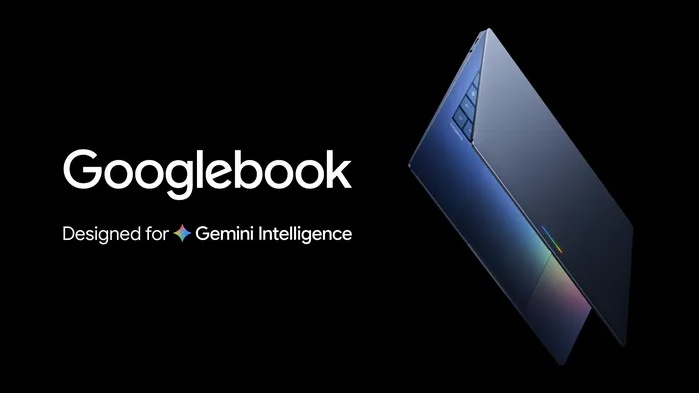
Google just made one of its most ambitious hardware moves in years. On May 12, 2026, at the Android Show: I/O Edition, the company officially unveiled the Googlebook — a brand new category of laptops it says are built from the ground up for "Gemini Intelligence." The announcement was made by Alex Kuscher, Google's Senior Director of Laptops and Tablets, and it comes roughly 15 years after Google first introduced the Chromebook.
The pitch is exciting on paper: premium laptops powered by AI, seamlessly connected to your Android phone, built by the biggest names in PC manufacturing, and available this fall 2026. But once you get past the polished marketing language and start asking practical questions, things get a little fuzzy. Let us dig into what the Googlebook actually is, what it promises, and whether any of that promise holds up to scrutiny.
What Exactly Is the Googlebook?
The Googlebook is not simply an updated Chromebook with a new name. Google is positioning it as a genuinely new product category — one that fuses Android (the same OS running on your smartphone) with ChromeOS, bringing Google Play, native Android apps, and tight phone integration together in a laptop form factor. The result is a device that sits somewhere between an Android tablet experience and a traditional laptop, with Gemini AI woven throughout the operating system.
Google's blog post describes the Googlebook as representing a shift "from an operating system to an intelligence system." That is a bold line. What it means in practice is that Gemini is not just an app you open when you need help; it is meant to be the logic layer behind everything you do on the device.
Hardware-wise, Google is not manufacturing the Googlebooks itself. Instead, it is working with five major PC manufacturers: Acer, ASUS, Dell, HP, and Lenovo. Every Googlebook will carry a distinctive design feature called the Glowbar — an illuminated LED strip that lights up in Google's signature colors and is described as both a brand identity element and a functional feature. Think of it as Google's version of the light bar on the old Chromebook Pixel. Notably, Google has not confirmed whether it plans to release its own branded Googlebook, as the company has not produced a first-party laptop since the Pixelbook Go back in 2019.
As of this writing, no hardware specifications, pricing, RAM configurations, display sizes, or battery life details have been disclosed. Those details are promised "later in 2026" before the fall launch window.
The Headline Features: What Gemini Actually Does on Googlebook
Google announced four core features that define the Googlebook experience, all powered by Gemini.
Magic Pointer
This is easily the most talked-about feature and the one Google leads with. Developed in collaboration with Google DeepMind, Magic Pointer transforms the humble cursor into something context-aware. You wiggle your mouse, and the pointer "comes alive" with Gemini, offering quick suggestions based on whatever is on screen at that moment. Point at a date in an email and it offers to schedule a meeting. Select two images, like your living room and a new couch, and it can visualize them together instantly.
It is clever, and the demo scenarios shown are genuinely useful. The question is how well it works outside of demo conditions. Context-aware AI suggestions are only helpful if the suggestions are accurate and relevant, and if they do not interrupt your flow when you are in the middle of something entirely different. That question can only be answered once real hardware is in people's hands.
Create Your Widget
Googlebook lets you build custom desktop widgets by simply prompting Gemini in plain language. Gemini can pull data from Gmail, Google Calendar, or the internet to generate personalized dashboards. Google's example: planning a family reunion in Berlin, and Gemini creating a single widget that consolidates your flight info, hotel bookings, restaurant reservations, and even a countdown timer. This feature is also coming to select Android phones later this year.
Quick Access
With Quick Access, you can view, search, and insert files stored on your Android phone directly from the Googlebook's file browser, with no need to transfer them first. It creates a seamless bridge between the two devices that removes one of the more persistent frustrations of juggling a phone and a laptop.
Cast My Apps
Android phone applications can be opened and used directly on the Googlebook screen. This is Google's answer to Apple's iPhone mirroring feature on Macs, which launched in 2024. It keeps you in the flow when a notification pulls your attention — finish that Duolingo lesson or place a food order without ever switching devices.
The Hardware Gap: Premium Promises Without the Specs to Back Them Up
Here is where things get genuinely frustrating. Google is marketing the Googlebook as a premium product competing directly with Apple's MacBook lineup and Microsoft's Copilot+ PCs. The phrase "premium craftsmanship and materials" appears in the official announcement. The OEM lineup includes Dell and HP, not just the budget-friendly names. The target is clearly the high end of the market, not the sub-$300 education segment where Chromebooks have long dominated.
And yet, as of today, there is not a single published spec. No processor information, no display resolution, no RAM tier, no battery estimate. Nothing. For a device being positioned as a premium, high-stakes purchase, that absence is significant.
What we do know is that the platform supports both ARM and x86 architectures. This is actually good news and addresses one of the concerns worth raising early: ARM chips are excellent for battery life and lightweight computing, but they have historically come with compatibility constraints. By supporting x86 as well, Google is at least keeping the door open for more powerful configurations. Still, the heavy lifting of Gemini's AI features raises an important question that Google has not answered: how much of that AI runs locally on the device, and how much requires a cloud connection?
The Big Question Nobody Has Answered: Who Pays for Gemini?
This is perhaps the most important practical question surrounding the Googlebook, and it has gone entirely unanswered. When you wiggle your mouse and Magic Pointer kicks in, or when you ask Gemini to generate a custom widget pulling live data from multiple sources, that compute has to come from somewhere.
There are three plausible scenarios:
Option 1: Gemini features are included free with the device. Google absorbs the cloud compute costs as part of the product experience, similar to how iCloud offers a small amount of free storage. This would be the most consumer-friendly approach, but it would also mean Google is subsidizing potentially significant server costs for every Googlebook owner indefinitely. That is a hard business case to make.
Option 2: You need a Google AI subscription for full features or to avoid usage limits. This is how Microsoft has structured Copilot+ — some features work locally, but the deeper, more powerful AI capabilities are tied to a Microsoft 365 Copilot subscription at $30 per user per month. If Google follows a similar model, the true cost of a Googlebook is higher than the sticker price suggests.
Option 3: The model runs locally on the device. This would be the most privacy-friendly and latency-free approach. On-device AI means your data never leaves your laptop, and features work even offline. The catch is that on-device models are significantly less capable than their cloud counterparts, particularly for complex reasoning and generation tasks. Whether Googlebook hardware can run a meaningful local model depends entirely on the chip specifications, which (again) have not been shared.
Until Google answers this question clearly, buyers cannot make an informed decision about what they are actually purchasing.
Is AI Enough to Sell a Laptop? The Copilot+ Lesson
Google is not the first company to bet big on AI as the primary selling point for a laptop. Microsoft has been doing exactly this with its Copilot+ PC initiative since 2024, and the results offer a useful reality check.
According to research from Recon Analytics, Microsoft's Copilot had a paid subscriber share that actually shrank from 18.8% in July 2025 to just 11.5% by January 2026 — a 39% contraction in just six months. Despite being embedded across Windows, Microsoft 365, Edge, and Bing, reaching hundreds of millions of users without any additional download, Copilot's voluntary adoption remains strikingly low. Microsoft reported 15 million paid M365 Copilot seats in early 2026, which sounds impressive until you realize that represents only 3.3% of their addressable commercial market of 450 million Microsoft 365 users — after two years on the market.
Perhaps more telling: Copilot's accuracy Net Promoter Score deteriorated to -24.1 in September 2025 before partially recovering to -19.8 in January 2026. A negative NPS means users who try the product are more likely to distrust it than recommend it to someone else. Among lapsed Copilot users, 44.2% cited distrust of answers as the primary reason they stopped using it.
The broader pattern here applies to AI features on consumer devices generally. New capabilities capture attention and generate buzz when they launch. Many people genuinely try them out in the first few weeks. But sustained daily use, the kind that makes a feature feel essential to how you work, is much harder to achieve. This has been true for AI-powered image generation, music generation, and creative tools that were once hailed as revolutionary and are now mostly ignored by the majority of users who first rushed to try them.
None of this means the Googlebook's Gemini features are destined to fail. Gemini has been growing its paid subscriber share and surpassed Copilot in late 2025. Google has genuine advantages in search, data integration, and the Android ecosystem. But the lesson from the Copilot+ experience is clear: slapping AI onto hardware does not automatically translate into products people use and love.
The Chromebook Legacy: A Difficult Act to Follow
Chromebooks are not a failed product. They have built a genuinely strong position, particularly in education, where they currently hold more than 60% of the US market. That base was built on something very concrete: affordable hardware, simple software, and reliability for web-first tasks. The value proposition was clear and defensible.
The Googlebook is targeting a fundamentally different segment — premium laptops competing against MacBooks and high-end Windows machines. This is a much harder fight. Apple's MacBook lineup is backed by years of brand trust, industry-leading chip performance, and a deeply loyal user base. Windows AI PCs are arriving with Snapdragon X-series chips and dedicated NPUs capable of 40+ TOPS, enabling on-device AI workloads without requiring cloud connectivity.
Importantly, Google says it will keep supporting existing Chromebooks, with 10-year software updates guaranteed for devices made in 2021 or later. The Googlebook is a new lane, not an exit from the old one. That is reassuring for current Chromebook users, but it also signals that Google is not fully committed to burning its bridges with the budget market.
What This Could Mean for Kenyan and African Consumers
For users in Kenya and across Africa, the Googlebook announcement is worth watching, but not rushing toward. The premium positioning means these devices will likely carry premium prices, which narrows the addressable market significantly. Connectivity is also a real consideration: if the best Gemini features require reliable, fast cloud connections, users in areas with inconsistent internet may find a significant portion of the Googlebook's value proposition simply unavailable in practice.
The Android ecosystem integration, however, is genuinely compelling for a region where Android dominates smartphone usage. Features like Quick Access and Cast My Apps could be more immediately useful for everyday users than any of the cloud AI features, simply because they solve real, practical problems around managing multiple devices.
It is also worth noting that none of the announced OEM partners — Acer, ASUS, Dell, HP, and Lenovo — have announced African-specific pricing or availability timelines. The fall 2026 window is for global launches in general, and regional rollouts typically follow months later.
The Verdict: Promising Concept, Incomplete Product
The Googlebook is a genuinely interesting idea. Rethinking the laptop around AI rather than bolting AI onto an existing product is the right instinct. Magic Pointer is a creative feature that could change how people interact with their screens. The Android ecosystem integration is long overdue and addresses real friction that Chromebook users have felt for years.
But as of today, the Googlebook is still a concept more than a product. No specs. No price. No clarity on how Gemini compute is handled or paid for. No independent reviews or benchmarks. Google's track record with hardware is also checkered — for every Pixel success story, there is a Google Home or a Stadia cautionary tale.
The honest advice for anyone excited about the Googlebook is this: wait. Wait for actual devices to launch in fall 2026. Wait for independent reviews from publications that will run real benchmarks. Wait for Google to answer the compute question clearly. Wait to find out whether the Gemini features work as well in daily life as they do in the announcement video.
The AI laptop race is real, and Google is right to take it seriously. Whether the Googlebook is the device that wins it remains to be seen.
Comments