 By
By 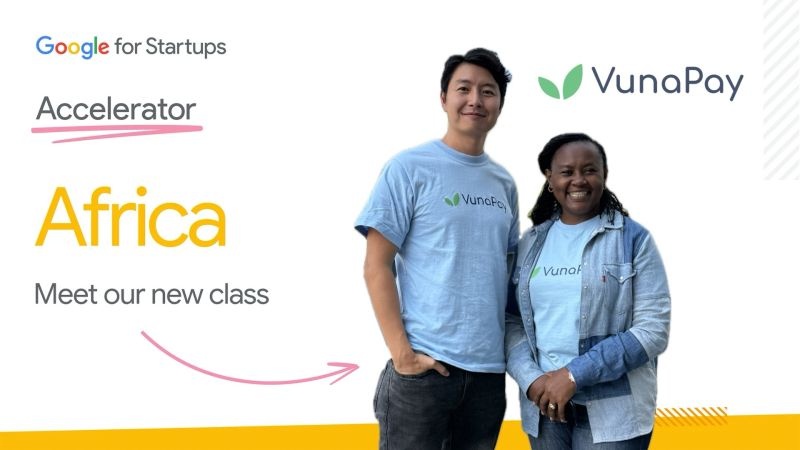
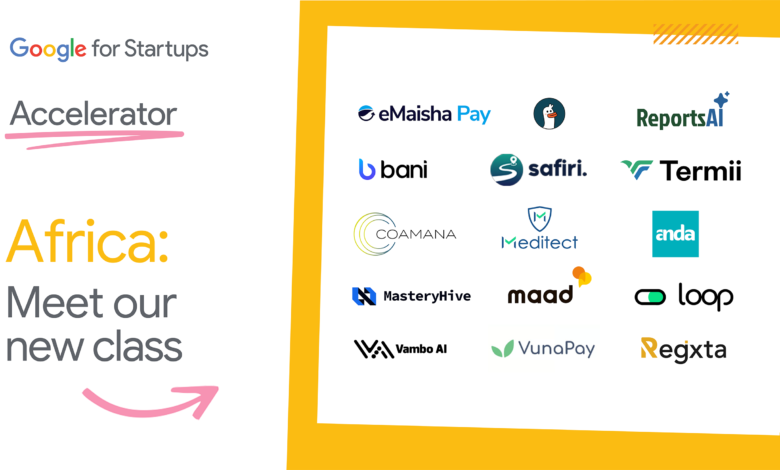
When Google opened applications for the 10th cohort of its Google for Startups Accelerator Africa program, nearly 2,600 startups from across the continent threw their hats in the ring. Only 15 made it through. Four of them are Kenyan.
Coamana, Duck, ReportsAI, and VunaPay graduated from the program on June 18, 2026, during Google's Close-out Week and Demo Day held in Nairobi, making this Kenya's strongest showing in the accelerator's history. With an acceptance rate of below 1%, getting into this program is statistically harder than getting into most Ivy League universities. And for context, Class 9 in 2025 drew around 1,500 applications, meaning this year's applicant pool grew by more than 70% in a single cycle. The competition has never been stiffer, which makes Kenya's four spots all the more significant.
What Is the Google for Startups Accelerator Africa?
Before getting into the startups themselves, it helps to understand what this program actually is and why it matters.
Launched in 2018, the Google for Startups Accelerator Africa is a three-month hybrid program designed for growth-stage, revenue-generating tech startups. It is entirely equity-free, meaning Google takes no ownership stake in any of the companies it supports. Instead, what it offers is arguably more valuable at the early stage: mentorship from Google engineers, technical workshops focused on AI and machine learning, access to Google's investor network, and up to USD 350,000 in Google Cloud credits per startup.
For AI startups, whose biggest operational cost is often GPU and inference infrastructure, those cloud credits alone can buy meaningful runway. The Trusted Tester benefits, which give participants early access to Google's newest AI tools, can also shave months off product development timelines.
Since its launch, the program has supported over 190 startups across 17 African countries. Alumni have collectively raised more than $400 million and created over 3,500 jobs. The accelerator has become one of the most valuable non-dilutive opportunities on the continent, and African founders are clearly taking notice.
The Four Kenyan Startups
What is striking about Kenya's Class 10 cohort is not just that four startups made it in. It is what they are building and who they are building it for.
Coamana is tackling one of the most overlooked corners of Africa's economy: informal food markets. Founded by Hafsah Jumare in 2018 and operating across both Kenya and Nigeria, Coamana builds technology through its MarketView platform that helps governments and market associations digitize these markets. Most food trade across Africa happens in traditional markets that operate entirely offline, with no real visibility into prices, volumes, or credit needs. Coamana uses AI to interpret real-time data from these markets, making them visible and actionable for businesses and policymakers. The startup raised USD 500,000 from Village Capital in mid-2024.
Duck is solving a problem that sounds simple but has significant commercial consequences: consumer brands in Africa have very little visibility into what is happening with their products once those products leave the warehouse. Co-founded by Alex Mativo and Michelle Watiki, Duck is a real-time data intelligence platform that pulls live sales and stock data from supermarket checkout systems, giving FMCG brands instant insight into what is selling, where, and when to restock. Watiki's story is particularly compelling. She left a successful engineering career at Rolls-Royce in the UK, bought house and all, to come back and build this. Duck is a Techstars 2024 alumnus and has been steadily building a retail data community in Nairobi through its annual Retail Data Ecosystem Mixer.
ReportsAI serves a sector that rarely makes startup headlines: the impact and development space. NGOs, donors, and impact investors spend enormous amounts of team time on reporting and compliance, time pulled directly away from actual delivery work. ReportsAI's AI-first platform converts raw program data into institutional knowledge and donor-ready reports in a fraction of the usual time, giving these organizations back the hours they need to focus on impact.
VunaPay is addressing one of the most financially damaging realities for Kenyan farmers. Founded in 2023 by Gatwiri Njogu-Mokaya, Koya Matsuno, and Ian Wambai, VunaPay provides instant payments to smallholder farmers the moment they deliver their produce to agricultural cooperatives. Without a solution like this, farmers typically wait three to six months, sometimes over a year, to receive payment for produce they have already handed over. That delay forces many into the hands of middlemen who offer lower prices, or into high-interest loans just to cover basic expenses. VunaPay has already onboarded over 100,000 farmers across coffee, dairy, and maize cooperatives, and processed roughly KES 75 million in payments to date.
What This Means for Kenya
Reading across these four companies, a pattern emerges that is worth paying attention to. Three of the four, Coamana, Duck, and VunaPay, are working in agricultural or retail infrastructure. The fourth, ReportsAI, targets the development sector. None of them are consumer apps chasing virality or riding a trend. They are building the unglamorous, infrastructure-layer businesses that quietly hold economies together. That is arguably where the most defensible African tech companies of the next decade will be built.
Kenya has long been celebrated as one of Africa's leading innovation hubs, but that reputation has sometimes felt more like historical momentum than present-day proof. Class 10 is present-day proof. Folarin Aiyegbusi, Google's Head of Startup Ecosystem for Africa, noted that what is visible in Kenya right now is a maturity in founders. People coming from corporate backgrounds, from academia, and applying that accumulated knowledge to solve problems not just for Kenya but for the continent and potentially the world.
It is also worth noting that 60% of this year's full cohort are already profitable businesses, generating an average monthly revenue of USD 60,000. This is not a group of promising ideas. These are working businesses that Google is helping scale.
For Kenya's broader startup ecosystem, four spots in the most competitive Google for Startups Accelerator Africa class ever run is a signal worth taking seriously. The country raised more venture capital than any other single African market in 2025. Its founders are solving real problems with real traction. And increasingly, the world is paying attention.
The question now is what comes next for Coamana, Duck, ReportsAI, and VunaPay once the Google resources, mentorship, and network are fully activated. If the program's alumni track record is anything to go by, we should expect bigger funding rounds, faster growth, and a few names that will become very familiar over the next few years.
Comments