 By
By 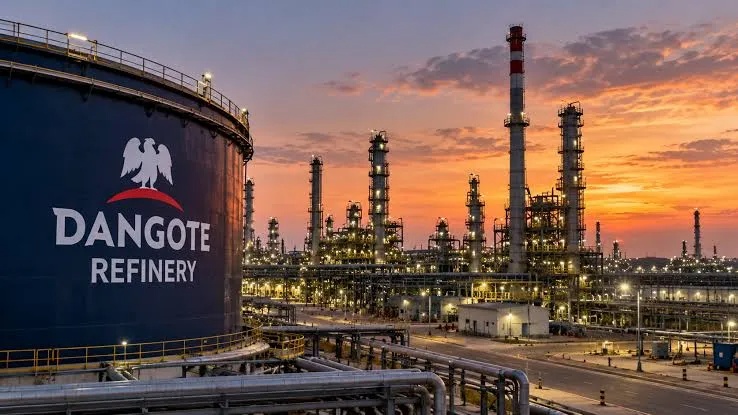
Kenyan retail investors can now join the Dangote Petroleum Refinery IPO for as little as KSh535, after Renaissance Capital (Kenya) Limited cut the minimum subscription on its Global Depositary Receipt (GDR) offer from 2,000 receipts to 10. The Nigerian offer, which was due to close on October 13, now runs until October 27 following approval from Nigeria's Securities and Exchange Commission (SEC).
The revision lowers the entry cost by 99.5 percent, from KSh107,000 to KSh535. This piece first explains how the Kenyan route works, then sets out an analytical view of what the lower threshold does and does not change for an individual investor. The analysis sections are labelled and represent interpretation, not raw reporting.
How the Kenyan GDR route works
Dangote Petroleum Refinery and Petrochemicals FZE (DPRP) is offering up to 4.1 billion ordinary shares at ₦525 each, according to the company's official offer site. At that price the offer would raise ₦2.1525 trillion before costs, per Cowrywise's summary of the terms. The Nigerian minimum is 10 shares, or ₦5,250.
Kenyans do not buy those shares directly. On October 5, the Capital Markets Authority (CMA) approved a short-form prospectus submitted by Renaissance Capital (Kenya), which opened a GDR route for eligible local investors. A GDR is a negotiable instrument representing shares in a company incorporated and listed in another market. Under the Kenyan arrangement, the underlying DPRP shares are held in custody while the receipts give investors a local-market instrument. Stanbic Bank Kenya will hold the underlying Nigerian shares, and each GDR represents one DPRP share.
Each GDR is priced at KSh53.50. The Kenyan offer covers up to 728.97 million GDRs. At the fixed price, that works out to roughly KSh39 billion by simple multiplication, targeting up to $300 million (about KSh38.7 billion) in local participation.
The programme is described as an unsponsored inward GDR, meaning regulated financial institutions rather than the issuing company set it up. If approved, it would be the first programme of its kind in Africa. Daba Finance, describing the proposed structure, reported that dividends, rights and other shareholder benefits would pass through to GDR holders, and that the refinery would not become a directly NSE-listed company. Investors would hold securities representing Nigerian shares, which keep their primary listing on the Nigerian Exchange (NGX).
Applications go through licensed intermediaries. The Citizen listed CPF Capital, SBG Securities/Stanbic Bank, Francis Drummond, National Bank of Kenya/Access Bank, Sterling Capital, Kestrel Capital and AXYS Investment Bank among the firms involved, alongside Renaissance Capital.
The timeline
GDRs are created only after the Nigerian offer closes and shares are allocated. The CMA said its approval to seek a listing is subject to the successful fund raise and allocation of the shares needed to create the GDRs which put the planned NSE listing at around December 8, 2026.
Dates reported for the Nigerian side differ by outlet. Returns will be collated on November 3, and the basis of allotment proposal goes to the SEC on November 10. Regulatory clearance of the allocation is expected by November 17, with trading projected to begin in early December, subject to completion of required processes.
The extension gives Kenyan investors more time to participate through the GDR arrangement, although the Kenyan window was previously indicated to close at 5:00 PM on October 13.
The asset behind the offer
The refinery sits in the Lekki Free Zone near Lagos. Khusoko reported that it cost about $20 billion to build, began operating in 2024 and reached its 650,000 barrels per day nameplate capacity in February 2026, with throughput since then at roughly 700,000 barrels per day.
The earnings trajectory is steep. Throughput rose from 225,000 barrels per day in 2024 to 410,000 in 2025, lifting utilisation from 34.6 percent to 63.1 percent. Revenue rose 94.6 percent to $12.3 billion in 2025, and EBITDA moved to $545.3 million from a loss of $425.1 million in 2024. In the first half of 2026, revenue rose 150 percent year on year to $13.9 billion, with EBITDA at $2.6 billion and average utilisation at 86 percent of capacity. Khusoko, citing the IPO prospectus, reported first-half net income of $1.82 billion.
The company plans to use net IPO proceeds for its expansion programme. The target is 1.4 million barrels per day, with the completion year reported as 2028 by CardinalStone and 2029 by Khusoko.
Analysis: what the lower minimum changes
The barrier was structural. At 2,000 GDRs, the original Kenyan minimum was 200 times the revised one. Renaissance Capital said the revision aligns the Kenyan minimum with the Nigerian offer and followed investor feedback, high market demand and CMA approval.
Fees now matter more. The reported KSh535 minimum is before applicable fees. If a broker applies a flat minimum charge per application, that charge would take a far larger share of a KSh535 investment than of a KSh107,000 one. Whether this applies depends on each intermediary's schedule, and a small applicant should ask for the all-in cost before committing.
Currency sits inside the product. The fixed GDR price of KSh53.50 against a ₦525 share implies about ₦9.81 per shilling. After listing, the GDR will trade in shillings on the NSE while the share trades in naira on the NGX. A Kenyan holder's return would therefore combine the share price move, any shift in the naira to shilling rate, and any gap between the GDR price and the value of the underlying share. Given that this is a new structure with no trading history, I would expect that gap to be less predictable than for a long-established depositary programme.
Capital is committed before there is a market. Applicants fund their subscription now, but the receipts do not exist until allocation, and the planned listing is around December 8. Until then there is no secondary market in which to exit, and CMA's approval is conditional on the Nigerian raise succeeding.
The valuation depends on a very recent step change. Cowrywise's figures imply a market value of about ₦65.2 trillion at ₦525, with the offer representing about 3.3 percent of the company. CardinalStone, per The Guardian Nigeria, projected post-listing capitalisation of ₦77.7 trillion, so estimates already differ. On earnings, first-half 2026 EBITDA of $2.6 billion is roughly 4.8 times the full-year 2025 figure of $545.3 million. Investors are being asked to price a turnaround that is only a few quarters old. CardinalStone itself identified crude supply, execution, foreign exchange, regulatory and market risks. A KSh535 ticket lowers the absolute cost of being wrong, but it does not change the percentage loss if those risks materialise.
The counterpoint. The case for the lower minimum is reasonable. A small first ticket lets a new investor learn how a cross-border GDR is bought, held and priced without staking a month's savings, and a wider base of holders could support trading activity once the receipts list. Aliko Dangote has also committed to listing the group's separate East African refinery on the NSE, so a retail base familiar with the GDR mechanism may matter beyond this single offer. Those benefits are plausible if the NSE listing proceeds on schedule and trading is active. They are not assured by the minimum itself.
Comments