 By
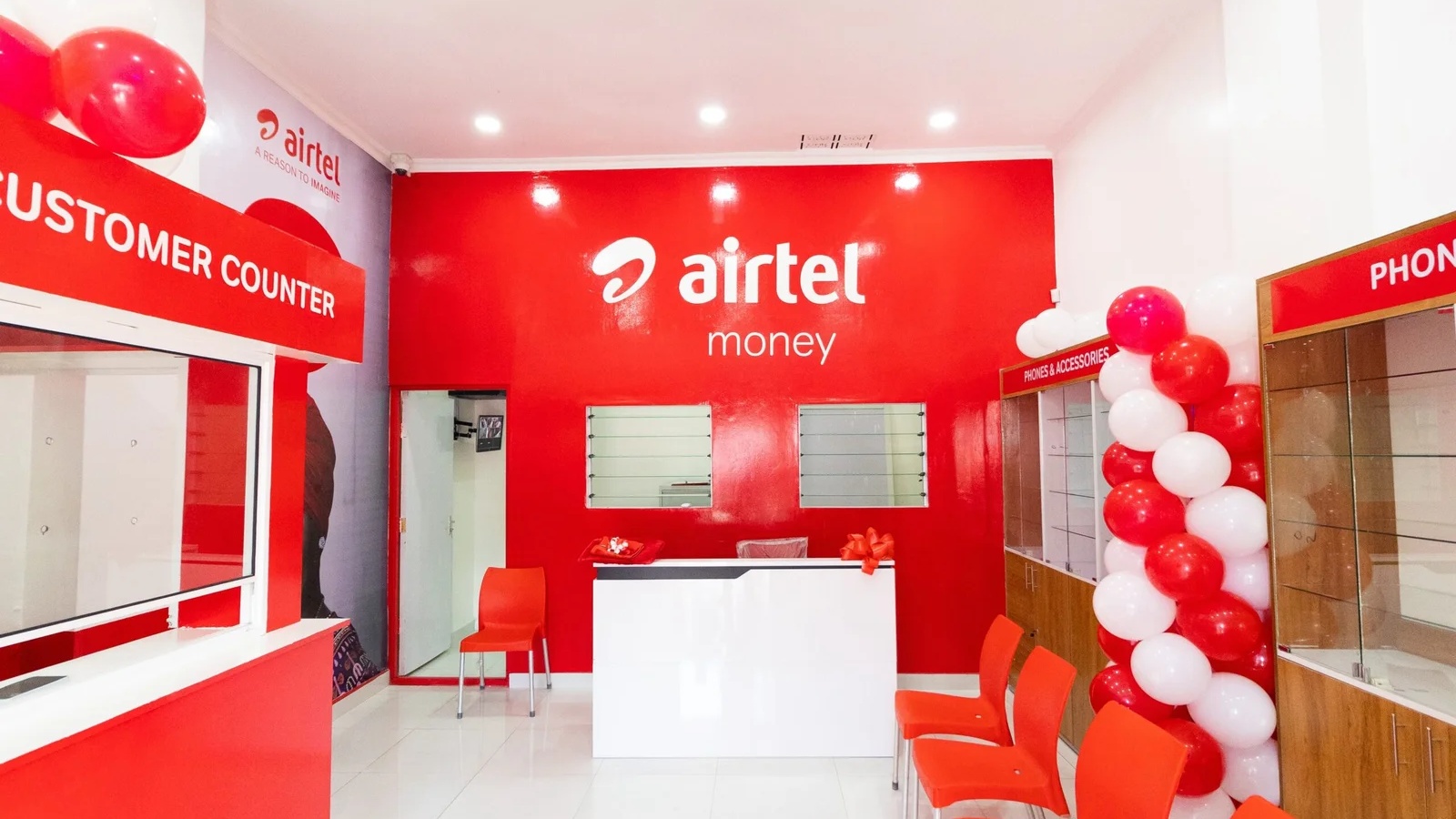
Airtel Money has formally set the pricing for its initial public offering on the London Stock Exchange at £1.96 (KSh 338) per share, establishing an equity valuation of £5.3 billion (KSh 913 billion, or approximately $7 billion) for the standalone fintech enterprise. The transaction involves the sale of 270 million existing shares valued at KSh 46.5 billion, with an over-allotment option that could expand the offered stake to 17.5 percent.
The transaction marks a structural milestone for African telecom infrastructure and digital financial services. By establishing a public market price tag for a dedicated payments entity operating across 13 sub-Saharan markets, Airtel Africa is providing institutional investors with a pure-play benchmark for mobile money platforms. The move puts direct pressure on regional rivals, most notably Safaricom, whose dominant M-Pesa ecosystem remains tightly bundled within its broader telecommunications business.
From Telco Feature to Financial Powerhouse
The journey toward the London Stock Exchange (LSE) listing reflects a long-term corporate strategy designed to separate volatile voice and data revenue from high-margin digital financial services. Historically, mobile money operations functioned as value-added services aimed at reducing subscriber churn for parent telecom operators. Over the past decade, however, payment processing, peer-to-peer transfers, merchant settlements, and micro-credit products evolved into high-growth, high-margin lines of business that outpaced traditional cellular services.
Airtel Africa laid the groundwork for this public listing by systematically ring-fencing its fintech assets across its operational footprint. Between 2021 and 2024, the parent company secured minority investments from institutional global capital, including Mastercard, TPG’s The Rise Fund, and the Qatar Investment Authority. These early transactions valued the mobile money unit at $2.65 billion.
The subsequent ring-fencing required extensive regulatory approvals across multiple jurisdictions. In Kenya, the process aligned with the Central Bank of Kenya (CBK) regulatory push for structural separation between telecommunications networks and payment service providers. The CBK’s National Payments System framework mandated distinct governance, capital adequacy, and board oversight for mobile money operations to prevent telecommunications operational risks from bleeding into financial systems.
By the time Airtel Money filed its prospectus with the UK Financial Conduct Authority, the platform had expanded its active user base to 54.1 million across East, Central, and West Africa. The entity reported over $1.35 billion in annualized revenue, operating with an EBITDA margin hovering near 50 percent and carrying zero external debt on its balance sheet.
The Economics of Unbundling Mobile Financial Services
The $7 billion valuation achieved by Airtel Money highlights the operational divergence between telecommunications infrastructure and mobile financial networks. Traditional cellular operators face heavy capital expenditure cycles driven by 4G expansion, 5G spectrum acquisitions, and fiber backhaul deployment. These capital requirements, combined with price competition in data bundles, have compressed return on invested capital for standard mobile network operators across Africa.
In contrast, mobile payment rails exhibit capital-light economics once agent networks and core transactional switching engines are established. Revenue generation shifts from selling megabytes and voice minutes to capturing transaction fees on money transfers, merchant payments, bill settlements, cross-border remittances, and micro-lending commissions.
For Airtel Money, operational performance across its primary markets—Kenya, Uganda, Tanzania, Zambia, and Malawi—demonstrated that transaction velocity grows faster than underlying subscriber acquisition. As user habits transition from basic cash-in/cash-out functions to digital merchant payments and app-based financial tools, average revenue per user (ARPU) expands without requiring equivalent capital expenditure in physical network infrastructure.
The London listing also provides institutional investors with a targeted equity vehicle. Emerging market fund managers seeking exposure to African financial inclusion previously had to buy shares in integrated telecoms, taking on currency exposure, network maintenance costs, and voice tariff erosion alongside fintech growth. The creation of a standalone, publicly traded mobile money share class isolates the financial technology return profile.
Market Share Realities and the Safaricom Comparison
While the $7 billion valuation establishes Airtel Money as a heavy-hitting regional entity, the operational dynamics inside Kenya reveal a more complex competitive landscape.
According to data from the Communications Authority of Kenya (CAK), Safaricom’s M-Pesa continues to hold a dominant position in the domestic market, controlling over 90 percent of local mobile money transaction values. Airtel Money Kenya holds an 11.1 percent market share in active subscriptions, backed by a network of roughly 260,000 active agents nationwide.
Despite M-Pesa’s domestic dominance, Airtel Money’s regional diversification provides it with a balanced revenue engine. While M-Pesa derives the vast majority of its earnings from Kenya, Airtel Money spreads its transactional volume across 13 countries, reducing its exposure to single-market macroeconomic shocks or localized regulatory interventions.
The standalone valuation creates an inescapable benchmark for Safaricom and its principal shareholders, Vodacom Group and the Kenyan state. Equity analysts at East African investment banks have long argued that Safaricom’s market capitalization on the Nairobi Securities Exchange (NSE) undervalues M-Pesa.
If M-Pesa were valued on the same revenue and EBITDA multiples implied by Airtel Money’s £5.3 billion market cap, M-Pesa as an independent entity would carry an estimated market valuation exceeding $12 billion to $15 billion. Currently, that equity value remains subsumed within Safaricom PLC’s consolidated market capitalization on the NSE.
Safaricom management has repeatedly evaluated the prospective unbundling of M-Pesa into a standalone holding company under CBK supervision. While regulatory structures are already largely separated internally, a full corporate spin-off and secondary listing on an international exchange would require navigating complex tax liabilities, government shareholding considerations, and shareholder approval processes. Airtel Money’s successful pricing on the LSE accelerates the strategic timeline for Safaricom to decide whether to unlock M-Pesa’s value through a similar structural public listing.
Regional Remittances and Interoperability Pressures
Airtel Money’s newly acquired public capital base directly targets cross-border transaction corridors within the East African Community (EAC) and the Common Market for Eastern and Southern Africa (COMESA). Regional trade integration under the African Continental Free Trade Area (AfCFTA) has accelerated demand for low-cost, real-time cross-border settlements.
Historically, cross-border remittances across East Africa carried high fees, averaging between 6 and 10 percent of the transaction value when routed through traditional money transfer operators. Airtel Money used its multi-country footprint to deploy intra-network cross-border transfers at significantly lower fees, capturing substantial volume in corridors such as Kenya-Uganda, Kenya-Tanzania, and Rwanda-DRC.
With additional balance sheet strength and regulatory backing from international investors such as the International Finance Corporation (IFC), which anchored a £67.2 million stake during the pre-IPO placement, Airtel Money is positioned to expand its settlement rails. This expansion targets direct integration with regional banking switches, international card schemes, and commercial banking APIs, positioning the network as a primary switch for business-to-business (B2B) trade payments.
This expansion forces a shift in competitive posture for domestic players. In Kenya, the Central Bank has pushed for mandatory interoperability across merchant till numbers and agent networks. As Airtel Money leverages its global liquidity to subsidize merchant acquisition and offer lower transaction tariffs to small and medium enterprises, Safaricom and local commercial banks are pushed to defend their fee structures and innovate in merchant loyalty programs, working capital credit, and treasury management tools.
Regulatory Implications and Capital Flows
The successful listing of an African digital financial service platform on a global exchange like the LSE brings heightened regulatory and governance expectations. Airtel Money must now adhere to strict UK financial conduct standards, continuous disclosure requirements, and global anti-money laundering (AML) and counter-terrorism financing (CTF) protocols alongside local oversight from regional central banks.
For regulatory authorities in East Africa, including the Central Bank of Kenya and the Bank of Uganda, the public listing of critical financial infrastructure requires rigorous macroprudential surveillance. Mobile money systems in East Africa process daily transaction volumes equivalent to a substantial fraction of national gross domestic product. The operational resilience, cybersecurity posture, and liquidity management of these networks are matters of systemic financial stability.
The market reception of Airtel Money’s IPO signals that institutional capital remains active for high-performing African digital infrastructure, provided the assets exhibit clear unit economics, strong governance, and predictable regulatory alignment. As the initial trading period unfolds on the London Stock Exchange, the performance of Airtel Money shares will serve as a barometer for subsequent tech and fintech spin-offs originating from East Africa's enterprise ecosystem.
Comments