 By

Airtel Kenya has bought 100 MHz of spectrum in the 3500 MHz band for $65 million (about KSh 8.45 billion) on a 25-year term, giving Kenya's second-largest mobile operator a wide block of the airwaves the industry treats as the main launch band for 5G. The purchase was disclosed by parent company Airtel Africa on Friday, October 30, which said the Communications Authority of Kenya (CA) had approved it subject to standard conditions.
The deal lands in a market where Safaricom still holds a commanding lead. CA data for the quarter ended June 2026 shows Safaricom with 64.4% of mobile broadband subscriptions, against 31.9% for Airtel. The regulator's figures also put Kenya's 5G subscriber base at 2.1 million in June 2026, up 75% from 1.2 million a year earlier, which means the technology is still a small but fast-growing part of the data market that both operators are fighting over.
What Airtel Kenya bought
The acquisition covers 100 MHz in the 3500 MHz range, commonly called the C-band, for a period of 25 years. The spectrum gives Airtel additional capacity to expand its network and strengthen its position in the country's broadband market. The KSh figure reflects an exchange rate of roughly KSh 130 to the dollar.
The company has not, in the material reviewed for this report, published a site-by-site rollout schedule for the new spectrum. Airtel Kenya has said separately that its recent licensing outcome gives it the certainty to invest in fibre, satellite connectivity, enterprise services and Airtel Money, which indicates the areas where it expects to commit capital, though it has not tied the spectrum purchase to a specific product line.
Why the 3500 MHz band matters
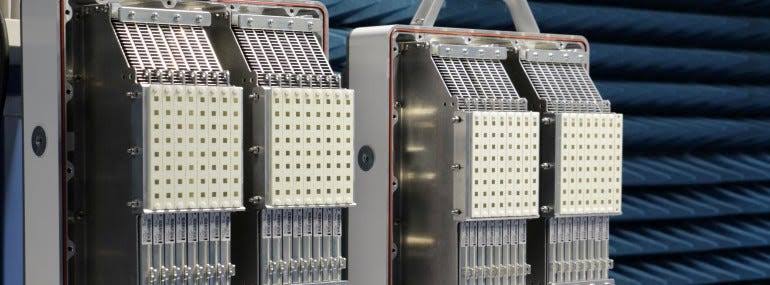
The GSMA, the global mobile industry body, describes the 3500 MHz range as the primary global launch band for 5G. Its appeal is practical. The band offers a workable balance between coverage and capacity, and a 100 MHz block allows an operator to run a single wide channel rather than stitching together narrower slices. Wider channels carry more traffic per site, which matters as users move to heavier services such as video, cloud applications and fixed wireless home internet.
The CA has long signalled the band's role in Kenya. In its 5G preparations before the first commercial launches, the regulator said it would refarm 3500 MHz spectrum that had previously been assigned to fixed wireless access networks so it could be used for 5G.
How it compares with Airtel's 2022 purchase
Airtel Kenya's last major spectrum purchase came in 2022, when it paid $40 million for 60 MHz in the 2600 MHz band on a 15-year licence valid from July 2022, according to Airtel Africa's announcement at the time. The company said that block would support 4G capacity, fixed wireless home broadband and future 5G rollout.
Set side by side, the new deal buys a block 40 MHz wider and runs 10 years longer. Using the reported prices, the 2022 purchase works out to about $0.67 million per MHz, while the 2026 purchase is about $0.65 million per MHz. Spread over the licence term, the annual cost per MHz falls from roughly $44,000 to about $26,000. These figures are calculations from the disclosed prices and terms, and they do not account for annual spectrum fees or other regulatory charges that may apply.
A market still led by Safaricom
Safaricom's lead in the 5G era rests on a larger customer base. CA statistics for the quarter ended June 2026 put Safaricom's share of overall mobile subscriptions at 69.8%, up from 68.9% in the March quarter, while its mobile broadband share edged down from 64.5% to 64.4% and its mobile money share slipped from 89.1% to 88.8%.
Airtel's position has strengthened over time but remains well behind. In the March 2026 quarter, the CA recorded Airtel with 23.2 million subscribers and a 27.6% share of mobile subscriptions. Its mobile broadband share, at around 32%, is considerably closer to Safaricom's than its overall SIM share, and its mobile money share was 10.9% against M-Pesa's 89.1%. Data on usage shows where the commercial stakes are: CA figures reported earlier this year showed 5G users averaging 46.4 GB a month in the second quarter of the 2025/26 financial year, compared with 14.1 GB for 4G users.
The 5G rollout so far
Safaricom launched commercial 5G in October 2022 after trials that began in March 2021 in Nairobi, Mombasa, Kisumu and other high-traffic urban areas.
The CA allocated it 60 MHz in the 2600 MHz band in 2022 for the purpose.
Airtel followed in July 2023, becoming the second operator to launch 5G in Kenya. It started with more than 370 sites across 16 counties, concentrated in dense residential areas, malls, hospitals and central business districts, and priced its 5G router at KSh 10,000 for consumers against KSh 25,000 for Safaricom's equivalent device at the time. Its home plans were unlimited, while Safaricom's 5G broadband was capped by data volume.
Airtel initially led on site count before Safaricom pulled ahead. By March 2024, Safaricom had 803 sites against Airtel's 690. At Airtel's launch, the CA had not set specific 5G spectrum fees and instead billed operators based on deployment and per installed link, so the C-band purchase marks a shift towards a priced, long-term block of spectrum for the operator.
Licensing questions in the background
The spectrum purchase arrives while Airtel's wider operating licence remains in transition. The operator's original licence, inherited from YuMobile when Airtel acquired it in 2014, expired in 2015, and the company operated for years amid a dispute with the regulator. A 2022 out-of-court settlement renewed the licence through 2025, and the CA then issued a temporary two-year permit that runs to January 2027.
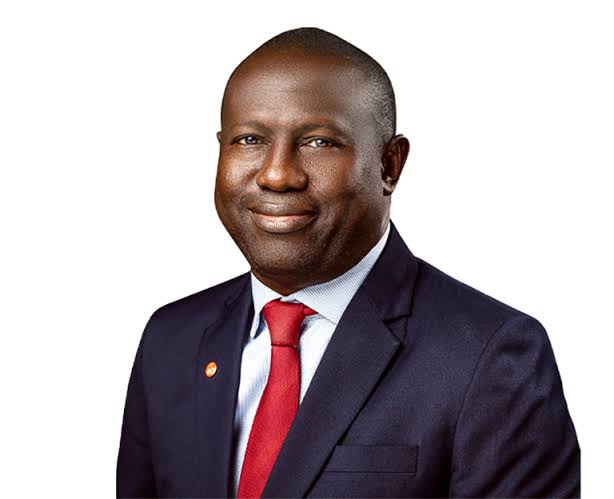
In July and August 2026, Airtel Kenya managing director Djibril Tobe said the CA had offered the company a 25-year licence under the unified licensing framework after payment of an undisclosed fee.
Safaricom had received its own 25-year licence earlier in the year. A CA gazette notice dated August 28, however, showed that Airtel's applications for a Network Facilities Provider Tier 1 licence and an International Gateway Systems and Services authorisation were open for public submissions until September 28, after which the regulator could decide on them. Neither Airtel nor the CA publicly reconciled the two accounts.
The two permits carry practical weight. The Tier 1 licence would allow Airtel to deploy communications infrastructure countrywide, and the gateway authorisation covers satellite-related services, including Airtel's planned rollout of direct-to-cell connectivity with Starlink, which the operator said in May it had piloted in Kenya while awaiting CA approval for a full launch.
Comments