 By
By 
The phrase "debt-trap diplomacy" has become one of the most repeated talking points in conversations about Africa's economic future. Mention China's loans to any room of informed people on the continent and you will almost certainly hear warnings about seized ports, stolen sovereignty, and a slow-motion colonization conducted through spreadsheets and loan agreements. It is a compelling narrative. It is also, in its most dramatic form, wrong.
That does not mean China's lending to Africa is without complications. It means the complications are more nuanced, more strategic, and ultimately more consequential than the clickbait version suggests. To understand what is actually happening, we need to look at the real numbers, trace where the "debt-trap" story came from, examine what happens when African countries actually default on Chinese loans, and understand why China was lending so heavily in the first place.
How Big Is Africa's Debt to China, Really?
Let us start with the numbers, because they matter enormously.
Between 2000 and 2023, Chinese financial institutions extended 1,306 loans totalling $182.28 billion to 49 African countries and seven regional organizations. That is a significant sum, and it explains why China dominates headlines when African debt is discussed. But context changes the picture completely.
China has become Africa's biggest bilateral lender, with its public lenders holding almost 9% of Africa's external debt in 2024, and its private lenders holding nearly the same share. Combine both figures and China holds roughly 12% of Africa's total external debt stock. That is a meaningful share, but it is nowhere near the majority.
Approximately 35% of Africa's external debt is held by Western banks, asset managers, and oil traders, compared to 12% by Chinese lenders. Multilateral institutions such as the World Bank and the African Development Bank hold an additional 37% to 39%. In other words, Africa owes far more to Western private creditors and international institutions than it does to Beijing.
This distinction matters because you cannot "colonize" a country by holding 12% of its debt. If debt concentration alone were enough to seize control of sovereign nations, the World Bank and BlackRock would already run half the continent.
Sub-Saharan Africa recorded the steepest decline in debt sustainability in 2024, with governments spending 18.7% of revenues on servicing external public and publicly guaranteed debt, three times the level in 2014. That is a genuine and worsening debt crisis. But it is a crisis rooted in the cumulative weight of all creditors combined, not a Chinese conspiracy.
The Shift: From Net Lender to Net Extractor
Something important has changed in the China-Africa financial relationship over the past five years, and Africans need to understand it clearly.
The era of massive Belt and Road mega-loans that defined the 2010s has largely ended. Collectively, African nations have gone from receiving nearly $30 billion in Chinese loans between 2010 and 2014 to paying out $22 billion between 2020 and 2024, a swing of $52 billion, according to analysis by One Data. China has effectively become a net extractor of funds from lower-income African countries as billions of dollars in loans mature simultaneously.
In 2024, Chinese banks loaned just more than $2 billion to African nations, with 70% of that going to Angola alone. That is a dramatic reduction from the peak years. The era of Beijing writing blank checks for African infrastructure is over, at least for now.
This is not necessarily bad news. It reflects a maturation of the relationship. Countries are repaying loans that built real infrastructure. The challenge is that many of those projects, particularly railways and roads, have not yet generated enough economic activity to make repayment comfortable. African governments are now navigating the uncomfortable middle period: the debt is due, the returns are still maturing, and new Chinese lending has dried up.
Where the "Debt Trap" Narrative Came From
If China is not actually seizing African assets, why does everyone believe it is? The answer involves one famous case in Asia, one high-profile misreading of documents in Kenya, and a great deal of geopolitical storytelling from Washington.
The Hambantota Port Story
The fears about African assets emerged during the same period when reports were circulating of an imminent transfer of Hambantota Port to satisfy part of Sri Lanka's debt to China. When Sri Lanka struggled to repay its debts in 2017 and signed a 99-year lease giving a Chinese state-owned company a majority stake in the port, the world's financial press immediately created a template. China was in the business of lending countries more than they could repay, waiting for the default, and then claiming strategic infrastructure as payment.
Independent economists subsequently pointed out that Sri Lanka's debt crisis was driven primarily by Western-held commercial bonds, not Chinese loans. The Hambantota deal was also a commercial transaction negotiated by a cash-strapped government, not a hostile asset seizure. But the image had stuck, and Africa was next in the crosshairs.
The Mombasa Port Myth and Kenya's SGR
The debt-trap narrative landed in Africa through a misreading of a technical contract in Kenya.
In 2018, Kenya's former Auditor General Edward Ouko was completing the 2017/18 audit of the national ports authority. He warned that the port authority's assets, of which Mombasa Port is the most valuable, risked being taken over by China Eximbank if Kenya defaulted on the $3.6 billion railway loans. International headlines immediately ran with the story: "China to take over Kenya's Mombasa Port."
The problem was that the Auditor General had made a critical error.
Research later discovered that the collateral rumour originated in a critical mistake by Kenya's auditor-general's office. The government's chief auditor had wrongly labelled Kenya Ports Authority, owner of Mombasa Port, as a "borrower" responsible for repaying the China Eximbank SGR loans. The ports authority was not a borrower.
The recently released loan contracts confirmed that "the Republic of Kenya, represented by the National Treasury of Kenya" is the Borrower, and is "fully liable for the payment and repayment obligations" of the loan contracts. The Port of Mombasa was not collateral. It was named as a "take-or-pay" customer, meaning Kenya Ports Authority had simply agreed to guarantee a certain volume of cargo would use the new railway. If Kenya defaulted on the loan, China Eximbank could sue for cash revenues. It had no legal right to seize the physical port or its land.
The China Africa Research Initiative at Johns Hopkins University scrutinised thousands of Chinese loan documents, mostly for projects in Africa, and reports that it has not found any evidence that China seizes the assets of other countries if they fail to pay loans.
By the time the research was published, the myth was already baked into public consciousness.
The Geopolitical Ingredient
The "debt-trap diplomacy" phrase was not coined by African analysts. For almost a decade, there has been a popular narrative in media, academic and policy circles, as well as public discourse, that China is engaging in debt-trap diplomacy, using massive loans primarily under the Belt and Road Initiative as a strategy to gain unfair advantage, political and diplomatic leverage over indebted African countries.
The term emerged from Indian academic circles and was enthusiastically amplified by American and European policymakers. For Washington and Brussels, emphasising the threat of Chinese "creditor imperialism" is a strategic tool in a broader competition for influence. By framing Chinese infrastructure loans as predatory, Western governments hope to steer African leaders back toward Western-aligned financing and institutions. The narrative has geopolitical utility regardless of its accuracy.
The Real Test: What Happened When Zambia Defaulted?
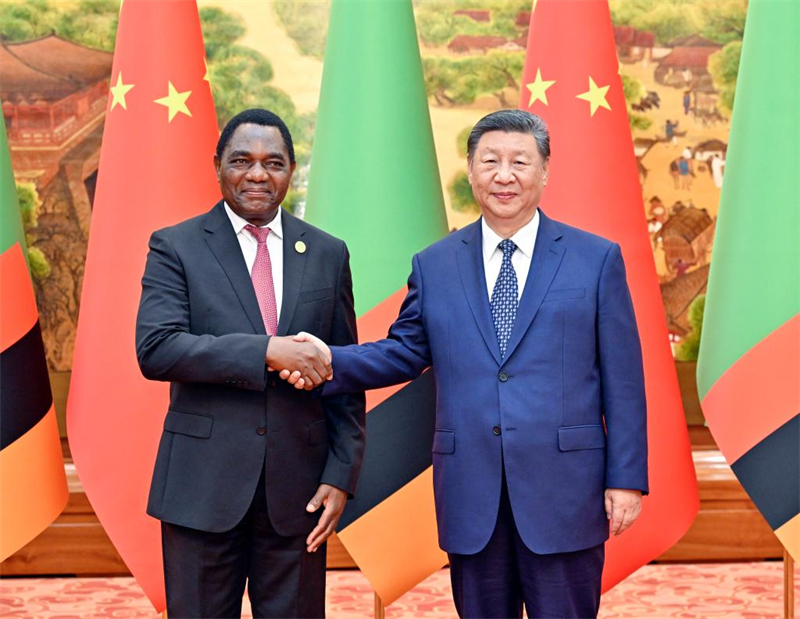
If debt-trap diplomacy were real, Zambia should have proved it. When Zambia became the first African country to default on its sovereign debt during the pandemic in November 2020, the world watched closely. After 28 months of negotiation, Zambia struck a precedent-setting deal with China and other bilateral creditors to restructure $6.3 billion in loans, of which $4.1 billion is owed to China.
China did not seize a single Zambian mine, airport, or power station. What actually happened was far more complicated, and in many ways, far more instructive.
China's "Delay and Extend" Approach
Chinese state banks refused to cancel the core principal of their loans, which is their consistent approach across all restructuring negotiations. Instead, they preferred to stretch the repayment timeline into the future. China and India signed a debt-revamp deal with Zambia in February 2024, as announced by Zambian President Hakainde Hichilema. Zambia reached a deal with two Chinese state-owned lenders, China Development Bank and Industrial and Commercial Bank of China, to restructure $1.5 billion in debt, completing a major piece of what had been an agonisingly slow process.
Forced to Work with the West
China's restructuring agreement in Zambia shows that Beijing is prepared to work within multilateral processes when necessary, though it continues to avoid permanent Paris Club membership. For the first time, Chinese officials sat alongside Western governments and the IMF under the G20 Common Framework to negotiate a unified relief plan. Beijing co-chaired Zambia's official creditor committee alongside France. That was genuinely unprecedented.
Why It Took So Long
Over $78 billion in China's external debt was under renegotiation since 2020. China's participation tends to slow both the arrival of IMF funding and ultimate debt restructuring agreements. Zambia's economy sat in a difficult holding pattern for nearly four years as negotiations dragged on. China repeatedly demanded that multilateral lenders like the World Bank also accept losses, which they are institutionally prohibited from doing, creating lengthy deadlocks. Under the final agreement, Zambia extended the maturity of its debt by an average of 12 years.
The lesson from Zambia is clear: China doesn't want your copper mines or your airports. Managing foreign infrastructure would be a diplomatic nightmare and a logistical burden for Beijing. What Chinese state banks want is their principal back, and they are willing to wait years to ensure they get it.
So Why Was China Lending All This Money?
If not to colonise Africa, what was China's motivation for pumping over $170 billion in loans into the continent over two decades? The answer is straightforward: strategic self-interest served through three interlocking goals.
Exporting Industrial Overcapacity
In the early 2000s, China's domestic construction boom was slowing, and its massive state-owned companies needed new markets for their labour and industrial output. Chinese loans to Africa were, in many cases, essentially contracts for Chinese firms.
Concerns have been raised that Chinese lenders require Chinese companies to be involved in constructing projects, limiting economic spillovers for the host countries. The Export-Import Bank of China would lend money to an African government, but the funds often went directly to Chinese state-owned construction companies that built the projects using Chinese steel, heavy machinery, and imported workers. The African country received the infrastructure and held the bill.
Securing Critical Resources
China is the world's manufacturing engine, and it requires a continuous, reliable supply of natural resources. Africa holds vast reserves of exactly what China needs: crude oil, copper, iron ore, bauxite, cobalt, and the lithium and other transition minerals essential for electric vehicles and advanced electronics. Many Chinese loans were structured as resource-backed infrastructure deals. China would build roads, railways, or power plants; the recipient country would guarantee a steady supply of commodities shipped to Chinese ports. Angola is the clearest example. Angola remains China's largest African borrower, having absorbed nearly $50 billion between 2000 and 2024, with the vast majority of those loans going into energy projects.
Buying Diplomatic Influence at the UN
The African continent comprises 54 sovereign nations, representing more than a quarter of the total voting power in the United Nations General Assembly. By becoming Africa's indispensable economic partner, Beijing has accumulated immense diplomatic loyalty. Decades ago, several African nations officially recognised Taiwan. Today, 53 out of 54 African countries officially recognise Beijing instead. When Western nations attempt to pass UN resolutions critical of China's human rights record or geopolitical maneuvers, African voting blocs frequently vote with Beijing or abstain, blunting Western diplomatic pressure.
The Concentrated Leverage Problem
While 12% of total debt is insufficient to "colonise" anyone, China does exercise meaningful leverage through a different mechanism: concentration.
If a country owes 40% of its debt to Western private investors, that debt is fragmented across hundreds of anonymous hedge funds, banks, and asset managers who rarely agree on anything. The 12% or 15% owed to China is typically held by just two or three tightly controlled state-owned Chinese banks, principally China Eximbank and China Development Bank. Beijing speaks with one voice.
When a default occurs, a single set of phone calls to Beijing determines whether a country's credit rating collapses or whether it gets a restructuring lifeline. China cannot colonise African nations through debt, but it absolutely uses concentrated financial leverage to secure long-term diplomatic alignment, raw material access, and UN voting support.
China's Pivot: "Small is Beautiful"
The massive mega-loan era is winding down, but China is not retreating from Africa. It is adapting.
At the third Belt and Road Forum in 2023, China emphasised that the future of the BRI involves "smaller" and "greener" projects. Xi Jinping's "small is beautiful" approach prioritises high-tech, renewable energy, and digital infrastructure over the billion-dollar railway and dam projects of the previous decade. Xi Jinping's keynote speech at the third Belt and Road Forum emphasised a strategic shift towards more sustainable, community-focused projects, with priority areas including renewable energy, healthcare, and technology.
The BRI itself, however, is far from dormant globally. In the first half of 2025 alone, Chinese companies signed BRI construction contracts worth $66.2 billion and invested roughly $57.1 billion in projects across Asia, Africa, Europe, and beyond, the highest six-month engagement ever recorded. Africa and Central Asia have overtaken Southeast Asia as top destinations. The strategy is evolving, not retreating.
What Does This Mean for African Nations?
The truth about China and Africa's debt sits uncomfortably between two extreme positions. China is neither the generous development partner it presents itself as nor the colonial predator that Western politicians warn about.
African governments entered these loan agreements with their eyes open. Many of the infrastructure projects built with Chinese loans, roads, railways, ports, and power plants, are real assets that Africa needed and that other creditors were unwilling to finance on comparable terms. The Standard Gauge Railway in Kenya, despite its controversies, physically connected Mombasa to Nairobi and beyond. Dams built with Chinese financing power homes and businesses across the continent.
The legitimate concerns are different. They involve the concentration of creditor leverage in Beijing's hands, the limited technology and skills transfer from Chinese-led projects, the opacity of loan contracts that made public scrutiny difficult, and the debt-service burden that now consumes a growing share of government revenues that could otherwise fund healthcare, education, and climate adaptation.
In 2024, Sub-Saharan Africa's governments spent 18.7% of revenues on servicing external public and publicly guaranteed debt, three times the level in 2014. That is the real crisis. It is not uniquely China's doing, but China's role as the largest single bilateral voice in restructuring negotiations means Beijing's posture will determine how quickly African economies can breathe again.
African nations need to approach future borrowing with stronger negotiating capacity, greater transparency in loan contracts, and a clearer link between borrowed funds and revenue-generating projects. The debt-trap myth is unhelpful because it frames African governments as passive victims who were outsmarted by Beijing. The reality is more honest and more empowering: African governments made decisions, some wise and some not, and those decisions now require careful management.
The strategic game between China, the West, and African nations is real, consequential, and ongoing. Understanding it clearly, rather than through the fog of geopolitical propaganda from any direction, is the starting point for navigating it well.
Comments