 By
By 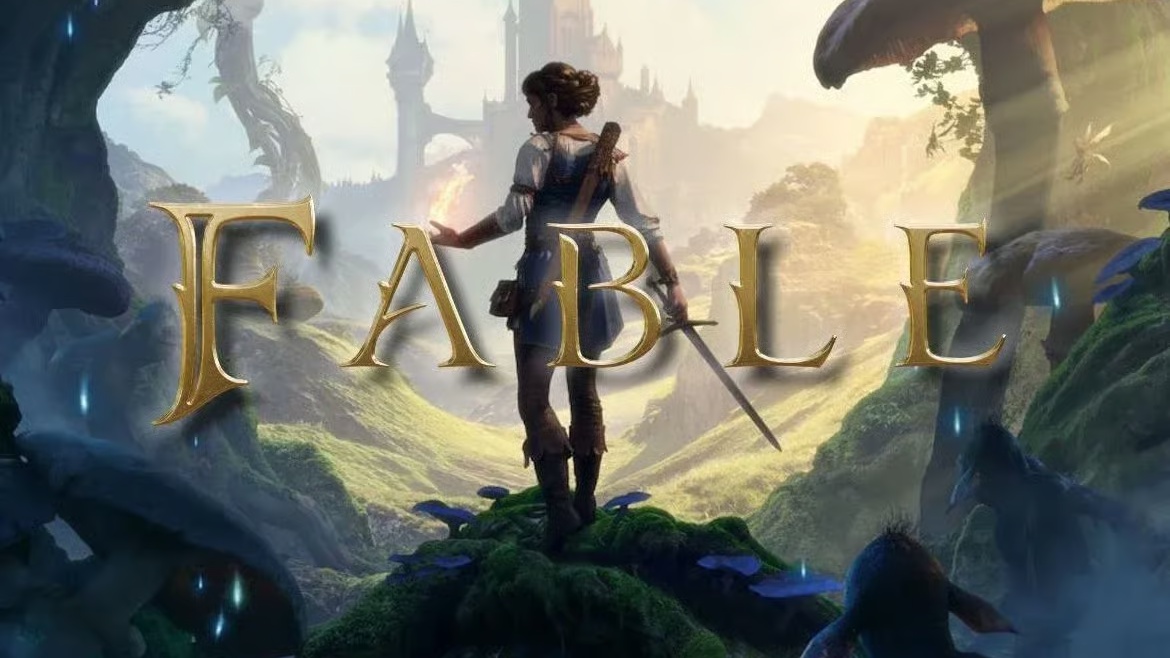
If you have seen the new Fable trailer or gameplay reveal and felt a wave of nostalgia, you are not imagining things. The long-awaited reboot of the beloved British RPG series is officially set to launch on February 23, 2027, for PlayStation 5, Xbox Series X/S, and PC, with day one availability on Game Pass. Developed by Playground Games, the studio best known for the Forza Horizon series, this new Fable is not a direct sequel to the original trilogy. Instead, it is a full reboot that takes Albion back to its whimsical, fairy-tale beginnings, moving away from the industrial, smog-filled world we saw in Fable III.
For longtime fans, this is a big deal. The original trilogy, released between 2004 and 2010 by Lionhead Studios under the guidance of designer Peter Molyneux, was one of the defining RPG series of its era. It blended high fantasy with sharp, tongue-in-cheek British humor and gave players a world that physically reacted to their choices. After Lionhead closed in 2016 and the multiplayer spin-off Fable Legends was cancelled, fans waited years for any sign of a true successor. Now that sign has finally arrived, and it looks like Playground Games understands exactly what made the series special in the first place.
The Story: A Village Turned to Stone
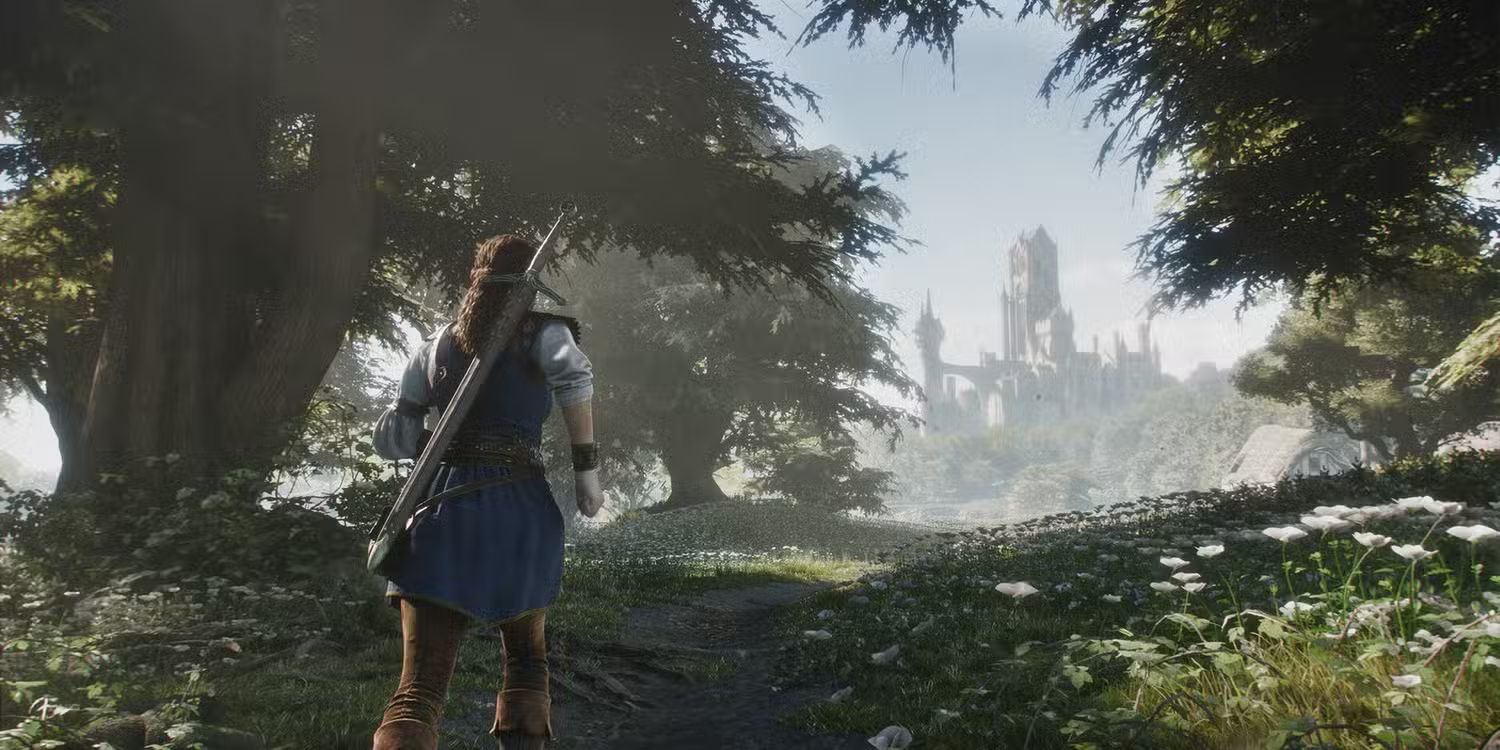
The new Fable begins with you as a child in the world of Albion, discovering your heroic powers early in life. After a time skip, you take control of your adult hero in the peaceful southern village of Briar Hill. Life there is calm until a mysterious stranger turns your grandmother, and the rest of your home village, to stone.
This tragedy is what sends you out into the wider world. Your search for answers will take you across Albion, from quiet rural regions in the north to the massive, bustling capital city of Bowerstone, where series staples like Fairfax Castle and the Heroes' Guild make a return. Along the way, you will encounter familiar enemies from the original trilogy, including Hobbes, Balverines, and the riddle-loving Demon Doors.
One of the biggest reveals from the Xbox Games Showcase 2026 was the confirmation that Jack of Blades, the masked villain from the very first Fable game, is returning. His involvement was teased in a stinger at the end of the showcase trailer, and the collector's edition of the game even includes a Jack of Blades statue, a custom Heroes' Guild Seal Pin, and a Steelbook, which suggests he plays a meaningful role in the story rather than a brief cameo.
Adding to the star power, Marvel actress Hayley Atwell has been cast as Isabel, the game's main villain. Reports describe her character as someone who genuinely believes she is the hero of the story, which fits well with Fable's tradition of morally complex antagonists who are driven by personal conviction rather than simple evil.
True to the series' roots, the player character can be male or female. Playground Games has cast two actors to share the role of the Hero of Briar Hill: Lily Nichol, known for Renegade Nell and Lockwood & Co., and Ukweli Roach, who appeared in Horizon Forbidden West and Assassin's Creed Valhalla.
Combat: Fluid, Flexible, and (Deliberately) Easy in the Demo
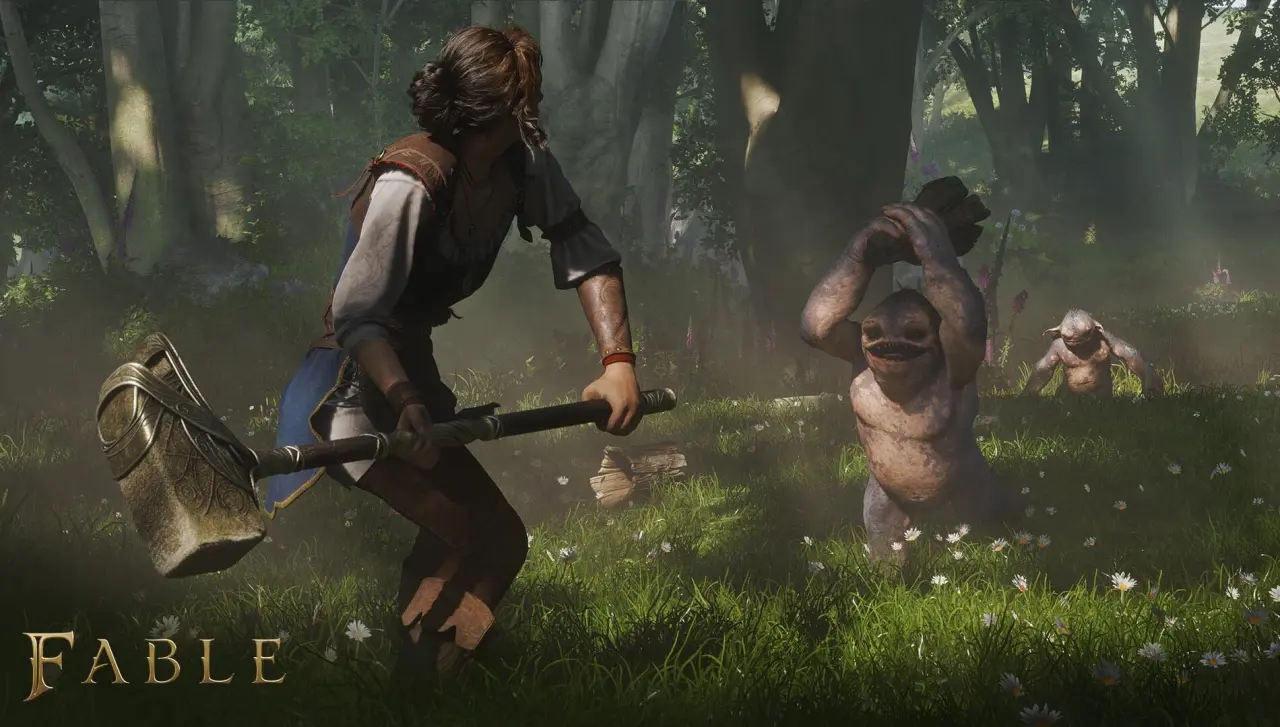
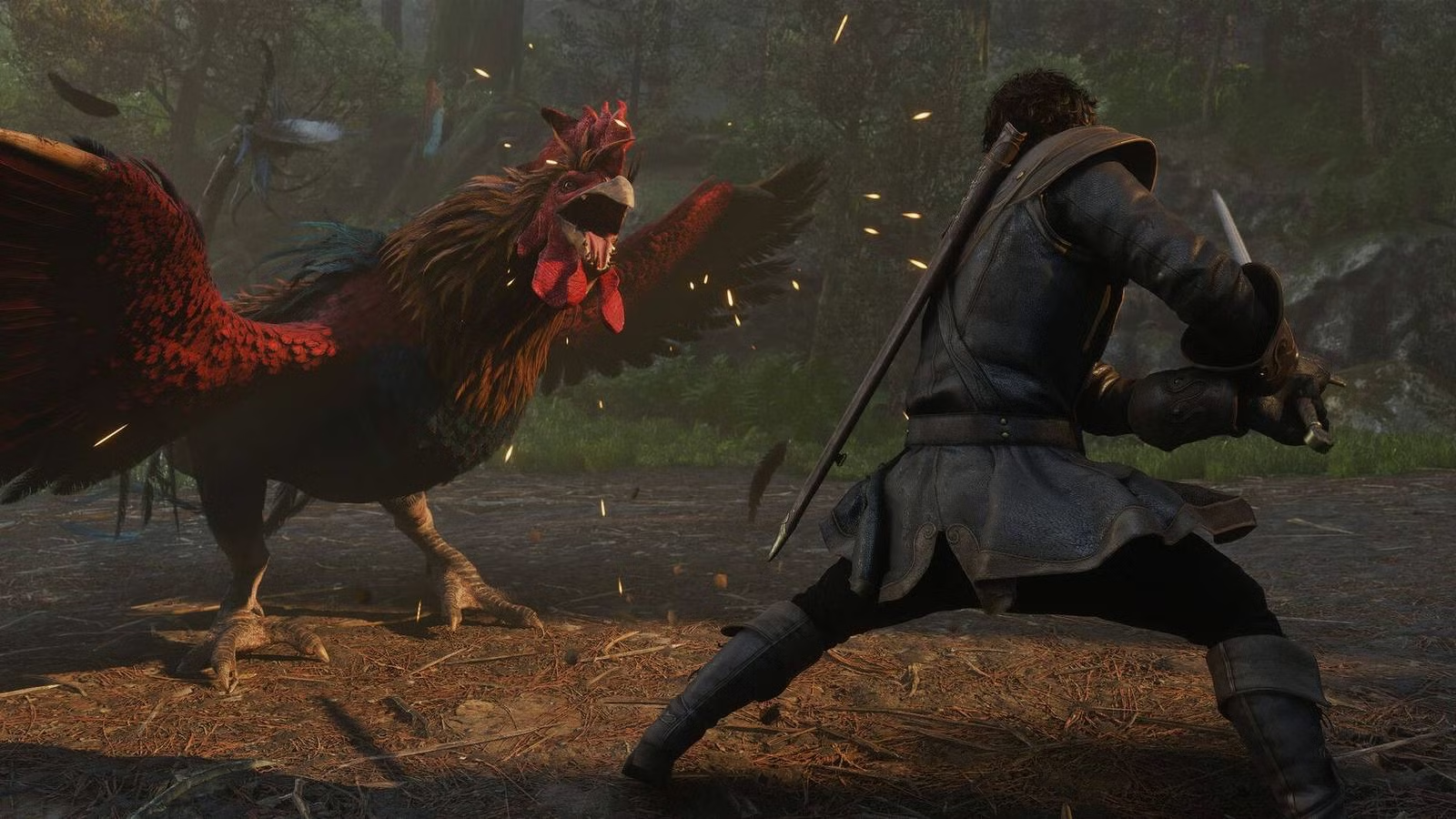
The combat system is built around three pillars: melee weapons like swords and axes, ranged weapons like bows, and magic. The developers have emphasized fluidity above everything else, meaning you are meant to swap between these styles mid-combo rather than sticking to one approach. A typical fight might involve staggering an enemy with a sword strike, rolling out of the way, and then finishing them off with a lightning spell.
After the 30-minute gameplay demo aired, some fans on social media expressed concern that the combat looked too easy, with enemies seemingly putting up little resistance. Playground Games addressed this directly, explaining that the demo was recorded on the "Story" difficulty setting, which is designed to be the gentlest way to experience Albion. The studio confirmed that multiple difficulty modes will be available at launch, and that on higher settings, enemies will be noticeably tougher and less forgiving.
This is worth highlighting because it marks a real shift for the series. The original 2004 Fable did not ship with difficulty options at all. It was not until the 2014 Anniversary remaster that a "Heroic" difficulty mode was added. Having multiple difficulty settings from day one suggests Playground Games is thinking carefully about accessibility without sacrificing challenge for players who want it.
Reputation: Goodbye Horns and Halos, Hello Nuance
The "Good vs. Evil" morality system has always been central to Fable's identity, and it is back in the reboot, though in a much more sophisticated form. In the original games, your morality was tracked on a simple bar, and extreme choices gave you visible physical changes, like a glowing halo for being virtuous or horns and pale skin for being corrupt.
The 2027 reboot drops that binary entirely in favor of what Playground Games describes as a "subjective and multifaceted" reputation system. Rather than a single global score, your reputation is tracked locally and contextually. For example, taking down a guard in a city could earn you a "Killer" label in that specific region, which might attract unwanted attention from the law if you return without a disguise. Meanwhile, sparing someone's life during a quest could earn you a "Merciful" reputation in a different area, and simply wearing expensive clothes around town could get you tagged as "Rich."
What makes this system interesting is that it does not only respond to major story choices. Even small, everyday actions, like firing an arrow into a tavern wall for fun, can shape how NPCs perceive and react to you. This means two players could have completely different experiences in the same town based on how they behaved while just wandering around.
This ties into one of the most impressive technical achievements of the game: over 1,000 handcrafted, individually voice-acted NPCs who follow their own unscripted daily routines. These are not characters standing around waiting for you to interact with them. They live their own lives, and your reputation in their eyes can shift depending on what they witness you doing.
Beyond Combat: Houses, Relationships, and a Staggering Amount of Dialogue
Fable has always been about more than fighting monsters, and the reboot leans into this heavily. You will be able to buy, own, and customize multiple properties across Albion. Even more impressively, Playground Games has confirmed that every single house in the game can be physically entered, which is a massive commitment to world detail for a game of this scale.
On the social side, you can build relationships with NPCs, go on dates, pursue romance, and get married. To support all of this reactive storytelling, Playground founder and general manager Ralph Fulton revealed at Summer Game Fest that the game features more than 150,000 lines of recorded dialogue. He noted that multiple studios were running in parallel for over 1,000 hours this year alone just to record voice-over work. That is an enormous amount of content, and it suggests the world is designed to respond meaningfully to who your hero has become and the choices you have made throughout your journey.
A Quick Refresher on the Original Trilogy
For anyone new to the series, or anyone who just wants a refresher before the reboot lands, here is a quick look at how the original three games evolved.
Fable (2004, with the extended "Lost Chapters" version in 2005) introduced players to Albion through the story of a young boy whose village is destroyed by bandits. After being trained at the Heroes' Guild, he embarks on a quest to defeat the ancient villain Jack of Blades. The game's biggest innovation was its "for every choice, a consequence" philosophy. Eating too much meat made your character gain weight, and using magic caused glowing blue lines, known as Will Lines, to appear on your skin. The tone was pastoral and fairy-tale-like, but laced with dark folklore and absurd humor, like the now-famous chicken-kicking minigame.
Fable II (2008) is widely regarded as the best entry in the series. It jumped 500 years into the future, with the Heroes' Guild long destroyed and Albion now in an age of muskets and early industrialization. You play as a street urchin who grows up to stop a mad lord from using an ancient spire to rewrite reality. This game introduced a loyal dog companion who could sniff out treasure and fight alongside you, a seamless co-op mode, and an expansive real estate system that let you buy nearly every building in the game world. The morality system also reached its most visually dramatic point here, with pure heroes gaining angelic halos and corrupt ones developing horns and pale skin.
Fable III (2010) was set 50 years after Fable II, by which point Albion had become fully industrialized, complete with factories, smog, and widespread poverty. The first half of the game focuses on leading a revolution against your tyrannical brother, King Logan. The second half puts you on the throne, forcing you to make difficult political and financial decisions to prepare the kingdom for a looming ancient threat. The game replaced traditional pause menus with the "Sanctuary," a walkable 3D hub, and leaned heavily into political satire. However, many fans felt it lost some of the magical charm of the earlier games by spending so much time in grim, industrial settings.
The Lore That Shapes Everything
If you want to fully appreciate what the 2027 reboot is building on, it helps to understand a few key pieces of Fable lore.
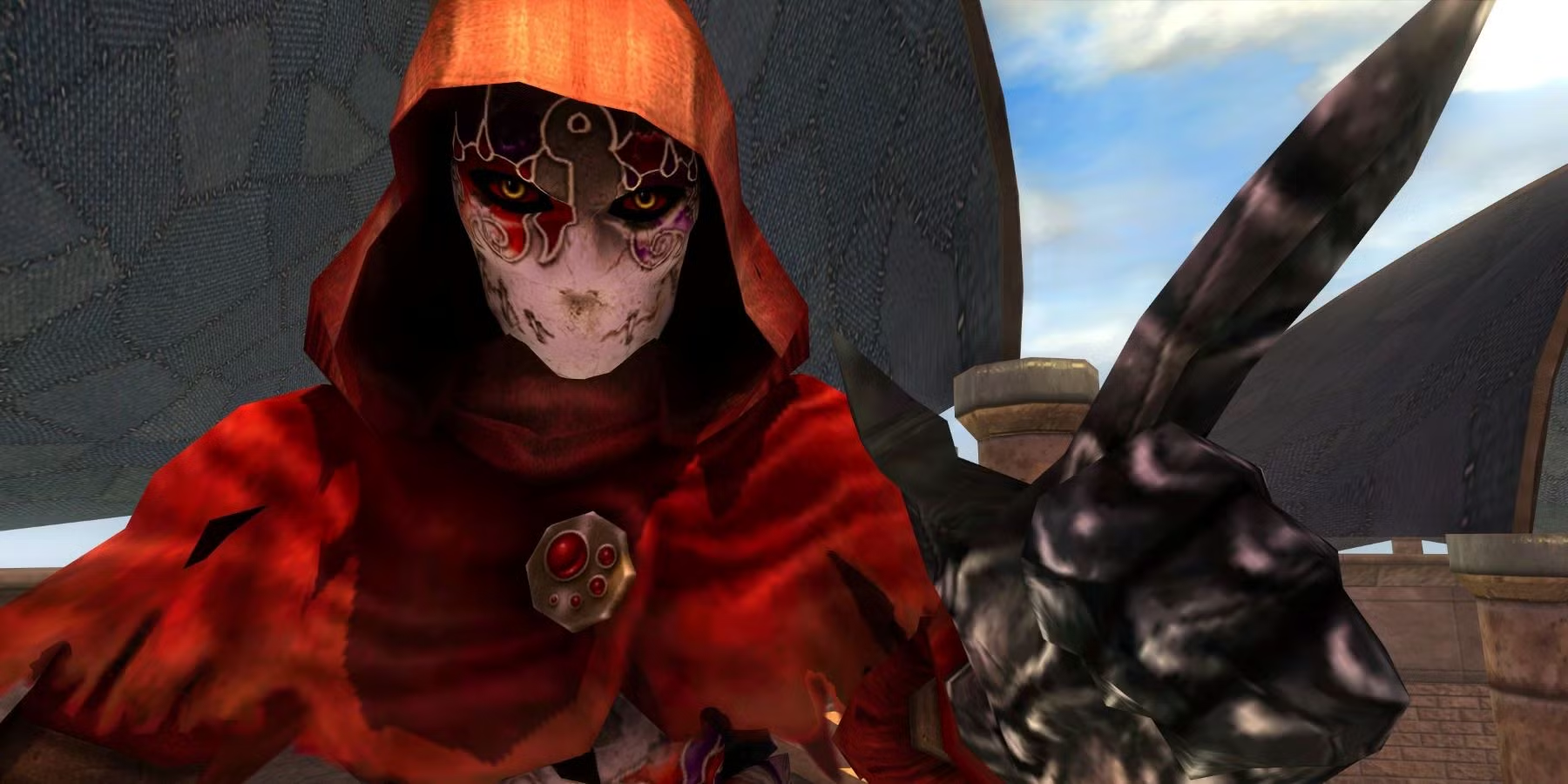
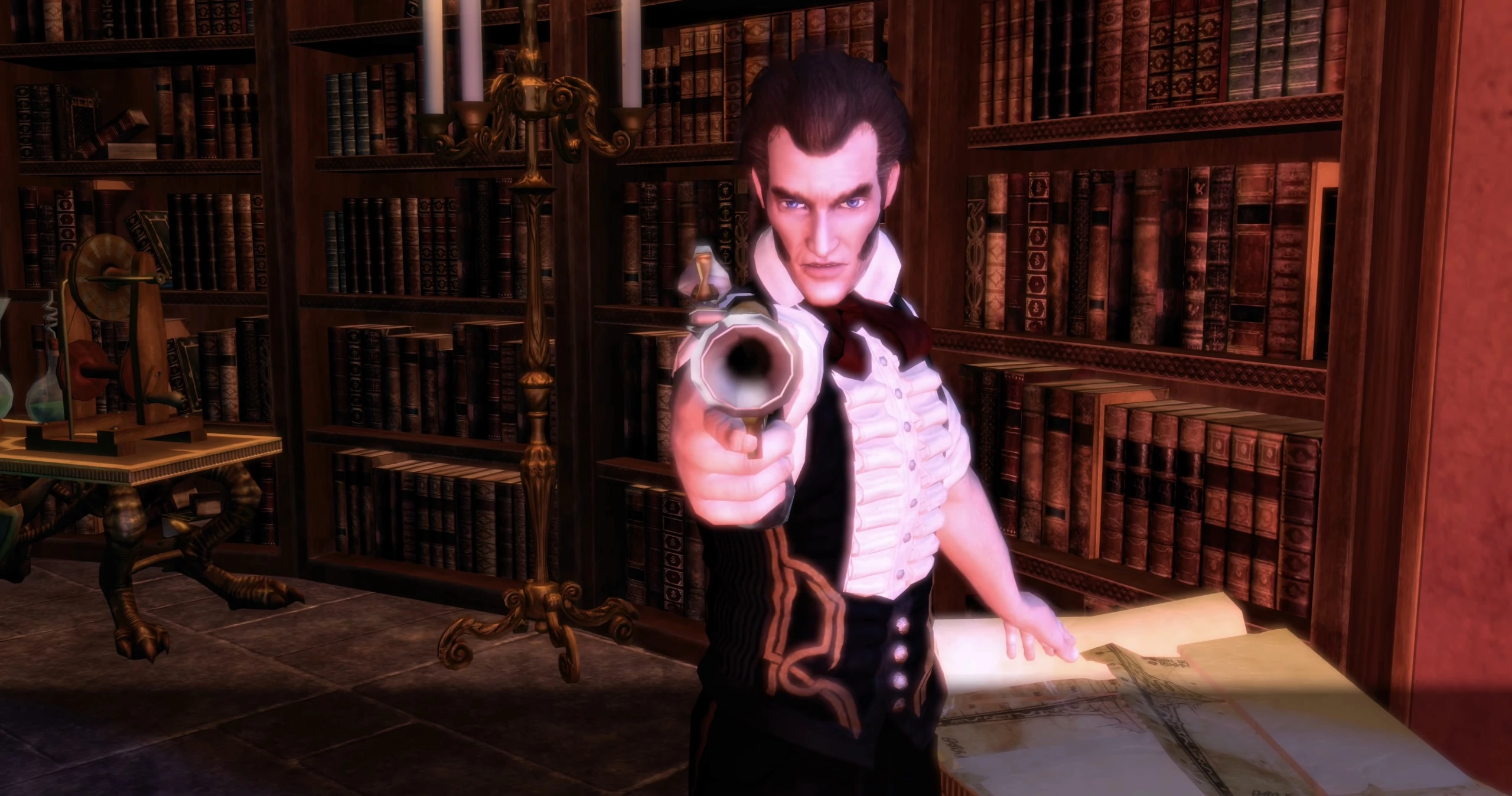
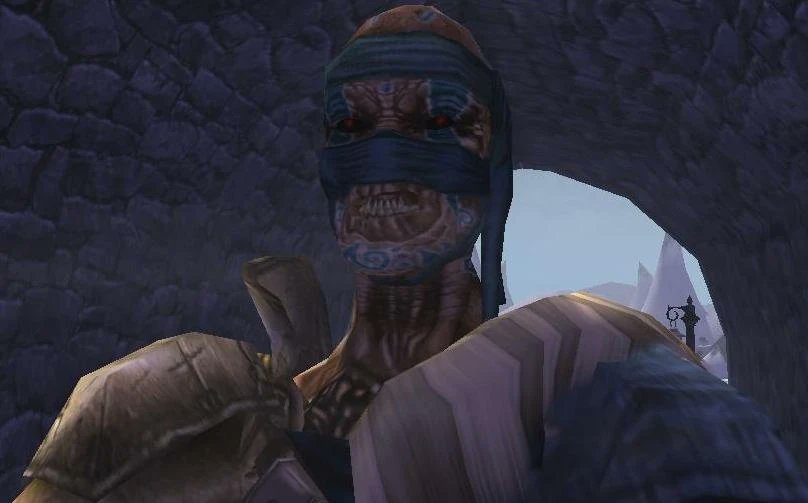
Jack of Blades is the series' most iconic villain. He is not human, but an ancient, extra-dimensional entity from a realm called the Netherworld. Millions of years ago, he was part of "The Court," a trio of god-like beings who ruled Albion through fear. Jack binds his soul to a physical mask, and anyone who wears it has their mind erased as Jack takes over their body. He wields the Sword of Aeons, a weapon that requires the blood of a hero's family member to reach its full power. His return in the 2027 reboot is one of the most exciting reveals for longtime fans, since he has not appeared in the series in more than two decades.
Lucien Fairfax, the main antagonist of Fable II, stands out because he is not a monster or an ancient demon. He is a grieving aristocrat driven mad by the loss of his wife and daughter. His obsession with ancient architecture led him to discover the Tattered Spire, a tower built by the Old Kingdom that is capable of granting a single, reality-altering wish. Lucien spends decades enslaving Albion's population to rebuild the Spire, intending to use its power to erase the world and recreate it as a paradise free of suffering and death.
William Black, also known as the Archon, is the ancestor of every main protagonist in the series. Thousands of years ago, when the demonic Court ruled Albion, he was a slave who opened a portal to the Netherworld, stole a powerful weapon, and defeated the Court, destroying two of its members and banishing Jack of Blades. He went on to found a magical empire as the first Archon, but the corrupting influence of absolute power eventually caused that empire to collapse and sink beneath the earth.
Theresa, the Blind Seeress, ties the entire original trilogy together. As a child, she was blinded by bandits during the raid that also affected her brother, the protagonist of the first Fable. She survived, discovered powerful prophetic abilities, and gained near-immortality, living for over 600 years as a morally ambiguous oracle. She guides young heroes toward their destinies, but her motives are often questionable. In several cases, she appears to orchestrate world-ending threats specifically so a hero will rise to meet them, ensuring Albion survives into its next era.
The Heroes' Guild and the Power of Will
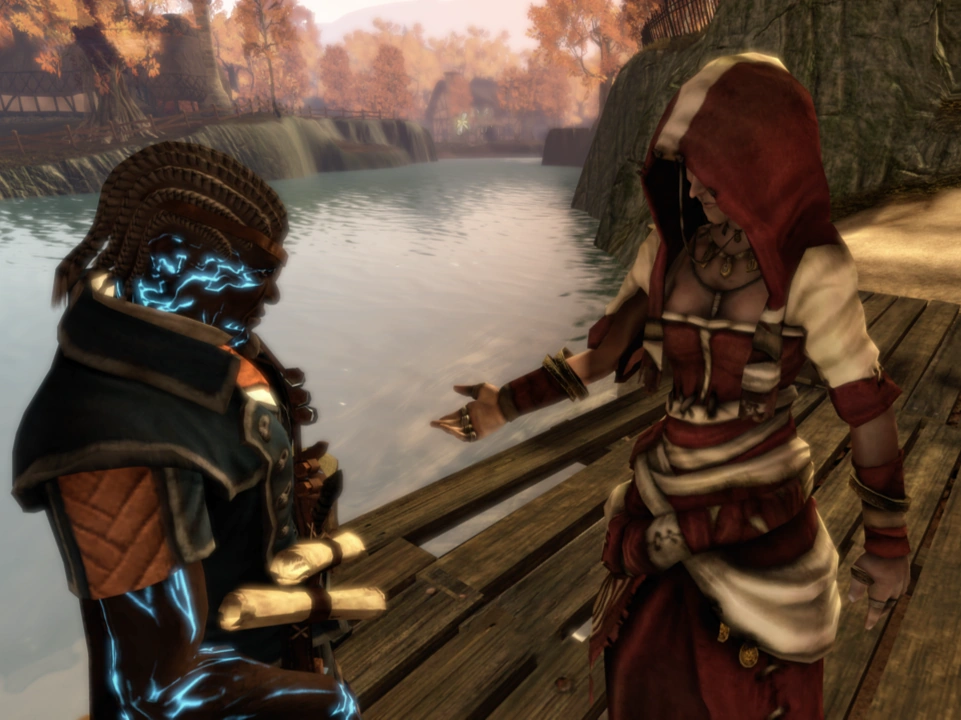
The Heroes' Guild, founded by a legendary hero named Weaver, was established to bring order to a world full of rogue, super-powered bloodlines. It operated as part school, part monastery, and part corporate headquarters, with a strict policy of neutrality. The Guild did not care whether a Hero used their powers for good or evil. Citizens and villains alike posted "Quest Cards" in the Guild's Map Room, and as long as a Hero completed their contract and paid their dues, they were free to choose their own path. This famously led to a guiding philosophy of simply "Choose thy alignment."
By the time of Fable II, the Guild no longer exists. Ordinary citizens grew tired of being treated as pawns by god-like Heroes chasing gold, and angry mobs armed with early firearms eventually laid siege to the Guild and burned it down, scattering the remaining Heroes into hiding.
Magic in Albion is known as Will, and it works differently from typical fantasy magic systems. Instead of relying on spellbooks, Will users cast spells instantly using their own life force. This comes at a physical cost. As a Hero gains experience with magic, their hair turns prematurely white, their eyes begin to glow, and Will Lines etch themselves permanently into their skin.
The original games divided Will spells into three categories. Attack spells, like Lightning and Fireball, were used to damage or control groups of enemies, while Battle Charge let a Hero turn into a kinetic battering ram. Environment spells, such as Slow Time and Force Push, gave players tactical control over the battlefield, slowing down enemies or pushing them back. Summon spells, like Turncoat and Ghost Sword, allowed Heroes to manipulate life force itself, forcing enemies to fight each other or summoning spectral allies to fight alongside the player.
This Feels Like a Genuine Return to Form
What stands out most to me about everything revealed so far is how deliberately Playground Games seems to be honoring what made the original Fable games special, without simply copying them. The shift away from a binary morality system toward a localized, reputation-based one feels like a natural evolution rather than a gimmick. It respects the spirit of the original "every choice has a consequence" idea while making it feel more grounded and personal.
The decision to set the story in Briar Hill and build outward from a personal tragedy, rather than starting with a grand, world-saving premise, also feels true to the series' roots. Fable has always worked best when it makes the world feel lived-in and reactive on a small scale before expanding outward, and an opening built around a single ruined village fits that approach well.
If there is one thing I will be watching closely as we get closer to launch, it is how the combat holds up on higher difficulties. The fluid style-swapping system sounds promising on paper, but the "too easy" criticism after the gameplay demo shows that fans are paying close attention to whether the combat can stand on its own, separate from the social systems and world-building that are clearly the stars of the show right now.
For now, with a confirmed release date of February 23, 2027, and an early access window starting February 18 for select players, Fable fans finally have something concrete to look forward to. Based on what has been shown so far, this reboot looks like it understands exactly what made Albion worth returning to in the first place.
Comments