 By
By 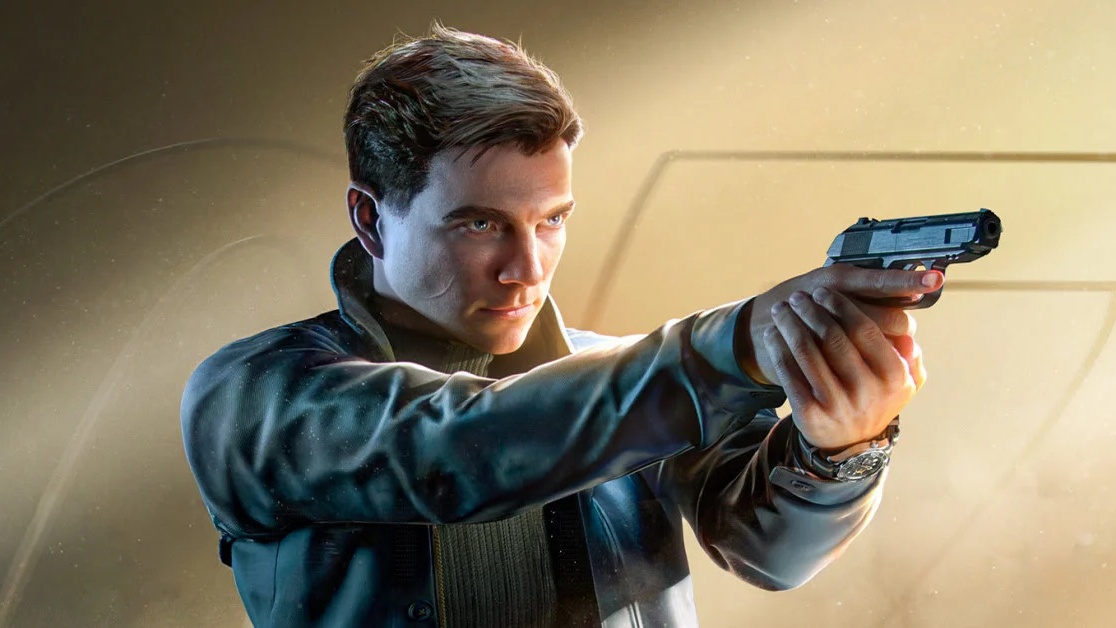
Back in May, before 007 First Light launched, we asked a simple question: is James Bond's long-awaited return to gaming actually worth the 14-year wait? Now that the game is out, the reviews have landed, the internet has done its thing, and players have had time to form real opinions, it is time to give you a proper answer.
The short version is yes. The more honest version is: yes, but not in the way most people expected, and with a few genuine frustrations you deserve to know about before you spend KES 9,000.
Because here is the thing nobody talks about enough when reviewing 007 First Light. IO Interactive did not make the game that most Hitman fans assumed they would. They made a completely different kind of game, with a completely different set of priorities. Whether that trade-off works for you depends entirely on what you wanted from a Bond game in 2026.
The Hitman Whiplash
Let us address the elephant in the room first.
IO Interactive built their reputation on the Hitman: World of Assassination trilogy. Three games of sprawling sandbox levels, hundreds of creative assassination approaches, disguises, distractions, and the absolute freedom to approach Agent 47's missions however you wanted. When they announced they were making a James Bond game, the obvious assumption was clear: Hitman with a tuxedo. Open levels. Creative kills. Multiple routes. Maybe a little more charm.
What IO Interactive actually delivered is something closer to Uncharted meets Batman: Arkham, with Hitman DNA sprinkled into its best moments. The game draws gameplay inspiration from Uncharted, Assassin's Creed, and the Batman Arkham series, and unlike Hitman, where patience and precision dominate every encounter, First Light constantly pushes players forward. Missions have cinematic momentum. There are set pieces. There is a story that demands your emotional investment. Bond is not a blank vessel for your creative problem-solving; he is a character, and you are along for his ride.
That is both the game's greatest strength and its most contentious decision.
The opening hours suffer from some strange pacing, with clear yellow and blue environmental markers frequently directing your path and reducing opportunities for exploration and problem-solving, which leaves some players feeling like they are navigating a very pretty linear corridor. The legitimate criticism here is real: if you came in expecting Hitman-level freedom from minute one, those first few hours will feel like a regression.
But here is the thing that many reviewers who played the full game are saying: if you give it time, the game opens up. The social stealth missions are some of 007 First Light's best because of how large the sandbox is and how many options it offers. Bond can use his skills as a spy to approach objectives in different ways, and the player is free to decide how to handle it. Even midway through, one route can be abandoned for another if it feels like the better choice.
So the honest assessment is this: IO Interactive sacrificed consistent open-world freedom in exchange for a cinematic Bond story with genuine dramatic peaks. Whether that feels like a betrayal or a revelation depends entirely on what you value in a game.
The Combat: Where the Game Earns Its Licence
If there is one area where 007 First Light is almost universally praised, it is the hand-to-hand combat. This is where IO Interactive found their best idea.
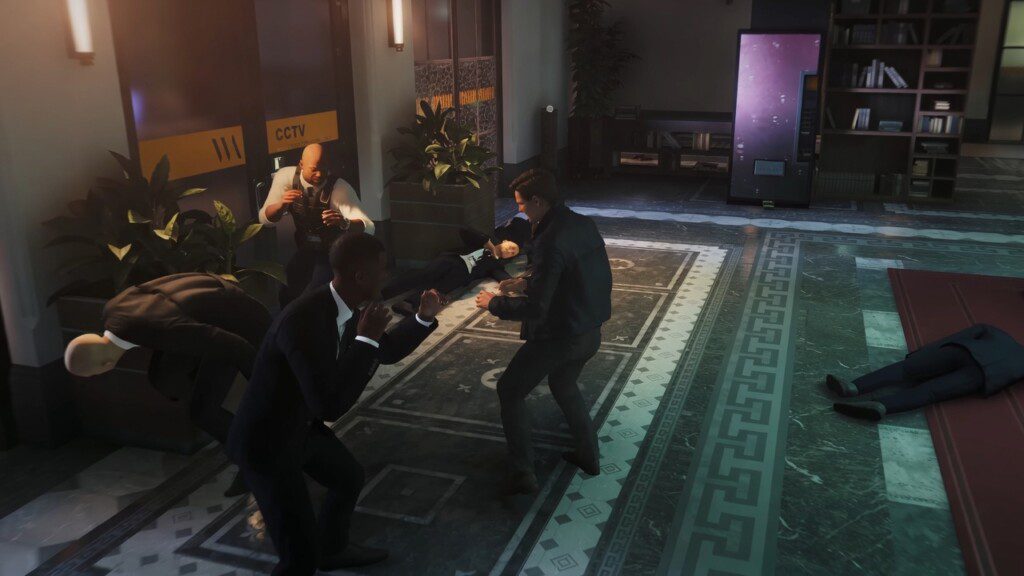
First Light's close-quarters combat is incredibly dynamic, offering contextual opportunities that feel ripped straight out of the movie. What's all the more impressive is that it never feels overly scripted. James will dynamically use the environment to his advantage in combat, and you can throw objects and reach for other tools to stun and incapacitate foes on the fly. Run out of bullets? Throw your gun at them, too.
The Arkham-style system of dodging, parrying, and grabbing works brilliantly here because it was built for a character who fights with controlled violence rather than superhero fury. Bond does not wade through rooms like a tank; he neutralises threats efficiently and stylishly, and the game rewards that instinct constantly. Shoving an enemy into a table, slamming another into a wall, kicking a third through a glass partition before rolling into cover, the choreography that emerges from combat feels earned rather than scripted.
It is in the way the game combines gunfights and fistfights that makes it much more frenetic and requires you to quickly make decisions. That blend of ranged and melee pressure is where First Light distinguishes itself from a dozen other third-person action games. It demands situational awareness and rewards improvisation in a way that genuinely feels like being Bond.
The combat is genuinely great. It is the part of this game that IO Interactive nailed with the most confidence. The question is whether the stealth surrounding it holds up equally well, and the answer, unfortunately, is more complicated.
The Brains Behind the Guards (Or the Lack Thereof)
Here is where we need to be honest, because the AI complaints are the most universal mechanical criticism of 007 First Light, and they are mostly valid.
In the interest of letting you transition between combat and stealth with relative ease, your foes have the awareness of moles. You can have entire three-on-one fistfights just metres away from guards at the other end of the room. They won't mind.
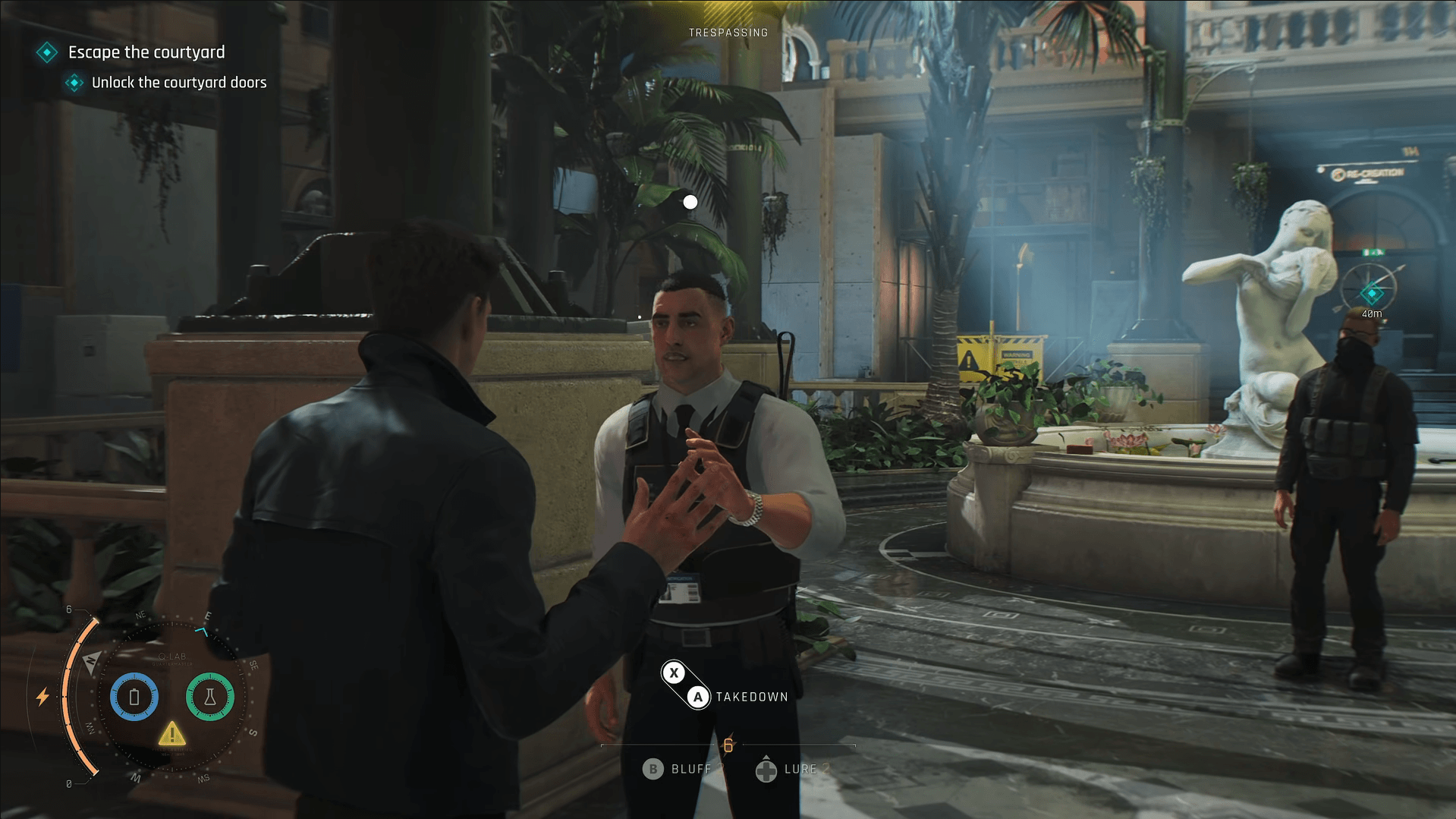
When stealth works in First Light, it is satisfying and tense. But the illusion relies on guards being kept deliberately limited in their perception. Attacking a group of enemies in a room will not alert nearby people, even those in the same room. You can also sneak past people who most definitely should be noticing you, but don't.
Think of it this way: stealth in most great stealth games feels like outsmarting intelligent opponents who are genuinely looking for you. Stealth in First Light sometimes feels like walking confidently past security guards who are professionally obligated to look at the wall. You are not outwitting them; you are simply existing in their blind spots, which the game has deliberately made enormous.
Sometimes it even felt like the game didn't want you to go with the stealth approach, with how aggressive the AI is in rotating and covering each other when they're alerted by your presence. It was serviceable, but it could've elevated the experience so much more if it had more mechanics to play with, or maybe even taken from the Hitman games.
This is the sharpest irony of 007 First Light. IO Interactive's Hitman games are celebrated precisely for their intelligent, reactive AI that made sneaking genuinely challenging. Here, they appear to have intentionally softened the enemy awareness to support the game's more cinematic, accessible tone. The result is stealth that feels less like espionage and more like a guided tour of a facility where the staff have agreed to look the other way.
It does not ruin the game. But it does limit it, and it is worth knowing before you go in expecting Hitman-level challenge.
The Post-Launch Question: Can TacSim Save the Replayability?
One of the most practical concerns about 007 First Light is simple: the campaign is roughly 12 to 14 hours long. For a KES 9,000 purchase, that prompts a fair question about value after the credits roll.
IO Interactive's answer is TacSim, short for Tactical Simulator. TacSim is a second mode where James Bond can do replayable operations and challenges, effectively little tests of skill in Tactical Simulators where players can just enjoy the game without the context of narrative, and unlock new outfits, gadgets and weapons along the way.
This mode works similarly to the challenge-based systems in Hitman: World of Assassination, where missions are remixed with new conditions, different enemy placements, additional modifiers, and customizable restrictions. Reports suggest TacSim missions will continue receiving updates after launch, giving players reasons to return long after the main story ends.
The modifier design is where TacSim gets genuinely interesting. One modifier removes all gadgets entirely, forcing you to rely on melee and environmental reads. The other restricts ranged combat to headshots only, meaning body shots deal no damage at all. Those two examples alone suggest the mode is designed to pressure players into approaches they wouldn't naturally choose.
But TacSim is not a New Game Plus, and it is not a replacement for playing the story again with the same emotional investment. TacSim is a systems challenge, not a narrative replay. Rather than replaying the narrative, it strips context away entirely and focuses on mechanical challenge. The upside is that it targets the parts of 007 First Light worth replaying, which are the open-ended mission structures, not the linear cinematic sections. The downside is that players who wanted to experience Bond's origin story again with different dialogue choices or a different approach to key moments won't get that here.
So is TacSim a band-aid or a genuine replayability engine? Probably something in between. For players who love optimising runs and chasing challenge modifiers, it scratches exactly the itch that the Hitman trilogy built. For players who wanted a richer, branching narrative they could revisit meaningfully, it falls short. TacSim is a good answer to the replay question. It is just not the only answer that question deserves.
The Online Noise: Separating Real Criticism From Manufactured Outrage
No review of First Light would be complete without addressing the discourse, because there has been a lot of it, and not all of it deserves equal weight.
Let us start with the valid complaints. Some players have noted that puzzles lean toward the simpler end of the difficulty spectrum, which reduces the satisfaction of environmental problem-solving. The cut-to-black animations during certain cinematic transitions have been flagged as jarring, breaking immersion at moments that should feel seamless. The single car chase in the game is a very scripted and linear approach with short cuts that are not required whatsoever, given how the chase ends. For a franchise whose car sequences are iconic, having that moment fall flat is a legitimate disappointment.
These are real, fair criticisms. They point to areas where IO Interactive prioritised accessibility and pacing over depth and player agency.
Then there is the other kind of noise.
007 First Light has seen criticism from some players of being "woke," with the backlash largely directed at James Bond taking direct orders from a female superior, specifically the character of M, played by Priyanga Burford. Here is the part worth stating clearly: a female M is not a creative risk or a political statement. The role of M in the Eon Productions films was played by Judi Dench in seven different movies, beginning with Pierce Brosnan's Bond debut in GoldenEye. That run started in 1995 and lasted until 2012's Skyfall. That is nearly two decades of cinematic precedent, covering some of the most beloved Bond films ever made.
Bond answering to a female M is as traditional as a Walther PPK. Anyone presenting it as some kind of radical new agenda is either very young or not particularly familiar with the franchise they claim to love. Move past it.
The real creative conversation worth having is not about who plays M. It is about whether IO Interactive found the right balance between cinematic storytelling and player freedom. That is an interesting debate with legitimate arguments on both sides. The other stuff is just internet noise dressed up as cultural commentary.
Lenny Kravitz and the Cast That Elevates Everything

One area that deserves more praise than it typically receives in the discourse is how good the performances are across the board.
Patrick Gibson as Bond is a genuine discovery. Gibson brings a lot of charm to the performance, and that natural, playful energy comes through often. It shows up not just in scenes with the main cast, but also in Bond's interactions with NPCs during stealth missions. He is playing a young Bond who is not yet the composed, world-weary figure we know. He is brash and a little reckless, and Gibson makes you feel that energy without it tipping into irritating overconfidence.
But the standout is Lenny Kravitz as Bawma, the villain described as a flamboyant Pirate King. Casting a rock legend as a Bond villain is the kind of swing that could easily misfire, but Kravitz reportedly delivers exactly the theatrical, magnetic menace the role demands. One reviewer described First Light as a "14-hour globetrotting epic" full of "spectacle, humour, action, and romance," noting it is everything James Bond should be. Much of that emotional range comes from the quality of the cast.
The Lana Del Rey theme song, "First Light," co-written with Bond film composer David Arnold, received mixed reviews, with praise for the composition and some criticism for the lyrics. But as an opening statement for this new Bond era, it establishes the right mood: yearning, cinematic, and a little dangerous.
The Verdict: A Bond Game That Earned Its Place
Here is where we land after everything.
007 First Light received positive reviews from critics, with praise given to the gameplay, combat, writing, and Patrick Gibson's performance as Bond. The game sold 1.5 million units within the first day of release. The commercial and critical reception has confirmed something important: there was genuine, pent-up hunger for a Bond game done right, and IO Interactive largely delivered on it.
One critic described the game as the closest and most definite result if one were to ask what a James Bond simulator would look like, noting that open-ended missions give tons of different approaches while deep combat mechanics inspire creativity. Another called it "the perfect James Bond game," arguing that the game adds the most to the Bond mythos of any title in recent memory.
The honest assessment from where we sit is this: 007 First Light is not a perfect game. The AI is softer than it should be, the early linearity tests your patience, and TacSim, while clever, does not fully replace the depth that a more ambitious replayability system would have provided. These are real limitations.
But First Light is also genuinely excellent in the ways that matter most for a Bond game. The combat is visceral, fluid, and cinematic. The story is confident and emotionally grounded. The cast is exceptional. The world IO Interactive has built is one you want to inhabit and, more importantly, one you want to see continue.
After 14 years without a proper Bond game, this is precisely the kind of debut that earns a sequel. IO Interactive did not give us the Hitman they are famous for. They gave us something new: a Bond game built on Bond's terms, with all the strengths and honest trade-offs that entails. That is not a failure. That is a foundation.
The licence to kill has been earned. Now let us see what they do with it.
Comments